
Climbing Kilimanjaro Over 50: What Actually Changes at 50, 60 and 70
Last verified: August 2026 · Next scheduled review: February 2027
Data sources cited in this article: Kilimania Adventure’s internal climb and guide-debrief records (2019–2024), current KINAPA/TANAPA regulations, CDC and Wilderness Medical Society guidance. Full list in Sources below.
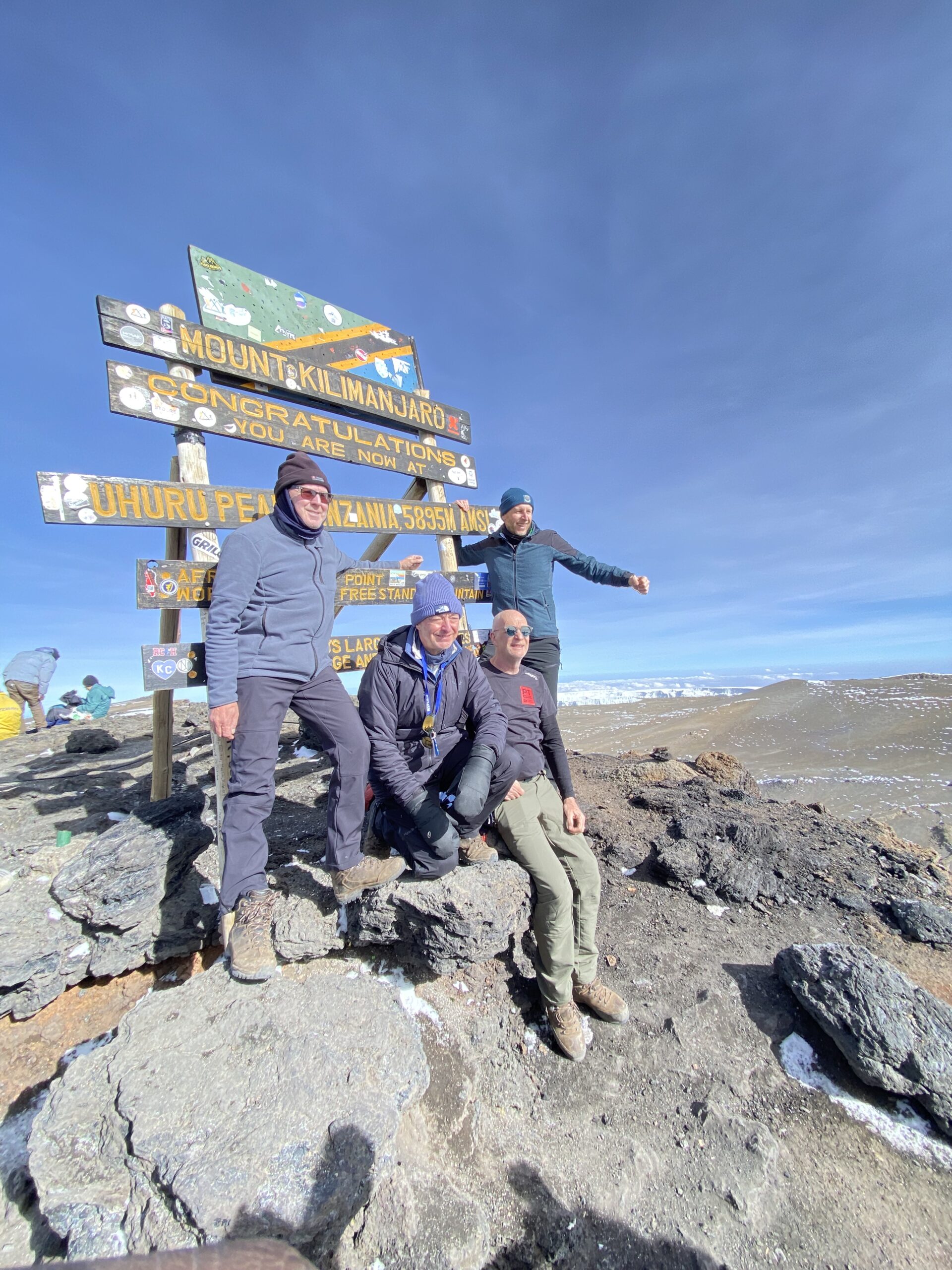
Climbing Kilimanjaro over 50 is realistic for most healthy adults, and it works at 60 and 70 too. Neither KINAPA nor TANAPA sets an upper age limit — there is no official cutoff of any kind. In our 22 years guiding from Moshi, the oldest client on record that we have guided to Uhuru Peak was 74. What matters more than the number on your passport is how many days your itinerary gives your body to adjust to the altitude, your general fitness, and your honesty about any existing health conditions. Age is one input among several — not the deciding factor.
Quick Answer
Can you climb Kilimanjaro over 50, 60 or 70? Yes. TANAPA and KINAPA set no upper age limit, and age alone does not predict whether someone summits. What tends to change with age is acclimatisation speed and overnight recovery — both of which are managed through route length. Our guide team generally recommends 8–10 day itineraries such as the Lemosho or Northern Circuit over 5–6 day routes for first-time high-altitude trekkers past 50, though individual fitness and medical history matter just as much.
⛰️ You’re not too old. You just need the right plan.
Here’s what 22 years of guiding has taught us: the difference between summiting and turning around is rarely age alone — it usually comes down to route selection and pacing discipline. In our experience, a well-prepared 65-year-old on a 9-day Northern Circuit itinerary often does better than a rushed 35-year-old on a 6-day Machame climb.
↓ What you’ll learn in this guide: which route fits your situation, how common health conditions factor in, training adjustments that matter after 50, and a case study of a 68-year-old client’s second, successful attempt.
Climbing Kilimanjaro Over 50: A Quick Reality Check
The biggest mistake we see happens before climbers even arrive in Tanzania.
The biggest mistake we see climbers over 50 make on Kilimanjaro happens before they arrive in Tanzania: choosing a 5- or 6-day route because it looks more affordable, on the assumption that personal fitness matters more than acclimatisation time. In our experience, it rarely does.
Climbers over 50 make up the largest single age group we guide on Kilimanjaro, and they are often more disciplined with pace than climbers half their age. Age changes specific, manageable things — recovery speed, acclimatisation rate, and the margin between a sustainable and unsustainable pace. Age alone does not determine whether a person can stand on Uhuru Peak; medical fitness, preparation, and itinerary choice matter far more.
Across our expeditions, one factor tracks with success more consistently than fitness level or prior trekking experience: the number of days spent on the mountain. In our records, climbers over 50 on 8-day or longer itineraries tend to outperform those on shorter routes — though individual results still vary.
What Do Kilimania’s Climb Records Show?
The following reflects patterns from Kilimania’s internal booking and guide-debrief records from 2019–2024, not a peer-reviewed clinical study. These are operational observations, and individual outcomes vary considerably.
Our internal records show that climbers over 50 consistently represent the largest segment of our client base, and that route length appears to be one of the strongest predictors of summit success on itineraries of 8 days or longer.
The clearest pattern we observe is not the difference between age groups, but the difference within each age group by route length: in our experience, older climbers on 8- or 9-day itineraries tend to outperform older climbers on 6-day routes by a wider margin than we see among younger clients on the same comparison. Additional acclimatisation days appear to help older climbers proportionally more than they help younger ones, though we have not measured this with a controlled study.
The most common reason our guides report for descent among climbers over 60 is persistent altitude symptoms — specifically a headache combined with nausea that does not resolve after rest at the same elevation. Among younger climbers, gastrointestinal illness unrelated to altitude is the more frequently reported cause. That distinction matters operationally: altitude symptoms are often reduced through route planning made before the climb, whereas illness is harder to plan around.
What Actually Changes at Altitude After 50?
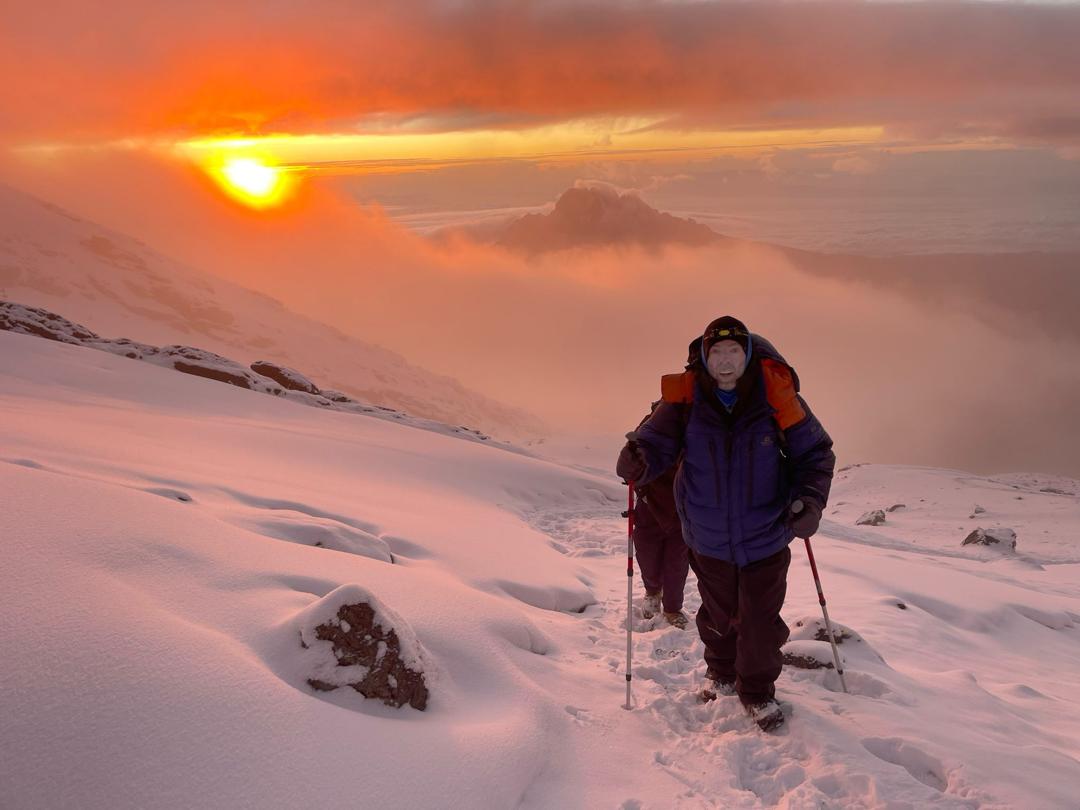
After 50, our guides commonly observe three things at altitude: acclimatisation can take more time, overnight recovery is often less complete, and the cardiovascular margin between a sustainable and unsustainable pace can narrow. None of these changes prevents a summit on its own — all of them respond directly to route planning and pacing discipline, and individual variation is considerable.
Acclimatisation Rate
The body’s adaptation to lower oxygen — adjusted breathing, increased red blood cell production, fluid regulation — tends to take more time in many older adults, though individual responses vary widely and some older climbers acclimatise as quickly as much younger trekkers. Every extra acclimatisation night on a longer route is doing real physiological work. An 8-day route provides two more of those nights than a 6-day route, which is one reason short routes tend to underperform for climbers over 50 in our records.
Overnight Recovery
Sleep at altitude is poor for nearly everyone — periodic breathing and disrupted sleep architecture are common above 3,500m regardless of age. In many older adults, recovery from each day’s exertion is generally less complete by morning, though this varies considerably between individuals, so fatigue can accumulate across days rather than clearing overnight. Built-in rest days on longer itineraries are not a comfort upgrade; in our experience they are often what allows older bodies to arrive at summit camp functional.
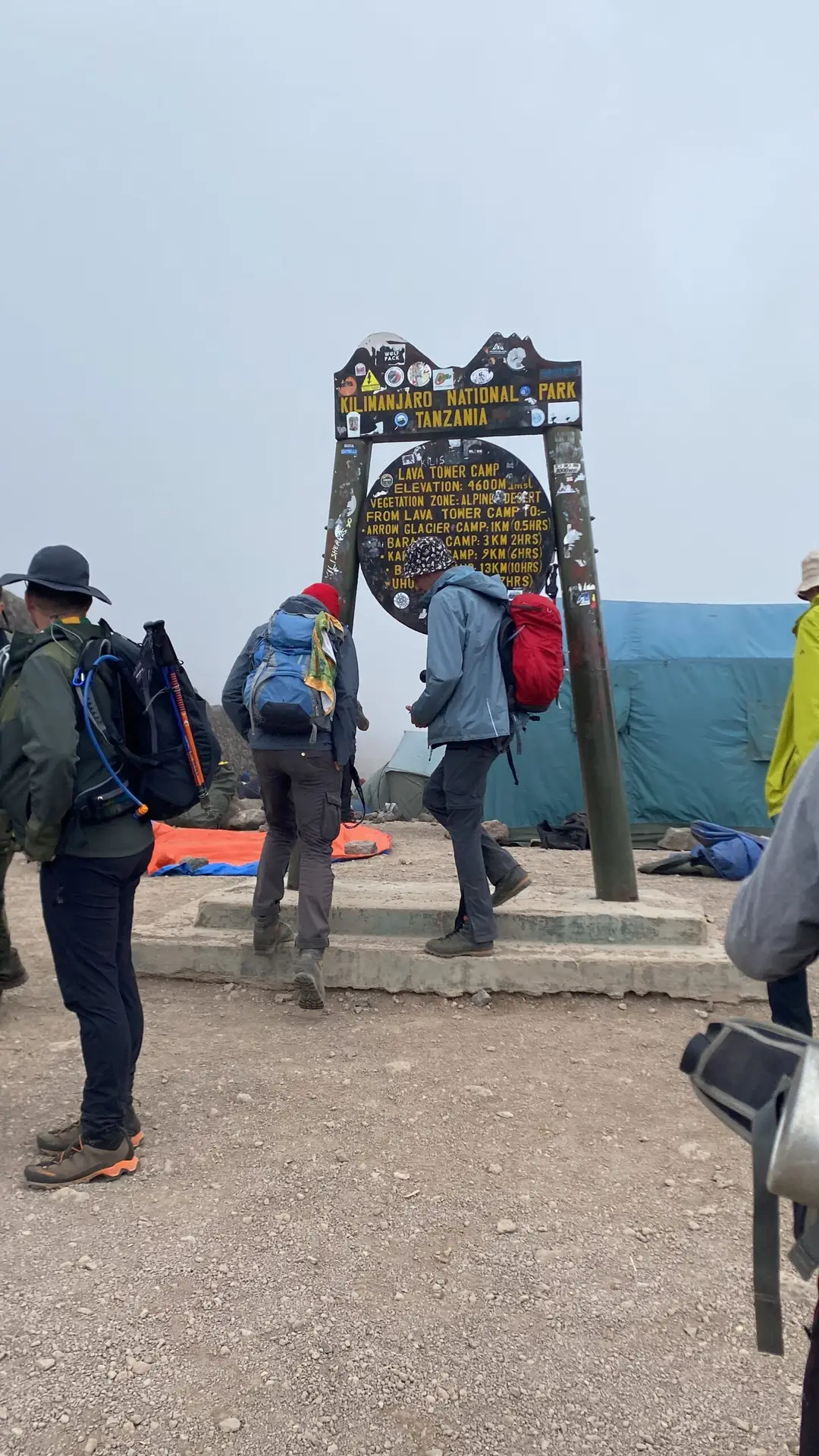
Barafu Camp (4,673m) is where recovery differences between age groups often become visible. Extra rest days on longer itineraries can determine who arrives here with energy left for summit night.
Cardiovascular Response
Maximum heart rate typically declines with age, and at altitude the heart works harder for any given effort because each breath delivers less oxygen. For many climbers over 55, this narrows the margin between a sustainable pace and one that isn’t. The practical rule our guides use: walk at a pace where full conversation stays comfortable — pole pole. If you can’t finish a sentence without pausing for breath, you’re moving too fast, regardless of how easy the terrain looks.
What Doesn’t Change
Pacing discipline often improves with age, in our guides’ experience. Climbers in their 60s are, anecdotally, less likely than climbers in their 30s to surge ahead of the group or dismiss early warning signs as minor.
Older climbers also tend, in our guides’ experience, to communicate health changes more accurately — decades of familiarity with their own bodies can make it easier to distinguish “genuinely wrong” from “merely uncomfortable.” On a mountain where self-reporting is one of the guide’s primary tools, that can be a real operational advantage.
What Age Can (and Can’t) Predict on Kilimanjaro
It’s worth separating what age plausibly affects from what it does not automatically determine. This distinction is the core of how our guide team assesses climbers, regardless of the number on their passport.
Age Can Affect
- Recovery speed between climbing days
- Baseline strength and joint durability, especially on descent
- Risk profile for certain injuries (e.g., knee strain)
- Likelihood of managing existing medication or chronic conditions
- How much benefit extra acclimatisation days provide
Age Does NOT Automatically Determine
- Whether you can reach Uhuru Peak
- Your baseline cardiovascular or aerobic fitness
- Your individual tolerance to altitude
- Your motivation or mental resilience on summit night
- Your prior trekking or endurance experience
A very fit, altitude-experienced 68-year-old may be better prepared than an unfit, sedentary 45-year-old. Chronological age is one data point among many your guide team and physician should weigh together.
Which Route and Day Count Fit Your Age Group?
Day count matters more than route name. The table below reflects our guide team’s general recommendations by age group, based on operational experience rather than a fixed medical rule. Age is only one factor — fitness, prior altitude experience, and medical clearance also shape the right itinerary for a given individual. As a starting point, longer routes generally provide a wider acclimatisation margin for first-time high-altitude trekkers in this age range.
| Age Group | Common Kilimania Recommendation | Typical Days Suggested | Why We Suggest This |
|---|---|---|---|
| 50–55 | Lemosho | 8 days | Lava Tower push (4,600m) is one of the most effective single acclimatisation days on any route. |
| 56–60 | Lemosho | 8 days | Western approach gives a longer acclimatisation window before Barafu Camp. |
| 61–65 | Lemosho or Northern Circuit | 8–10 days | Recovery days become operationally significant, not merely optional, in our experience. |
| 66–70 | Northern Circuit | 9–10 days | Lowest average daily elevation gain of any standard route on the mountain. |
| 71+ | Northern Circuit, private itinerary | 10+ days | Individual pace management can be harder to accommodate in a standard group setting. |
These are Kilimania’s guide-team recommendations, not medical requirements. A fit, altitude-experienced 70-year-old may do well on a shorter itinerary than shown here, and a 52-year-old with limited fitness or a complex medical history may benefit from more days than the table suggests. Discuss your individual situation with your physician and our guide team before booking.
Our 8-day Lemosho Route is a frequent recommendation for climbers aged 50–65: it crosses to Lava Tower (4,600m) then descends to Barranco Camp (3,976m), a climb-high-sleep-low sequence with a meaningful acclimatisation effect. For many climbers 65 and older, the 9-day Northern Circuit is a stronger fit — it’s the longest standard route on the mountain, with vertical gain spread across more days. See our full route length comparison for a route-by-route breakdown, and check current seasonal weather before picking dates.
The 5-day Marangu and 6-day Machame are routes we generally do not recommend for climbers over 50 attempting a first high-altitude climb — in our experience they often don’t provide enough acclimatisation time for this age range, regardless of fitness level, though we assess this individually.
How Do 50s, 60s and 70s Actually Compare on the Mountain?
Age alone doesn’t determine success on Kilimanjaro, but practical differences often show up in recovery time, acclimatisation needs, and route choice. The table below summarizes general patterns we observe decade by decade — individual variation within each decade is often larger than the difference between decades.
| Factor | 50s | 60s | 70s |
|---|---|---|---|
| Recovery between days | Moderate, typically | Often slower | Often slowest |
| Acclimatisation needs | Generally high | Often higher | Often highest |
| Common Kilimania recommendation | Lemosho | Lemosho or Northern Circuit | Northern Circuit, private group |
| Typical training period | 12–14 weeks | 14–16 weeks | 16+ weeks |
| Medical clearance | Recommended | Strongly recommended | Essential |
Bottom Line
In our experience, climbers over 50 who succeed most consistently do three things: they choose enough days on the mountain (8+ on Lemosho or Northern Circuit-style itineraries), they disclose their health history honestly to the guide team before day one, and they walk at a pace that feels unnecessarily slow from the trailhead onward. These are strong, evidence-informed recommendations from our guide team — not universal medical requirements — and your physician’s individual assessment should always take priority.
A Case Study: February 2025, Northern Circuit
In February 2025, guide John Akaro led a 68-year-old client — a retired engineer with well-controlled hypertension and two prior knee surgeries — on a private 9-day Northern Circuit itinerary. The client had attempted Kilimanjaro at 61 on a 7-day route with a different operator and turned back at Barafu Camp with persistent headache and vomiting.
The second attempt differed in three ways: a longer route, a private itinerary that allowed an unplanned rest afternoon at Mawenzi Tarn (4,330m) after a low pulse oximetry reading logged by the guide on day three, and consistent trekking pole technique throughout the descent. He reached Uhuru Peak on day eight. As he put it afterward, the first time I was trying to finish. The second time I was trying to acclimatize.
This account, shared with the client’s consent, illustrates one client’s experience from our guide-debrief records. It does not predict outcomes for other climbers with similar profiles — individual results vary based on health, fitness, and many factors beyond route choice.
What Health Conditions Should Climbers Over 50 Discuss With Their Doctor?
Common conditions in this age group — controlled hypertension, managed diabetes, previous knee replacement — do not automatically prevent a summit, and they do not automatically make a climb unsafe either. Undisclosed conditions, not the conditions themselves, create the greatest avoidable risk. Every section below carries the same instruction: this requires individual medical assessment, and you should discuss it with your physician and tell your guide team before the climb begins.
Important: The following reflects operational guiding experience, not medical advice. Every climber with an existing health condition should get an individual evaluation from a physician familiar with high-altitude physiology before booking. See sources below.
Cardiovascular Conditions
Well-controlled hypertension is among the most common conditions we manage in climbers over 55 and does not automatically rule out a climb. Unstable hypertension, a cardiac event within the past 12 months, or significant heart failure require explicit cardiologist assessment before booking — individual risk varies and only a physician can evaluate it. The Wilderness Medical Society recommends an exercise stress test be considered for climbers with significant cardiac histories before high-altitude travel.
Knee Conditions
For many climbers over 55, knees are a bigger practical concern than lungs on summit day. The descent from 5,895m to Mweka Camp covers over 2,700 vertical metres on tired legs after a night with little sleep. Two trekking poles used correctly can transfer load away from the knee joint, and descent-specific strength training (slow step-downs, controlled lunges) often matters more than flat-ground cardio — though this should be built up gradually and reviewed with a physician if you have a joint history.
Diabetes
Blood sugar management can become less predictable at altitude due to appetite suppression, cold, and disrupted sleep, and altitude may blunt the hypoglycaemia symptoms a climber is used to recognising at sea level. Guides need to know your diagnosis, medication, and symptom pattern before day one so they can support you appropriately.
Medications and Altitude
Some medications interact with acetazolamide (Diamox), the drug most commonly used to aid acclimatisation. Others have their effectiveness altered by altitude-related changes in hydration or cardiovascular load. Bring a complete written medication list — names, doses, and timing — and review it with your physician before travel, then share it with your guide team on arrival in Moshi.
Monitoring and Emergency Descent
Ask any operator, including us, how their guides monitor climbers for signs of Acute Mountain Sickness (AMS), High Altitude Cerebral Edema (HACE), and High Altitude Pulmonary Edema (HAPE), and what their emergency descent procedure looks like. Standard practice across reputable operators includes regular symptom check-ins, pulse oximetry spot checks at higher camps, and immediate descent as the primary treatment when symptoms worsen — this applies to climbers of any age. The CDC’s guidance on high-elevation travel and altitude illness is a useful independent reference for understanding these risks before you travel.
For a wider look at how physiology differs by group, see our guide on men vs women at high altitude.
How Should Training Change After 50?
The training fundamentals are similar at any age — the practical difference after 50 is that recovery between sessions often takes longer, strength work tends to matter more relative to pure mileage, and many climbers benefit from extending preparation to 14–16 weeks rather than the standard 12. These are general guidelines to discuss with a doctor or trainer, not a fixed prescription.
- Allow more recovery between hard sessions. Three well-executed training days with real recovery often beat five depleted ones — adaptation happens during recovery, not just during the session itself.
- Prioritize strength alongside distance. Quadriceps, glutes and calves influence how well you manage the summit descent. Two strength sessions weekly in the final 12 weeks is a reasonable target for many climbers, adjusted to individual capacity.
- Train on downhills specifically. Long descents with poles and a loaded pack are among the closest available preparation for what the body faces below Barafu Camp.
- Consider pre-acclimatisation where feasible. Some climbers over 60 who live at sea level choose to spend a few days at moderate altitude (roughly 2,500–3,500m) in the weeks before arriving in Moshi. Evidence on how much this helps varies by individual, but many climbers report it as a useful head start.
Eccentric quadriceps and glute work — slow step-downs and controlled lunges — is more specific to the descent demand below Barafu Camp than most flat-ground cardio. Climbers over 50 should also consider extending a standard 12-week programme by 2–4 weeks and building in recovery intervals throughout, progressing gradually rather than ramping up quickly.
Check your baseline against our Kilimanjaro fitness assessment before committing to a training block, and review what a typical climbing day involves in our guide to what climbing Kilimanjaro is actually like.
Before You Book: A Checklist
Whatever your age, working through this list with your doctor and your chosen operator will do more for your summit chances than any single piece of gear or training tip.
- Discuss high-altitude trekking with your doctor
- Review existing medical conditions and how altitude may affect them
- Review current medications for altitude or Diamox interactions
- Choose an itinerary with enough acclimatisation days for your situation
- Factor in any previous high-altitude experience, positive or negative
- Assess your current walking and strength fitness honestly
- Tell the operator about relevant medical history before booking
- Ask how the guide team monitors climbers for altitude symptoms
- Ask about the operator’s emergency descent procedures
- Ask about the guide-to-client ratio on your specific itinerary
Frequently Asked Questions
Yes. Most climbers we guide who are over 50 reach Uhuru Peak. Success depends far more on itinerary length, general fitness, and honest medical disclosure than on turning 50 itself.
Yes. Climbers in their 60s summit regularly, particularly on 8-day or longer itineraries that allow more time to acclimatise. Individual fitness and health history matter more than the number itself.
Yes. Age alone does not prevent a summit. Climbers in their 70s regularly reach Uhuru Peak on longer itineraries with medical clearance and experienced guides. We typically recommend a private 9–10 day Northern Circuit itinerary for most climbers over 70, adjusted to individual fitness.
No official upper age limit exists. TANAPA and KINAPA do not restrict climbers by maximum age. Medical fitness, not age, is the deciding factor in whether a climb is appropriate.
Anne Lorimor of Arizona reached Uhuru Peak at age 89 in July 2019 and is widely reported as the oldest person to summit Kilimanjaro, demonstrating that age itself is not a fixed barrier when health and preparation are managed carefully.
The mountain itself doesn’t get harder, but acclimatisation and recovery often need more time — which is why we generally recommend 8–10 day itineraries rather than shorter routes for climbers over 60, while recognizing that fitness varies widely at any age.
There is no single route that fits every older climber, but longer itineraries such as the 8-day Lemosho or 9-day Northern Circuit generally provide more acclimatisation opportunity than 5–6 day routes. The right choice depends on your fitness, prior altitude experience, and available time.
Many climbers with well-controlled hypertension summit successfully each year. Blood pressure should be stable, medication reviewed by your physician, and your guide team informed before the climb begins.
Often, yes, once fully recovered and cleared by a physician. Trekking pole technique and descent-specific strength training tend to matter more than age or the surgery itself — but this should be assessed individually.
For a deeper look at the family side of age-related planning, see our guide to family Kilimanjaro climbing, and if you’re still deciding whether to go at all, our honest breakdown of reasons you should not climb Kilimanjaro is worth reading first.
Conclusion
The climbers over 50 who stand on Uhuru Peak share three decisions that have little to do with age: they chose enough days on the mountain, they disclosed their health history before day one, and they walked at the pace their guide set even when it felt unnecessarily slow. Explore our 8-day Lemosho Route if you’re ready to talk dates.
We Walk With You.
Free Download: Kilimanjaro Altitude Symptom Checklist
Used by Senior Guide Sabinus Msimba on every expedition to support early symptom recognition. This is an educational resource, not a substitute for medical advice.
Download PDFReady to talk dates? Tell us your age group, preferred dates, group size, and previous trekking experience. If you have relevant health considerations, your doctor can advise you on what’s useful to share with your operator. We reply within 12 hours, 7 days a week, from our KINAPA-licensed guide team in Moshi.
Message Us on WhatsApp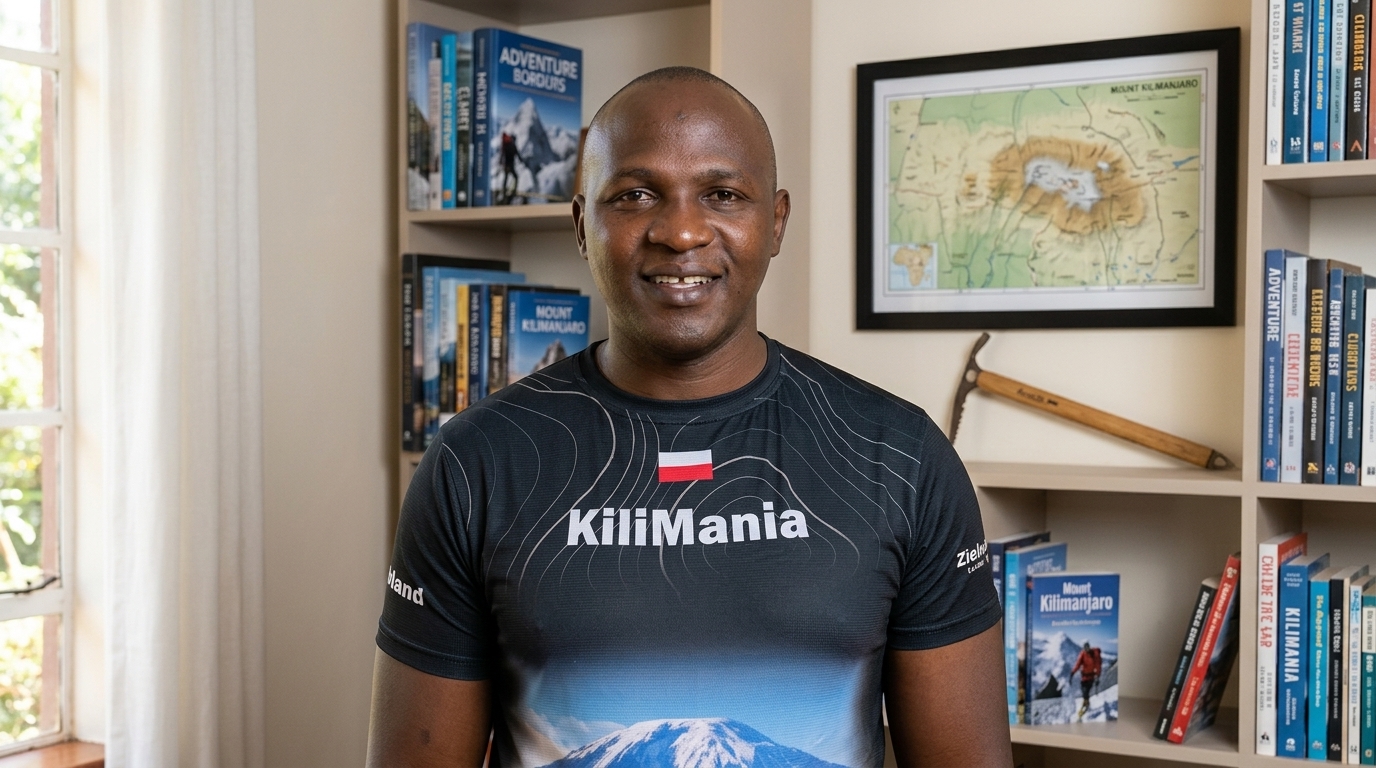
Written by Sabinus Msimba
Senior Kilimanjaro Guide and Co-founder, Kilimania Adventure. 22+ years guiding on Kilimanjaro, 300+ personal Uhuru Peak summits, KINAPA-licensed mountain guide since 2003, Wilderness First Responder (WFR) certified. Claims about internal company data reflect Kilimania Adventure’s own booking and guide-debrief records, not independent scientific research.
Disclosure: Kilimania Adventure is a TATO-registered commercial tour operator based in Moshi, Tanzania, and may receive bookings from this page. First-hand observations and internal company data are identified as such throughout this article and are not a substitute for peer-reviewed research. We encourage you to compare our quotes with at least one other TATO-registered operator before booking.
Medical notice: This article does not replace individual medical advice. Climbers with existing health conditions should consult a physician familiar with high-altitude physiology before booking.
Sources referenced: KINAPA · TANAPA · Wilderness Medical Society · CDC — High-Elevation Travel and Altitude Illness · Kilimania Adventure internal climb records, 2019–2024.