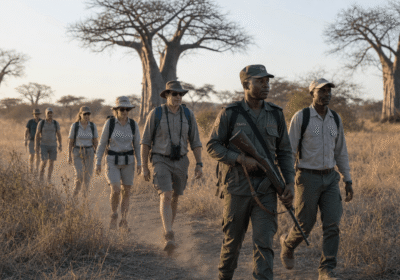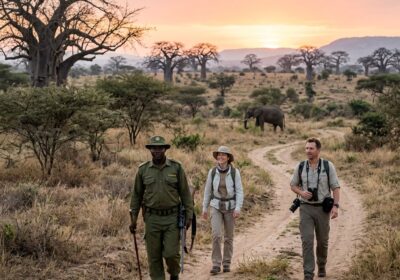
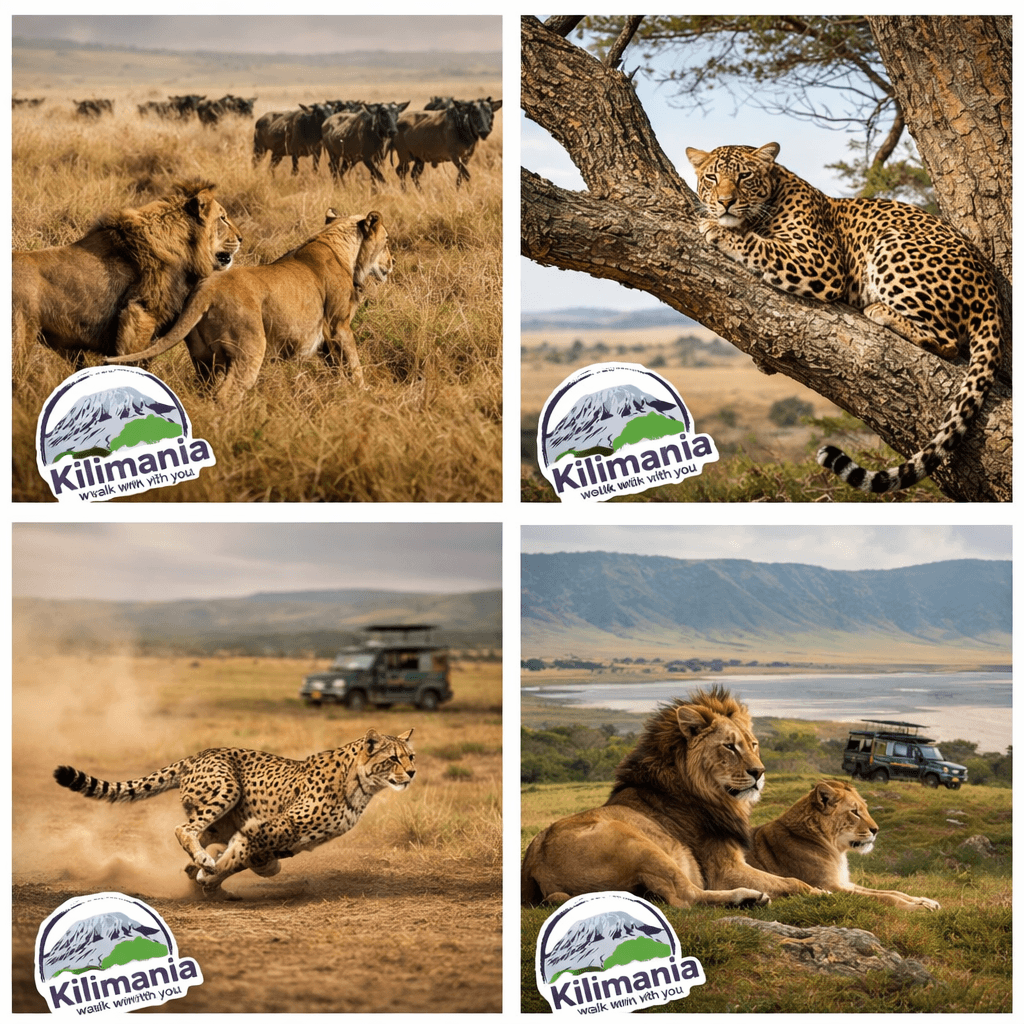
Over 8,000 wildebeest calves are born on the Ndutu plains every single day at peak calving season—and every predator in the ecosystem knows it.
Table of Contents
INTRODUCTION
The best time to see big cats in Tanzania is from late December to March during the Ndutu calving season. This is when lions and cheetahs actively hunt newborn wildebeest on open short-grass plains—producing the highest density of predator encounters anywhere in Africa. For leopards, target August to October when dry-season conditions expose these elusive cats in riverine corridors. This guide also helps you understand the best time for the Tanzania safari for wildlife, so you can plan your trip based on real predator behavior rather than general seasonal advice.
As a local operator, Kilimania Adventure offers guided safari experiences across Tanzania’s northern circuit. You can explore more about our approach on our Tanzania safari homepage.
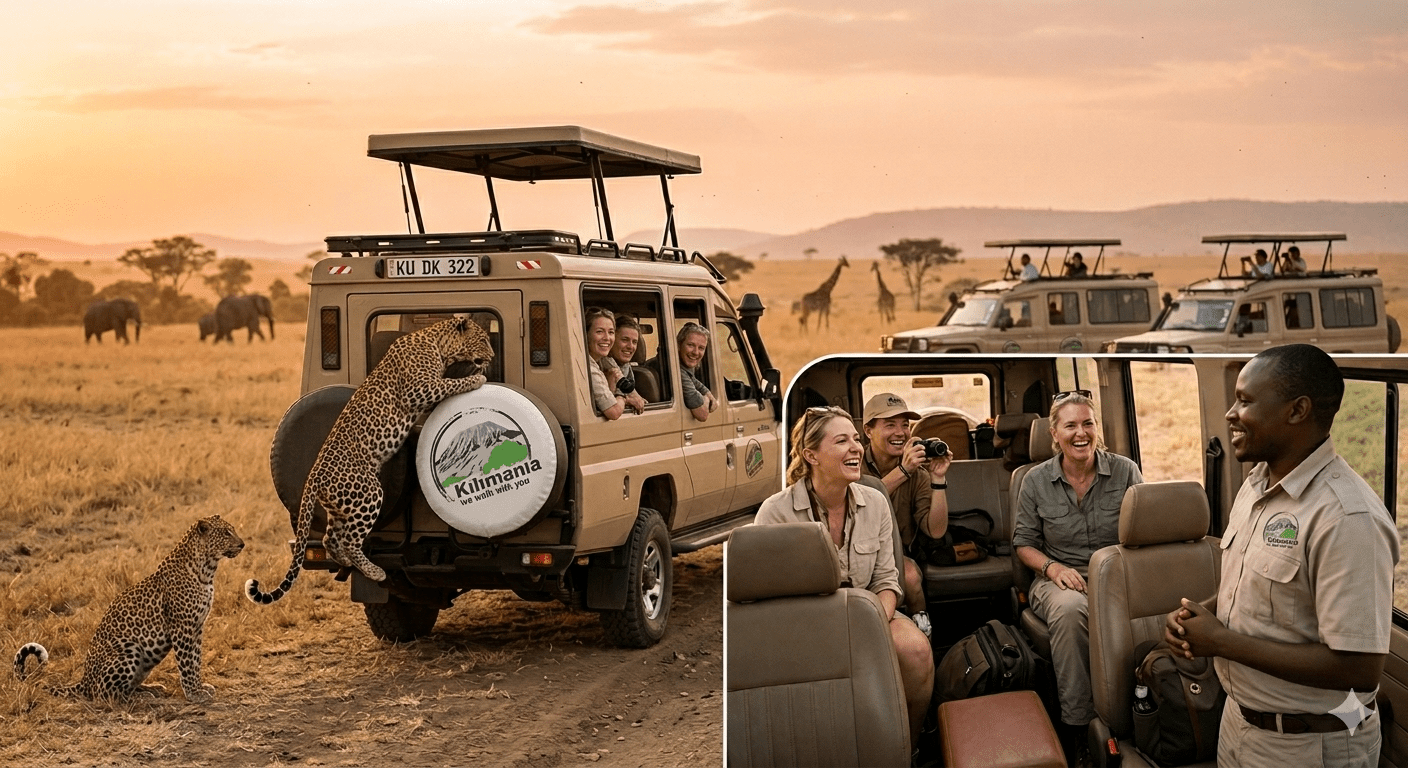
Best Time to See Big Cats in Tanzania for Predator Action
This guide explains the seasonal shifts that drive predator behavior across the Serengeti, Ngorongoro Crater, and Tarangire, so you can book the right month for real predator action — not just a chance of sleeping lions in the shade.
It is written for first-time safari travelers and private groups planning a 2026 trip who want honest, specific information rather than vague seasonal summaries.
As a Moshi-based team, we have tracked resident lion prides in the Ngorongoro Crater for over a decade and followed Serengeti populations as they shift with the herds. One thing our guides agree on: timing is the single decision that separates a spectacular predator safari from an ordinary game drive.
Quick Safari Summary of Best Time to See Big Cats in Tanzania
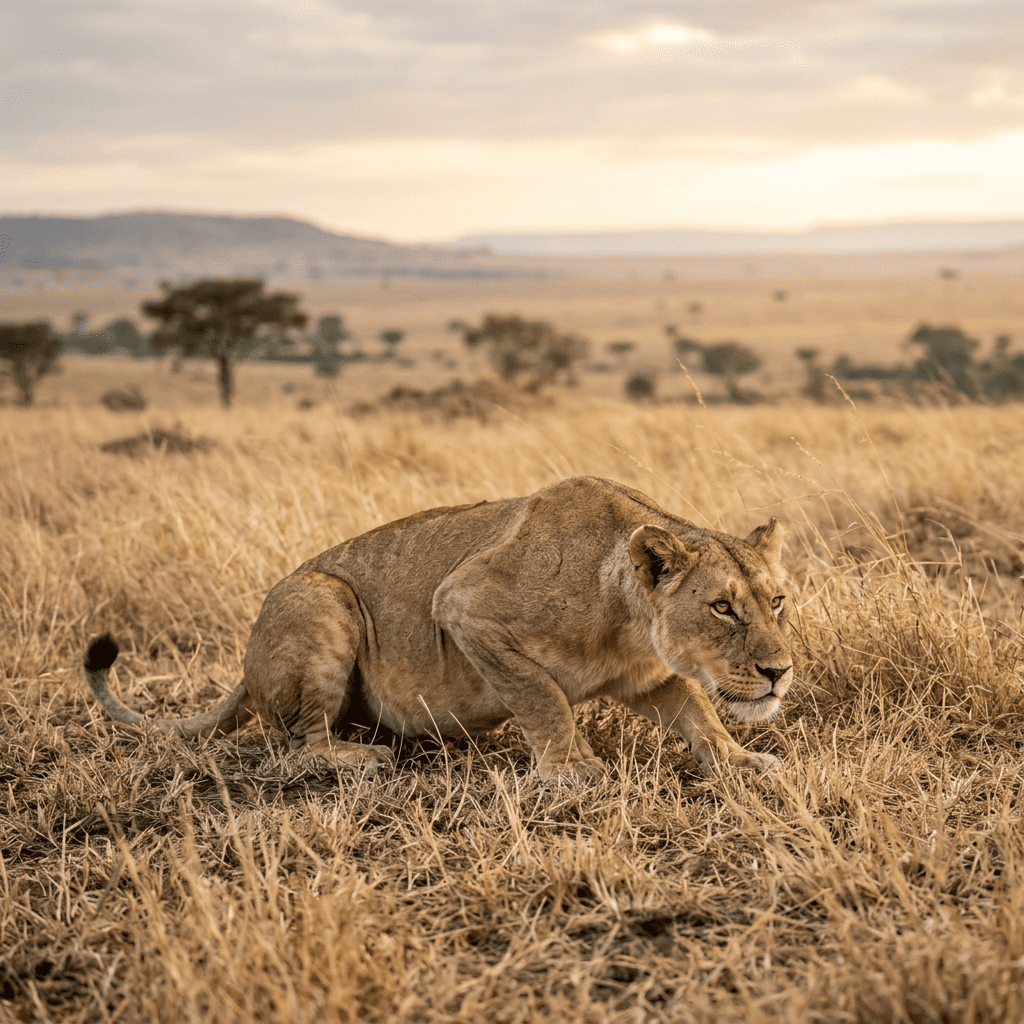
- Best overall months: January–March
- Best for action: Ndutu calving season
- Best for leopards: August–October
When to See Lions in Serengeti National Park
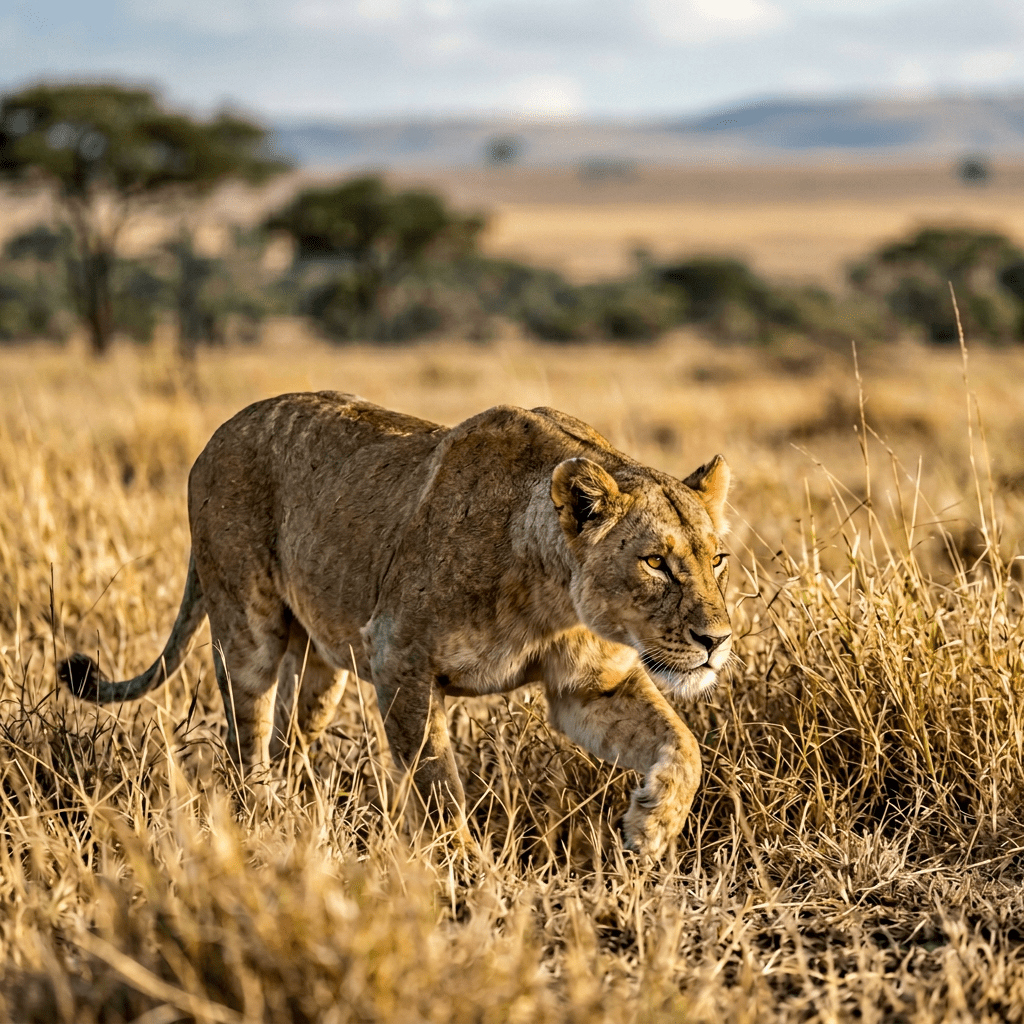
Lions are resident year-round in the Serengeti. According to the Tanzania National Parks Authority (TANAPA), the Serengeti supports approximately 3,000 lions — the largest population in Africa. But year-round presence does not mean year-round visibility. The Serengeti National Park is recognized as a UNESCO World Heritage Site, highlighting its global importance as one of the most significant wildlife ecosystems on Earth. This status reflects not only the scale of the Great Migration but also the exceptional concentration of predators that make the Serengeti one of the most reliable places to observe big cats in their natural environment.
The dry season from June to October offers reliable sightings as vegetation thins. However, the most intense predator action happens from January to March in the Southern Serengeti and Ndutu plains. During these months, lions exploit the wildebeest calving with hunts occurring multiple times a day — behaviour our guides rarely see outside this window. The Best Time to See Big Cats in Tanzania
If you travel outside the calving season, focus on the Seronera Valley in the central Serengeti. Permanent water sources attract prey year-round, and the resident prides here are among the most habituated on the continent. This is precisely what our Ndutu calving season itinerary focuses on—positioning you in the right place when predator activity is at its peak.
For travelers researching when to visit Serengeti safari areas for lion sightings, the Southern Serengeti during calving season consistently delivers the highest level of predator activity.
Practical note: We follow TANAPA’s 25-meter minimum distance protocol during all predator sightings. This protects the natural behavior you came to watch — and it produces more authentic photographs than vehicles that crowd the action during the best time to see big cats in Tanzania
Lion Safari Quick Facts:
- Best months: January to March (Ndutu calving season)
- Best location: Southern Serengeti (Ndutu plains)
- Best time of day: Early morning (6:00–9:00 AM)
- Sightings level: Very high during calving season
Best Time for Cheetah Safari in Tanzania
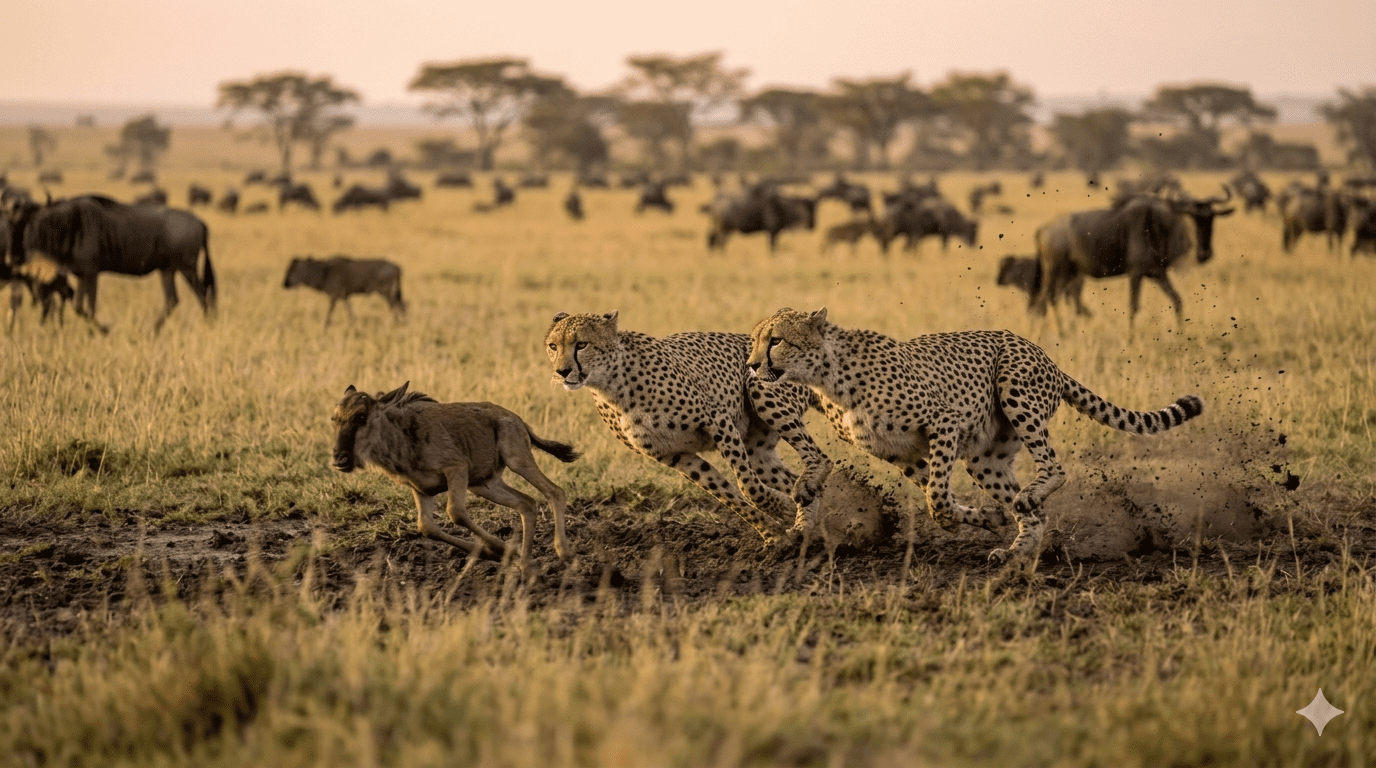
Cheetahs depend on flat, open terrain to use their speed. This makes location as important as season.
The Ndutu plains and Southern Serengeti deliver ideal conditions from December to March are the best time to see big cats in Tanzania. Short-grass plains allow full-speed chases over distances of 400 to 500 meters with clear sightlines from the vehicle. Cheetahs also hunt by day — unlike lions and leopards — making them a photographer’s priority.
If you visit in June or July, the Central Serengeti grass can reach one meter in height. At that level, a crouching cheetah is effectively invisible until it moves. Sightings become largely a matter of luck rather than guiding skill.
Our guides often pair a ground-level game drive in Ndutu with an optional balloon perspective — aerial views reveal cheetahs and their prey in ways no vehicle can match. See our Tanzania Big Cats and Balloon Safari for combined itinerary options.
Understanding Serengeti predator safari timing is especially important for cheetahs, as their visibility depends heavily on grass height and open terrain.
Cheetah Safari Quick Facts: Best Time to See Big Cats in Tanzania
- Best months: December to March
- Best location: Ndutu and Southern Serengeti plains
- Best time of day: Daytime (active hunters)
- Sightings level: High in short-grass conditions
For travelers looking for a private Tanzania safari experience, this season offers the best balance of visibility and action on open plains.
The Hunt for Leopards: A Different Strategy
Leopards require a different approach than the other two cats. They are solitary, largely nocturnal, and deliberately difficult to find.
The best window for leopard sightings in Tanzania is August to October. As the dry season peaks, trees like the yellow-fever acacia lose foliage — making it far easier to spot a leopard draped over a branch eight meters above the ground. Vegetation that hides them in January becomes their most reliable reveal point in September.
Target these specific corridors:
- Seronera River Valley — the most consistent leopard territory in the Serengeti; riverine trees provide permanent resting spots
- Ngorongoro Crater forest margin — dense but accessible; prides and leopards use different elevation bands
- Tarangire National Park — baobab woodlands and riverine zones regularly produce sightings on our Tanzania safaris, particularly at dusk
Experienced guides track individual leopard territories over the years. When booking, ask specifically whether your guide knows named individuals in these corridors. A guide who can say “there is a female with two cubs using the fig trees near the third crossing” is a fundamentally different resource than one who is scanning randomly.
If your goal is to plan the best time to see big cats in Tanzania, specifically for leopards, the dry months from August to October provide the most reliable viewing conditions.
Our tailored Tanzania safari routes focus on riverine areas where leopard sightings are most consistent during the dry season.
Leopard Safari Quick Facts:
- Best months: August to October
- Best location: Seronera River Valley and Tarangire
- Best time of day: early morning and late afternoon
- Sightings level: Moderate to high in dry season
Practical Comparison: Calving Season vs. Dry Season—Best Time to See Big Cats in Tanzania
This table helps you choose the right window based on your specific priorities.
| Feature | Calving Season (Jan–Mar) | Dry Season (Jun–Oct) |
|---|---|---|
| Primary location | Ndutu / South Serengeti | Central / North Serengeti |
| Predator behaviour | Active hunting, multiple daily | Territorial, resting, patrolling |
| Vegetation | Short grass, excellent sightlines | Tall grass in the center; short in the north |
| Photography conditions | Green landscapes, dramatic skies | Golden grass, dusty light |
| Leopard sightings | Moderate | High (Aug–Oct specifically) |
| Price per person | From $1,000 | From $1,350 |
| Advance booking needed | 6–9 months (camps fill early) | 3–4 months is typically sufficient |
Prices shown are per person for a 4-day private safari with mid-range lodging. Both seasons produce strong results — the calving season prioritizes lion and cheetah action; the dry season gives a broader and more predictable wildlife spread.
Choosing between these seasons depends on your priorities, but both represent the best safari season Tanzania offers for different types of wildlife experiences.
Tanzania big cats safari best time lions Ngorongoro Crater 2026
Common Mistakes Travelers Make When Planning a Predator Safari
Best Time to See Big Cats in Tanzania: The four planning errors our Moshi Kilimania team sees most often—and all of them are easy to avoid.
Targeting the wrong region for the season.
Booking Ndutu in July or the Central Serengeti in February sends you to the wrong ecosystem entirely. The herds move, the predators follow, and the regions that work in one season can be quiet in another. Match your dates to the location, not the other way around.
Expecting sightings to be guaranteed.
Wildlife has no schedule. Our guides will find predators on the vast majority of drives during peak season—but “high probability” is not certainty. Travelers who arrive expecting a guaranteed kill every morning often miss the quiet power of moments in between.
Booking a shared vehicle.
Shared vehicles run fixed routes on fixed schedules. A private 4×4 allows your guide to stay at a sighting for as long as the animal is active, to reposition for better light, and to take small detours based on radio reports from other guides in the network. For photography especially, this is not a luxury — it is the difference between a usable shot and a missed moment.
Skipping early morning drives.
Lions and cheetahs are most active in the cool hours between 6:00 AM and 9:00 AM. Travelers who sleep until 8:00 regularly miss the most productive window of the day. Our itineraries depart before sunrise.
Essential Gear for a Predator Safari During the Best Time to See Big Cats in Tanzania
600mm telephoto lens (or 400mm minimum): Required for capturing predator action without approaching close enough to disrupt natural behavior. Most travelers rent telephoto lenses in Arusha — we coordinate rentals and confirm quality before departure.
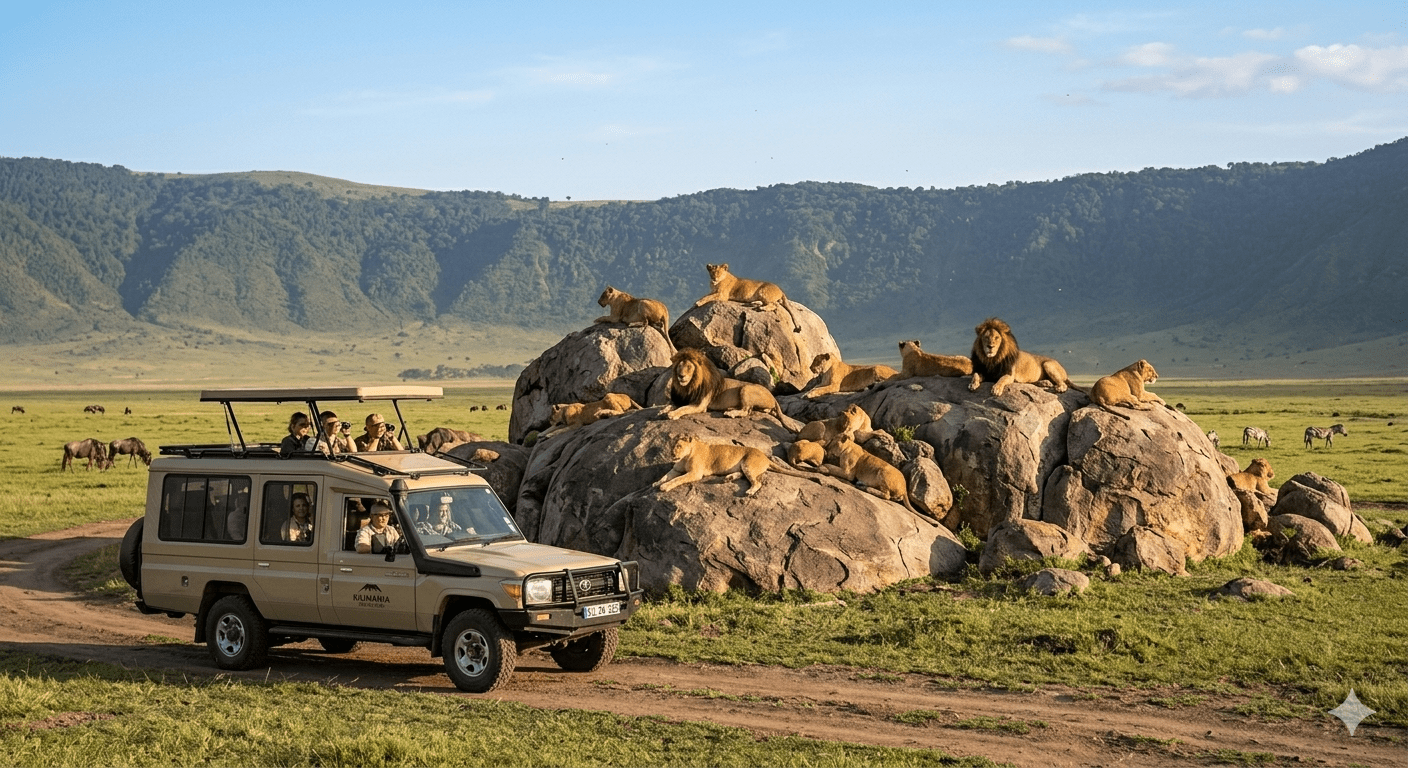
8×42 binoculars: Essential for scanning kopjes (rock outcroppings) where lions rest during midday heat and for spotting cheetah silhouettes on termite mounds at a distance.
Beanbag support: Better than any tripod for long lenses in a vehicle. We carry beanbags in all our 4×4s — rest the lens on the roof opening and let the vehicle absorb the vibration.
Neutral clothing — tan, khaki, olive: Avoid blue and black. Dark colors attract tsetse flies in the bush. Bright colors disturb animals at close range.
Layered kit: Ngorongoro Crater rim mornings drop to 10°C even in January. Ndutu afternoons reach 34°C. Both happen on Day 3 of our Big Cats itinerary. Pack for both.
Why Choose Kilimania for the Best Time to See Big Cats in Tanzania?
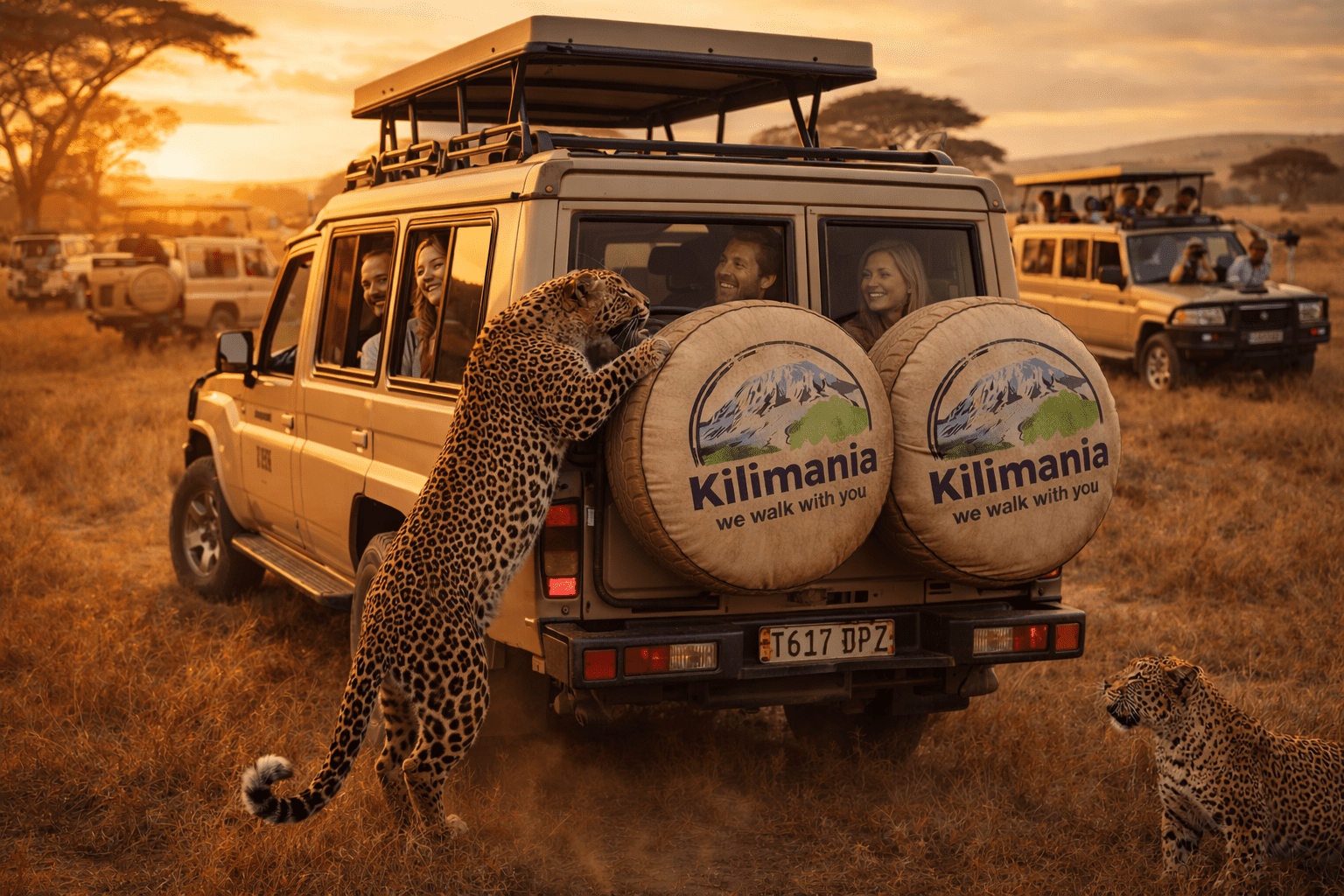
Planning the right safari is not just about choosing a destination — it’s about choosing the appropriate team on the ground. At Kilimania Adventure, we focus on delivering real wildlife experiences based on local knowledge, ethical guiding, and practical planning.
Local Moshi-based guides
Our team is based in Moshi, close to the northern safari circuit. We track wildlife patterns throughout the year and adjust routes based on real-time conditions in Serengeti National Park and surrounding ecosystems — not fixed itineraries for the best time to see big cats in Tanzania
Over 10 years of field experience
Our guides have spent more than a decade working in Serengeti, Ngorongoro Crater, and Tarangire National Park. This experience allows them to anticipate predator movement, identify active territories, and position vehicles for the best sightings.
Best Time to See Big Cats in Tanzania 4×4 Safari Vehicles
Every safari is conducted in a private 4×4 Land Cruiser. This gives you:
- Flexible game drive timing
- Better positioning for photography
- More time at active sightings
You are not restricted by group schedules or shared routes.
Best Time to See Big Cats in Tanzania: Wildlife Viewing Standards
We strictly follow guidelines from the Tanzania National Parks Authority, including maintaining safe viewing distances. This protects animal behavior and ensures a more natural safari experience — especially during hunts.
Tailored itineraries based on the season
No two safaris are the same. We design each itinerary based on:
- Migration location
- Grass conditions
- Your travel dates
This is why a February safari focuses on Ndutu, while an August trip shifts toward central Serengeti and river corridors.
Ready to plan your predator safari?
Explore our 4-day Serengeti predator safari and contact our team to secure your 2026 dates — peak season camps fill quickly.
We Walk With You.
If the green season rains concern you, know that Ndutu stays accessible and delivers the most raw predator activity of the year — precisely because it is the window most casual visitors overlook.
Explore our Ndutu calving season safari itinerary to review the full itinerary and lock in your 2026 dates.
Kilimania Adventure — We Walk With You, from the planning conversation in Moshi to the moment a lioness locks eyes with a calf on the Ndutu plains.
Curious about the full Ndutu experience? Read about our private Tanzania safari experience to see exactly what each day involves — camp by camp, drive by drive.
FAQ: Best Time to See Big Cats in Tanzania
Q: What is the best month to see big cats in Tanzania?
February is the best month to see big cats in Tanzania. This is when wildebeest calving peaks in Ndutu, attracting lions and cheetahs hunting daily on open plains. January and March are also excellent, but February offers the highest concentration of predator activity.
Q: Can I see lions, leopards, and cheetahs in one safari?
Yes, you can see all three big cats in one safari, especially in the Serengeti and Ngorongoro Crater. A well-planned 4-day itinerary combining Ndutu and central Serengeti gives the highest chances, although wildlife sightings are never guaranteed.
See how this works in our 4-Day Big Cats Safari itinerary.
Q: What time of day are big cats most active on safari?
Big cats are most active early in the morning around 6:00 AM and late afternoon after 4:30 PM. Cooler temperatures trigger hunting behavior, while midday heat pushes predators into shade, reducing activity but improving photography conditions.
Q: Do I need a private vehicle for a Tanzania safari?
Yes, a private 4×4 vehicle is recommended for the best safari experience. It allows flexible timing, better positioning for wildlife viewing, and more time at sightings — especially important for photography and tracking predators.
Q: Where is the best place to see big cats in Tanzania?
The best locations are Serengeti National Park and the Ndutu plains during calving season and the Seronera Valley year-round. Tarangire National Park and Ngorongoro also offer strong lion and leopard sightings.
Q: Is Ndutu accessible during the rainy (green) season?
Yes, Ndutu remains accessible from January to March during the green season. The short-grass plains drain quickly, and this period actually offers the best predator action due to the wildebeest calving season.
Conclusion
Best Time to See Big Cats in Tanzania Year-Round—but grass height, migration position, and seasonal rainfall determine how much you actually see. If you are planning a 2026 trip and want predator action rather than just predator presence, the Ndutu calving season from December to March offers the highest-probability window for lions and cheetahs. For leopards, hold August to October as your target.
Ultimately, understanding the best time to see big cats in Tanzania for wildlife allows you to match your travel dates with the right ecosystem, increasing your chances of seeing real predator action rather than just wildlife presence.
Our guests consistently rate their experience highly, with strong reviews from recent travelers who joined our Serengeti safaris. On our Google Business Profile to see recent guest experiences.
We Walk With You.