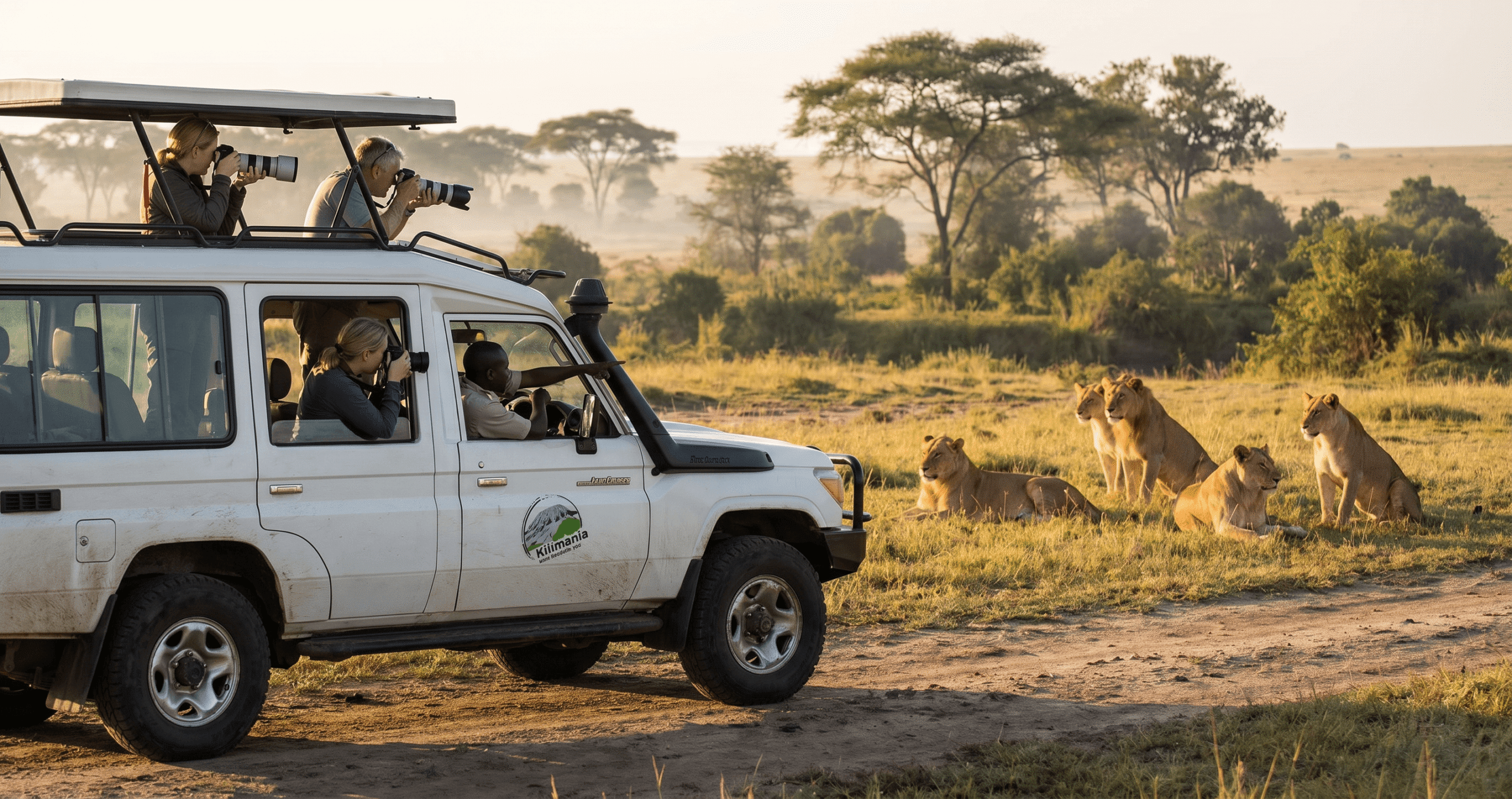
Most travellers planning a Tanzania safari face the same question: is a 5-day Serengeti Big Five safari enough, or is a 7-day itinerary worth the extra cost?
5-day safari gives most first-time visitors an excellent chance of seeing lion, elephant, buffalo, leopard, and black rhino while keeping costs under control. A 7-day safari adds more time in Serengeti, increases wildlife viewing opportunities, improves black rhino sighting odds in Ngorongoro Crater, and creates a more relaxed pace between parks.
In this guide, you’ll compare real 2026 costs, daily itineraries, wildlife expectations, park fees, accommodation options, and the practical differences between 5-day and 7-day Serengeti Big Five safaris so you can choose the right trip for your budget and travel goals.
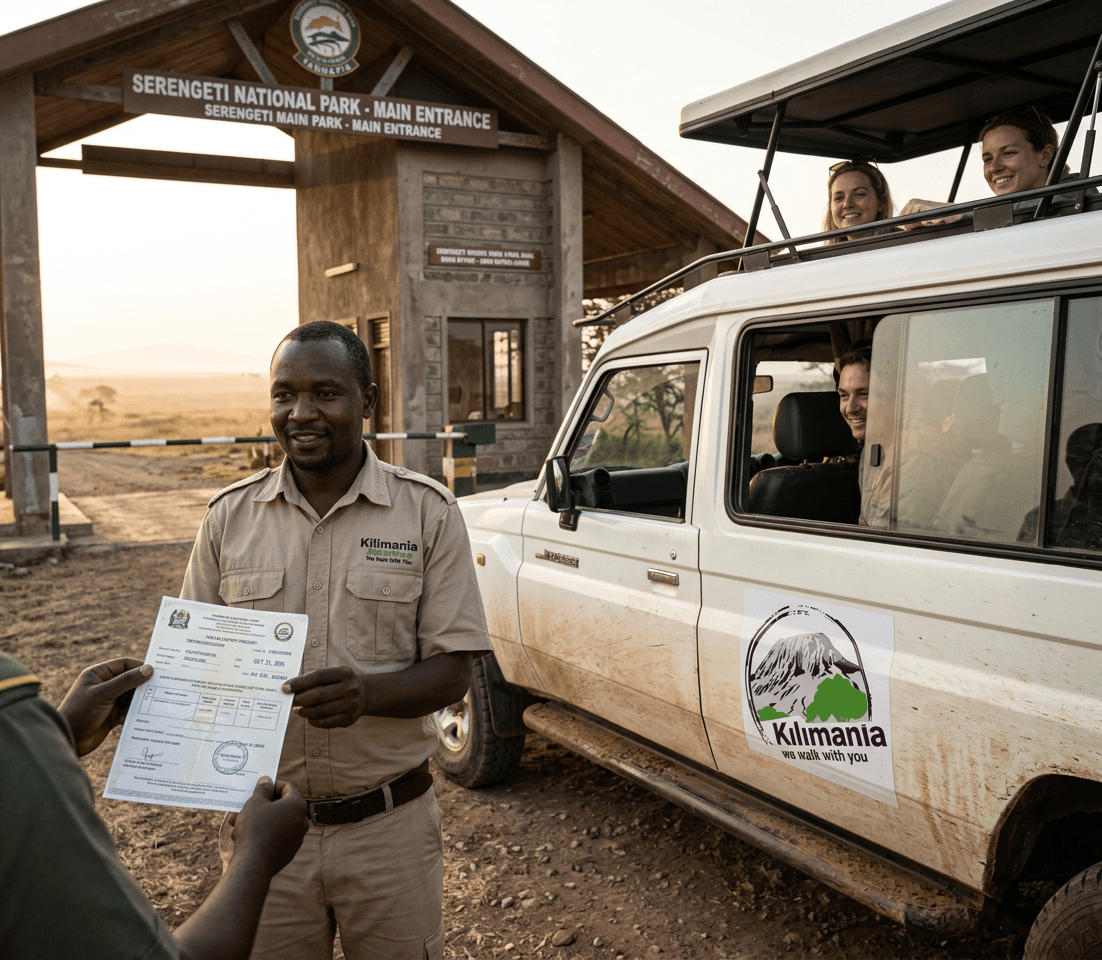
Park fees, visa costs, and conservation area charges are set by government authorities and can change without advance notice. All figures reflect published May 2026 rates. Verify current fees at tanzaniaparks.go.tz before booking. Request a gate receipt during your safari to confirm your operator paid the correct published amount.
A legitimate 5-day Serengeti Big Five safari costs $1,800–$2,300 per person for budget camping in 2026. A 7-day itinerary runs $2,300–$3,000 per person on the same tier. Mid-range tented camps add $1,500–$2,000 above those figures. The cost floor before operator margin is $1,445 per person for 5 days — any quote far below that number is missing a major cost item.
See our full 7-day Tanzania Northern Circuit Big Five safari itinerary with itemised pricing.
Key Stats
- $82.60 — Serengeti National Park adult entry fee per 24 hours (TANAPA 2026)
- $71.00 — Ngorongoro Conservation Area adult entry per 24 hours (NCAA 2026)
- $295.00 — Ngorongoro Crater descent fee per vehicle (not per person)
- $1,445 — Minimum cost floor per person for a legitimate 5-day safari before operator margin
- 70% — Estimated black rhino sighting probability with two Ngorongoro Crater mornings
- 45% — Estimated black rhino sighting probability with one Ngorongoro Crater morning
For a legitimate 5-day Serengeti Big Five safari in 2026, the honest price floor is $1,445 per person before operator margin. Budget camping quotes below $1,500 for 5 days are mathematically impossible with park fees included. Any quote that low excludes crater descent, hides park fees, or routes you through parks that do not deliver Big Five coverage.
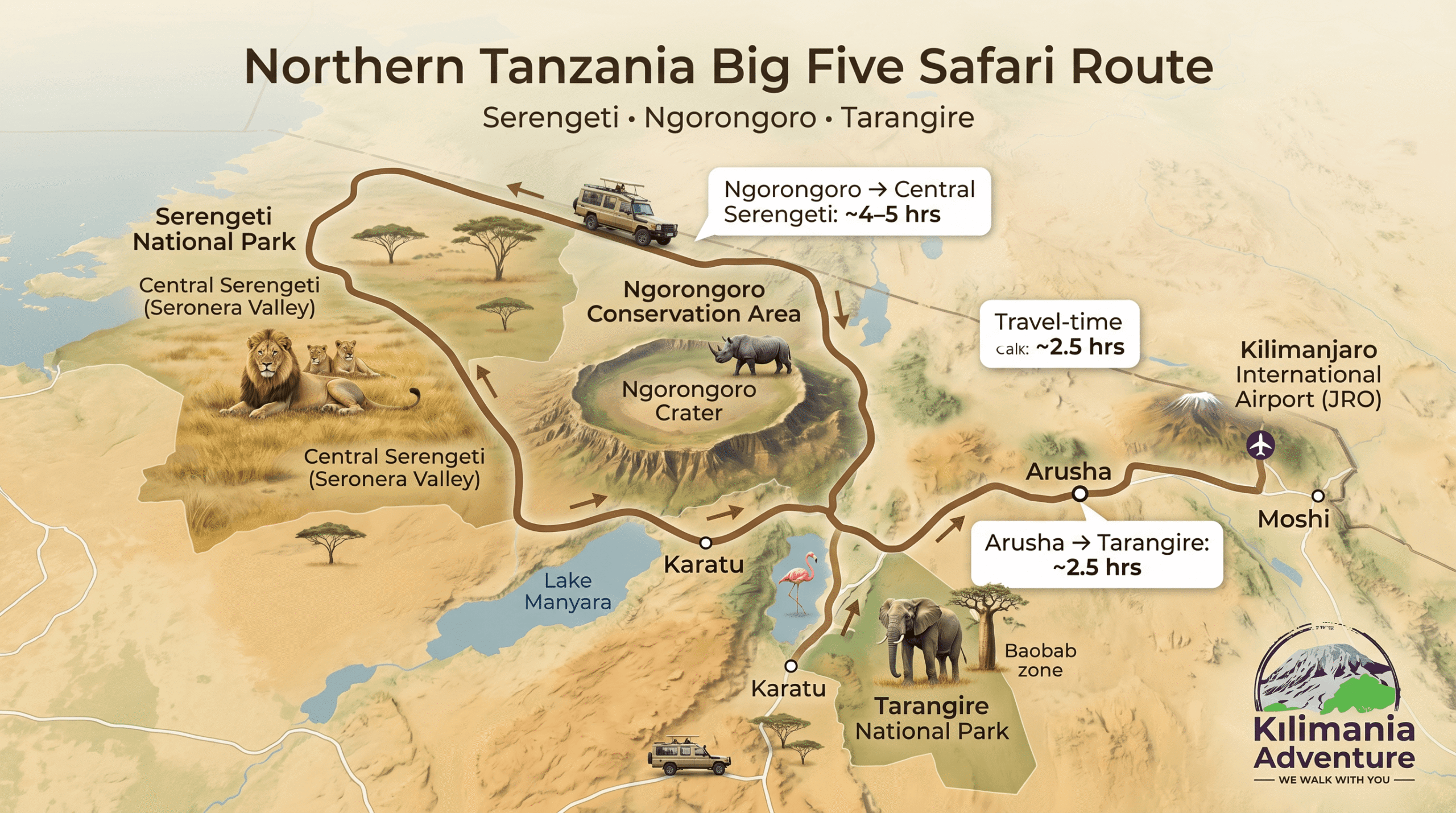
A 5-day Serengeti Big Five safari costs $1,800–$2,300 per person for budget camping in 2026, booked as a shared vehicle with three to five other travellers. A 7-day itinerary on the same tier runs $2,300–$3,000 per person. The three biggest cost drivers — park fees set by TANAPA, the $295 per-vehicle Ngorongoro Crater descent fee set by NCAA, and whether your vehicle is shared or private — account for roughly 55–65% of the total safari price before accommodation.
This guide covers real 2026 operating costs, the route logic behind every serious Big Five itinerary, and exactly what to look for in a quote before you send a deposit.
Most first-time travellers underestimate how much of a Tanzania safari price is controlled by government fees rather than accommodation. In 2026, park fees, crater charges, VAT, fuel, and vehicle costs account for most of the total before operator margin is added.
This guide breaks down where the money actually goes, what changes the price between 5-day and 7-day safaris, and how to avoid quotes that hide major costs until arrival in Tanzania.
According to the Tanzania Tourism Board, Tanzania welcomed over 1.9 million international visitors in 2024, with demand for Northern Circuit safaris growing 12% year on year.
How Much Does a Serengeti Big Five Safari Cost in 2026?
A legitimate 5-day budget camping safari costs $1,800–$2,300 per person in 2026. Mid-range tented camps run $3,200–$4,200 per person. Luxury lodges start at $5,500 per person. The cost driver is not the accommodation tier — it is park fees, crater descent, and vehicle-sharing economics. A better bed does not improve wildlife viewing. Better route planning does.
The table below covers a standard 5-day Northern Circuit Big Five itinerary: Tarangire, Serengeti, and Ngorongoro Crater.
5-Day Serengeti Big Five Safari Cost by Tier
| Safari Tier | 5-Day Cost Per Person | 7-Day Cost Per Person | Accommodation | Vehicle | Recommended For |
|---|---|---|---|---|---|
| Budget Camping | $1,800 – $2,300 | $2,300 – $3,000 | Public campsites (Seronera, Simba) | Shared Land Cruiser, 4–6 travelers | First-time visitors, solo travelers on group departures, budget-focused couples |
| Mid-Range Tented Camp | $3,200 – $4,200 | $4,500 – $6,000 | En-suite tented camps or safari lodges | Shared or private depending on booking | Couples, families, comfort-focused travelers who want hot showers and better bedding |
| Luxury Lodge | From $5,500 | From $8,000 | Premium lodges or mobile fly camps | Private vehicle with dedicated guide | Honeymooners, photographers, travelers celebrating a significant occasion |
One reality surprises many travellers: changing accommodation tier does not change the wildlife. The parks are the same. The game-drive roads are the same. Budget camping and luxury lodge guests enter the same Seronera Valley gates at the same time each morning.
The range within each tier is driven by three variables:
- Group size — costs drop from 1 traveller to 4 travellers because fixed costs are shared across more passengers
- Season — July to September adds $200–$600 per person versus April prices
- Private versus shared vehicle — the single biggest pricing lever inside any tier
Travellers comparing itinerary length should also read our detailed breakdown of:
- Serengeti Big Five safari itineraries
- Serengeti safari cost guide with hidden fee analysis
- Complete Serengeti National Park safari guide
What Are the Fixed Park Fees Every Legitimate Operator Must Charge?
For a standard 5-day Big Five route, government park fees total $401.40 per adult before the $295 per-vehicle Ngorongoro Crater descent fee, before VAT, and before any accommodation or vehicle costs. These figures are non-negotiable. Every operator pays them at the gate. No discount exists. No operator can undercut them legally.
Park Fee Breakdown — 5-Day Northern Circuit
| Park | Days | Fee Per Adult | Subtotal |
|---|---|---|---|
| Serengeti National Park | 3 | $82.60/day | $247.80 |
| Tarangire National Park | 1 | $82.60/day | $82.60 |
| Ngorongoro Conservation Area | 1 | $71.00/day | $71.00 |
| Government Fees Subtotal | — | — | $401.40 |
| Ngorongoro Crater Descent | Per Vehicle | $295.00 | Shared by Passengers |
| Tanzania VAT | 18% | On Safari Services | Added to Operator Costs |
Verify current fees at tanzaniaparks.go.tz and ncaa.go.tz.
The Crater Descent Fee — The Most Misquoted Number in Tanzania Safari
The Ngorongoro Crater descent fee is $295 per vehicle, charged by the NCAA. It is not per person.
On a 4-person shared vehicle, each traveler’s share is $73.75. On a 2-person private vehicle, each person carries $147.50.
If a quote shows the crater descent as a per-person charge — for example, “$75 per person” — with no explanation, ask the operator to show the fee structure in writing before proceeding. The $295 vehicle fee divided by 4 passengers produces $73.75. That is fine. But “$75 per person” on a 2-person private safari is mathematically short by $148. That shortfall is collected from you at the crater rim, in cash, where turning back is impractical.
Why Tanzania Safaris Cost More Than Many Travellers Expect
The biggest misconception about Tanzania safaris is that operators freely set prices. In reality, a large portion of every safari budget is controlled by fixed government conservation fees.
For example:
- Serengeti entry fees are charged per adult per 24 hours
- Ngorongoro Crater descent fees are charged per vehicle
- VAT applies to most safari services
- Fuel consumption increases significantly on long Serengeti routes
- Remote park logistics increase food and supply transport costs
This is why two safaris with similar wildlife routes often have surprisingly similar pricing even when booked through different operators.
The Cost Floor — What the Math Looks Like for One Traveller
For one traveler on a shared 5-day safari with four passengers in the vehicle:
- Serengeti park fees (3 days): $247.80
- Tarangire park fee (1 day): $82.60
- Ngorongoro Conservation Area (1 day): $71.00
- Crater descent share (4 passengers): $73.75
- Fixed government charges total: $475.15 per person
Add basic camping ($35/night × 4 nights), meals, fuel, guide wages, and 18% VAT — the total floor lands at approximately $1,445 per person before operator margin.
Any 5-day Big Five quote far below $1,500 per person is missing a cost item. That item will appear later.
What Does Budget Camping on a Big Five Safari Actually Include?
Budget camping means public campsites, a shared Land Cruiser with a pop-up roof, and meals cooked by a safari cook at camp. You sleep on a foam mattress in a dome tent. You use shared bathroom blocks. The parks, the game-drive roads, and the wildlife are identical to what mid-range and luxury travelers experience. Budget camping changes where you sleep — not what you see.
Budget travelers and luxury lodge guests enter Seronera Valley through the same gate at the same hour. They drive the same roads. They watch the same lion pride from the same safe viewing distance.
What a Budget Camping Safari Includes
- Serengeti National Park, Tarangire National Park, and Ngorongoro Crater access
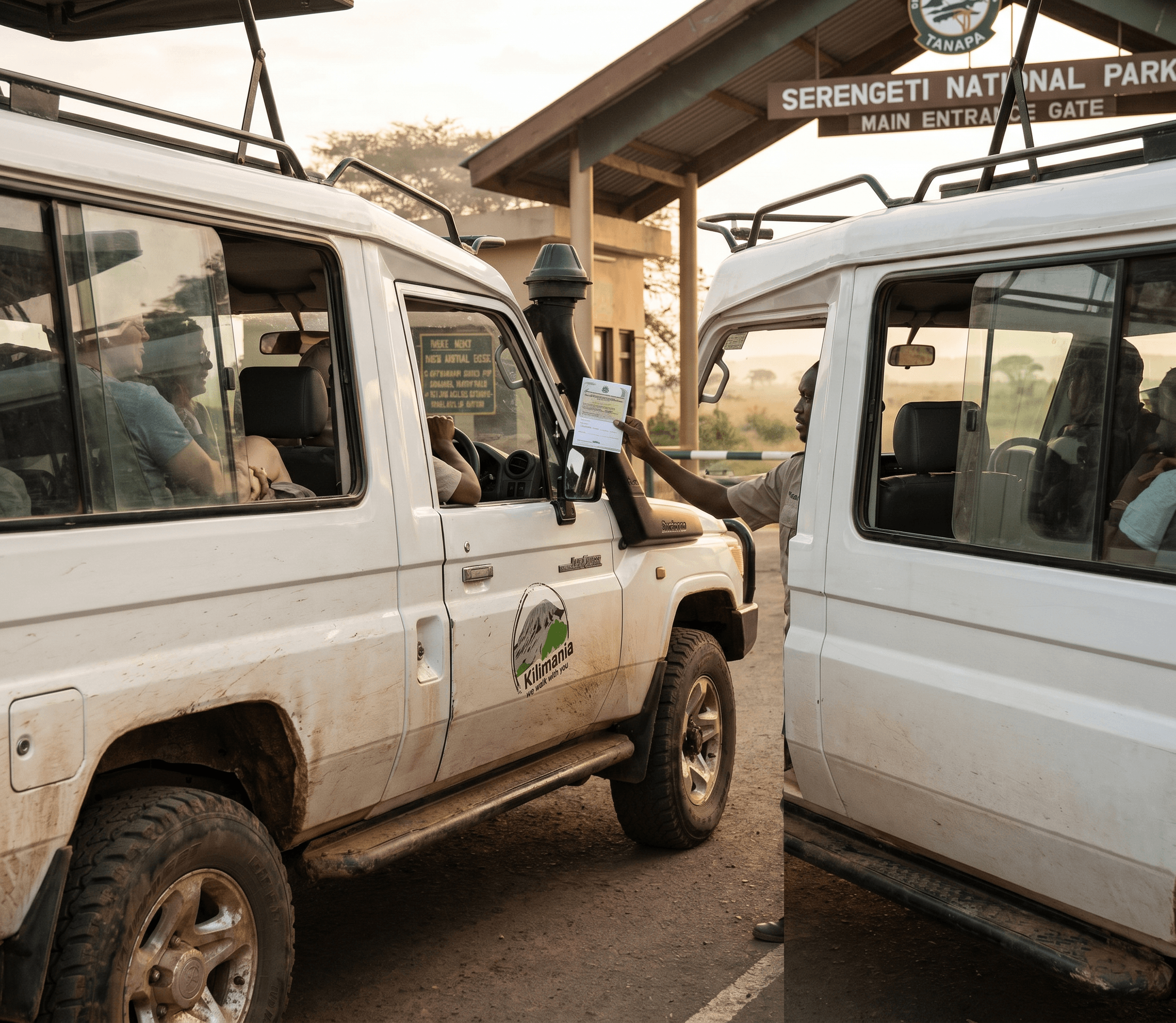
- TANAPA and NCAA park fees are paid and receipted at each gate
- Public campsite accommodation (Seronera, Simba, Ndutu-area depending on route)
- All meals prepared by safari cook — breakfast, packed lunch, dinner
- Shared Land Cruiser 4×4 with pop-up roof and USB charging points
- KINAPA-licensed guide or TATO-affiliated driver-guide
- Drinking water throughout
- 18% VAT is included in the total price
What Is Not Included at Any Tier
- International flights to Kilimanjaro International Airport (JRO)
- Tanzania e-visa ($50 for most nationalities, $100 for US citizens)
- Travel insurance — including emergency air evacuation coverage
- Tips for guide, cook, and camp staff
- Alcoholic drinks outside all-inclusive luxury packages
- Personal spending and souvenirs
- Hotel nights before and after safari in Moshi or Arusha
Kanti Kessy, senior driver-guide with 17 years on the Northern Circuit: “The traveller who sleeps in a tent sees the same leopard I showed the guests from the lodge next door. The difference is the hot shower and the wine list.”
Tanzania Safari & Kilimanjaro Experts, WhatsApp: +255 756 449 990, Email: info@kilimania.co.tz
Is a 5-Day or 7-Day Safari Better for Seeing the Big Five?
Short answer: A well-built 5-day itinerary through Tarangire, Serengeti, and Ngorongoro Crater gives you a realistic shot at all five species. Seven days raise your black rhino probability from roughly 45% to roughly 70% and add two additional Serengeti mornings for leopard. For most first-time travellers, 5 days is the right starting point. If rhino is a specific priority, 7 days delivers measurably better odds.
What a Strong 5-Day Big Five Route Looks Like
| Day | Location | Key Species Focus |
|---|---|---|
| Day 1 | Tarangire National Park | African bush elephant (Loxodonta africana), lion, leopard |
| Day 2 | Transfer to Serengeti — afternoon Seronera game drive | Lion (Panthera leo), cheetah, African wild dog |
| Day 3 | Full Serengeti game drive — Seronera Valley | Leopard (Panthera pardus), lion, buffalo (Syncerus caffer) |
| Day 4 | Ngorongoro Crater descent — morning game drive | Black rhino (Diceros bicornis), lion, elephant |
| Day 5 | Return to Arusha, Moshi, or JRO | — |
What 7 Days Adds That 5 Days Cannot
A 7-day itinerary adds:
- Two additional full Serengeti mornings — typically one in Seronera Valley and one in a seasonal zone (Kogatende in July–October, Ndutu plains in January–March)
- A second Ngorongoro session — which doubles your rhino probability from 45% to roughly 70%
- Less road pressure — you spend fewer hours driving between gates and more hours watching animals
Wildlife Probability by Day Count
Black rhino (Diceros bicornis) — Ngorongoro Crater floor:
- One crater morning: approximately 45% sighting probability
- Two crater mornings: approximately 70% sighting probability
Leopard (Panthera pardus) — Seronera Valley:
- One Seronera morning: approximately 40% probability
- Two Seronera mornings: approximately 65% probability
These are field estimates from daily game-drive records — not guarantees. Wild animal sightings are never guaranteed by any operator. An operator selling “guaranteed rhino sightings” for an extra fee should be dismissed immediately.
The Guide’s Field Perspective on Morning Hours
In Seronera, leopard sightings are most consistent in the first 60 minutes after sunrise. That is when cats are still moving, before heat pushes them into acacia shade, where they become static and hard to locate. By 8:15 AM, active leopard movement has typically ended for the day.
In Ngorongoro Crater, black rhinos move across the open volcanic grassland floor in the early morning. The viewing window is not long. A second morning gives you a second shot at that window. That is the entire logic behind recommending 7 days for rhino-focused travellers.
Choose 5 days if:
- It is your first Tanzania safari
- You want a complete Big Five route without extending your budget
- One serious rhino attempt is acceptable to you
Choose 7 days if:
- The black rhino is a specific priority
- You want more leopard time in Seronera or a seasonal northern zone
- You are travelling a long distance and want stronger species odds overall
- You prefer a less rushed pace between parks
How Does Group Size Change the Cost Per Person?
| Group Size | Estimated 5-Day Cost Per Person | Crater Descent Share | Notes |
|---|---|---|---|
| 1 Traveler (Private Vehicle) | $2,500 – $3,000 | $295.00 (full vehicle fee) | Solo traveler carries all fixed vehicle costs alone |
| 2 Travelers (Shared or Private) | $2,100 – $2,500 | $147.50 each | Significant saving over solo — couple rate applies |
| 4 Travelers (Shared Vehicle) | $1,800 – $2,100 | $73.75 each | Optimal group size — most monthly departures target 4 passengers |
| 6 Travelers (Full Shared Vehicle) | $1,650 – $1,950 | $49.17 each | Lowest per-person cost — less flexibility for individual route adjustments |
Monthly Group Departures for Solo Travelers
Solo travelers do not have to pay for empty seats. Kilimania Adventure runs a monthly group departure calendar from Moshi. Solo travellers join a shared vehicle with 3–5 other travellers and pay the same per-person rate as a couple on the same departure.
Priya S., Canada, January 2026: “I was nervous sharing a vehicle with strangers for 7 days. By day 4 we were finishing each other’s sentences about lion behavior. Fifteen years of solo travel — these are the best connections I’ve made.” [Verified TripAdvisor]
Marcus T., USA, March 2026: “The solo supplement was the only thing stopping me from booking. The group departure was the right call — same cost as a couple would pay and better company than I’d have had alone.” [Verified Google Reviews]
What Is the Most Cost-Effective Time to Book a Tanzania Safari?
June and November deliver the strongest balance of cost and wildlife quality for a Serengeti Big Five safari. June opens the dry season before peak-season prices arrive in July. November gives you green-season wildlife viewing with fewer vehicles and prices 10–20% below July–September levels. April and May are the lowest-cost months but wetter roads reduce game-drive efficiency.
| Month | Typical 5-Day Budget Cost | Wildlife Conditions | Road Quality |
|---|---|---|---|
| January–March | $1,800–$2,200 | Strong — calving season in Ndutu; excellent predator action | Good to soft in late March |
| April–May | $1,500–$1,900 | Good — animals present, long grass, cats harder to spot | Wet — some tracks impassable |
| June | $1,700–$2,000 | Very good — dry season begins, short vegetation, strong visibility | Dry and good |
| July–September | $2,000–$2,800 | Excellent — peak dry season, river crossings possible in Kogatende | Excellent — firm tracks |
| October | $1,800–$2,200 | Good — short rains begin, green scenery, solid big cat sightings | Good with occasional soft patches |
| November–December | $1,600–$2,200 | Good — green season, fewer vehicles, calving builds in southern Serengeti | Good to soft by late December |
The Field Reality of Wet Season Safaris
In April and May, Tanzania’s long rains fall across the Serengeti and Ngorongoro Conservation Area. Animals do not disappear. Lions, buffalo, and elephants remain very realistic. What changes:
- Grass grows long — cheetahs and leopards are harder to spot in thick vegetation
- Some tracks become impassable — experienced guides route around problem areas, but drive times increase
- Photography conditions differ — vivid green scenery but shorter visibility lines
If budget is your primary constraint, April and May are legitimate choices. If the black rhino is the priority, dry-season months from June to October give the cleanest Ngorongoro Crater floor visibility.
Tanzania Safari & Kilimanjaro Experts, WhatsApp: +255 756 449 990, Email: info@kilimania.co.tz
Why June Is the Guide’s Recommended Value Month
In June, dry-season conditions have started, but peak-season pricing has not fully arrived. Vegetation is short enough for excellent sighting lines. Vehicle density at popular Seronera sighting points is 30–40% lower than in August. The Ngorongoro Crater floor is bright and open — rhino movement is visible from longer distances.
From our base in Moshi, June departures consistently record the highest sighting rates per game-drive hour for lion, elephant, and buffalo across the Northern Circuit.
Emma v.d.B., Netherlands, March 2026: “Honest warning: July nights at Ngorongoro rim are freezing. Bring thermal underwear. But we saw a leopard kill at 6 AM because we were already at the gate.” [Verified TripAdvisor]
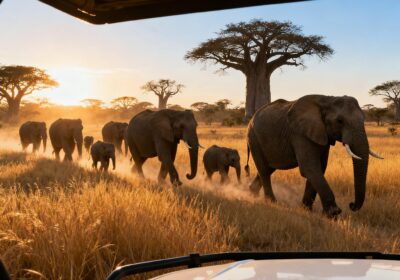
[IMAGE: Open Land Cruiser on dry Serengeti plains in June. Two African bush elephants are visible 80 metres ahead on short golden grass. Late afternoon western light. Central Serengeti near the Seronera River. No other vehicles visible. ALT: Tanzania safari June dry season Serengeti elephant viewing Central Serengeti 2026 File: tanzania-safari-june-dry-season-serengeti-elephant-central-serengeti-2026.webp]
What Route Gives You the Strongest Big Five Results?
The Northern Circuit route — Tarangire, Serengeti (Seronera), and Ngorongoro Crater — is the most efficient 5-day Big Five itinerary in Tanzania. It covers each species in its strongest habitat: Tarangire for elephant and buffalo, Seronera for lion and leopard, and Ngorongoro for black rhino. No other 5-day route in Northern Tanzania produces comparable Big Five coverage.
Species by Habitat — Why This Route Works
Tarangire National Park — Elephant and Buffalo
Tarangire holds one of the highest African bush elephant (Loxodonta africana) densities in Northern Tanzania, particularly around the Tarangire River during July–October. Buffalo herds of 200–400 animals are common in the dry season. Lions are present but less reliable here than in the Serengeti. Most 5-day itineraries allocate one day in Tarangire as the elephant-and-buffalo foundation before moving into Serengeti.
Explore the full Tarangire National Park safari guide for month-by-month species coverage.
Serengeti National Park — Lion, Leopard, and Cheetah
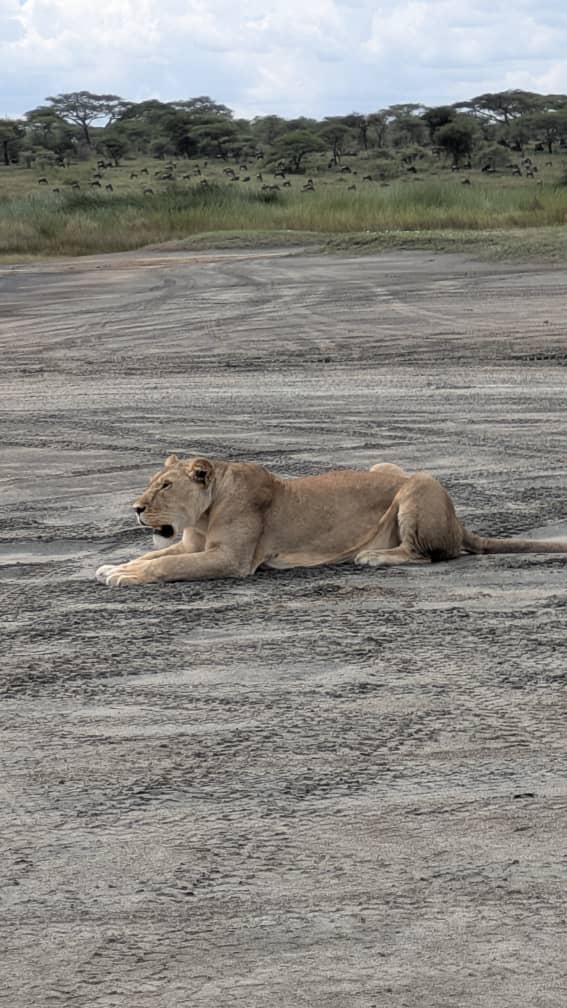
Seronera Valley in Central Serengeti holds the highest year-round predator density on the Northern Circuit. Lion (Panthera leo) prides, leopard (Panthera pardus) territories, and cheetah (Acinonyx jubatus) ranges overlap here. For a 3-day Serengeti allocation, your guide focuses the first morning in Seronera.
Leopard sightings are most consistent in the first 60 minutes after sunrise. By 8:15 AM, most active movement has ended.
In July–October, Kogatende in Northern Serengeti is the primary river-crossing zone for the Great Migration. A 7-day itinerary can cover both Seronera and Kogatende.
Read the full Serengeti National Park safari guide for zone-by-zone wildlife detail.
Ngorongoro Crater — Black Rhino
The Ngorongoro Conservation Area, managed by the NCAA and listed as a UNESCO World Heritage Site, is the only location on the Northern Circuit where black rhino (Diceros bicornis) sightings are realistic for a standard itinerary traveller. The crater floor holds approximately 26–34 individual rhinos at the last NCAA count. The crater floor covers 264 square kilometres. Your guide positions the vehicle in known rhino movement corridors in the first two hours of the descent.
For travelers extending their Ngorongoro time, see our Ngorongoro Crater safari from Moshi with a two-morning crater option.
What About Lake Manyara?
Lake Manyara National Park is worthwhile for birds, groundwater forest, and tree-climbing lions. For a strict Big Five focus, Tarangire is the stronger single-day choice — elephant density and buffalo herd sightings are more consistent. Lake Manyara works well as a Day 1 addition on 6-day or 7-day itineraries.
See our 4-day Tanzania safari: Lake Manyara, Serengeti, and Ngorongoro for an alternative route structure.
What Mistakes Inflate Your Safari Cost Without Improving the Experience?
The five most common cost inflation mistakes are: booking a private vehicle as a solo traveler when group departures exist, adding Lake Manyara to a 5-day Big Five itinerary and losing a Serengeti morning, booking in July without checking vehicle density at popular sighting points, misreading the $295 crater descent as a per-person budget item, and paying a high deposit to an operator who has not provided a TATO registration number.
This section contains field-based observations that do not appear in generic safari content.
Mistake 1: Paying for a private vehicle as a solo traveler when a group departure fits your dates
A solo traveler on a private vehicle on a 5-day safari pays $2,500–$3,000. The same traveler on a group departure pays $1,800–$2,100. The parks are identical. The guide is comparable. Monthly group departures from Moshi solve this entirely — ask any TATO-registered operator for their departure calendar.
Mistake 2: Adding Lake Manyara to a strict 5-day Big Five itinerary
Lake Manyara on Day 1 costs you a Serengeti game-drive morning — which is the highest-wildlife-density hour of the entire itinerary. You pay the same price, spend an additional day in a park without rhino or consistent Big Five coverage, and arrive in Serengeti one morning later. On a 6-day or 7-day safari, Manyara adds genuine value. On a 5-day Big Five plan, it reduces it.
Mistake 3: Booking peak July–August without checking vehicle density
July and August are the most expensive months and the most crowded at popular sighting points. River crossing events in Kogatende draw large vehicle concentrations. June delivers comparable dry-season conditions with 30–40% fewer vehicles at key Seronera sighting locations. Wildlife quality is comparable. Price is 15–25% lower.
Mistake 4: Misreading the crater descent fee and over-budgeting
Some travelers read “$295 Ngorongoro Crater descent fee” and budget $295 per person. On a 4-person shared vehicle, the per-person share is $73.75. This distorts cost comparisons when evaluating quotes from different operators. A $295 line item in a 4-person quote and a $73.75 line item in another quote are both correct — they describe the same vehicle fee shared differently.
Mistake 5: Paying a high deposit to an operator before receiving a TATO registration number
The industry-standard deposit is 25%–30% of the total safari cost. It is payable after the operator shares their TATO registration number — verifiable at tatotz.org. Full payment demanded more than 60 days before departure is a red flag regardless of website presentation.
Is a Cheap Big Five Safari Quote Real or a Scam?
A 5-day Big Five safari quote below $1,200 per person is mathematically impossible with all government park fees included. Serengeti alone costs $82.60 per adult per day. Three Serengeti days plus one Tarangire day plus one Ngorongoro day total $401.40 per person in park fees — before crater descent, camping, food, vehicle, guide, or VAT. Any quote below $1,445 per person is missing a cost the operator plans to collect later.
The Five Fraud Patterns in Tanzania Safari Booking
1. Deposit theft: The operator takes a 30–50% deposit and does not appear on departure day. The booking platform, phone number, and email address disappear within 72 hours of the departure date. This is most common with operators found on general classifieds sites rather than TATO-verified directories.
2. Park fee exclusion: The headline price excludes park fees entirely. “Park fees additional” appears in small print or is simply absent from the quote. Cash is demanded at every gate on arrival — where you have no negotiating position and no leverage.
3. Crater descent omission: The $295 per-vehicle NCAA crater descent fee is missing from the quote entirely. It is demanded at the Ngorongoro Crater rim in cash before descent. At that point, turning back means losing your Ngorongoro day with no refund.
4. Bait and switch: The quote is confirmed in writing. On arrival in Tanzania, a “fuel surcharge,” “VAT revision,” or “park fee adjustment” is demanded in cash before the safari begins. This typically happens at the hotel or airport — where your vehicle, guide, and itinerary are already waiting.
5. Unlicensed operation: The vehicle is real, the departure is real, but the operator holds no TATO registration, no licensed guide certification, and no public liability insurance. If a medical evacuation or vehicle incident occurs during your safari, you have no legal or insurance protection.
Six Verification Steps Before You Pay Any Deposit
- Ask for the operator’s TATO registration number
- Request park fees listed by park and by day — verify amounts against tanzaniaparks.go.tz
- Confirm the Ngorongoro Crater descent fee appears as a per-vehicle charge with the per-passenger share stated clearly
- Confirm 18% VAT treatment in writing — is it included in the total or excluded?
- Request accommodation names — not “budget campsite” but “Seronera public campsite” or “Simba campsite.”
- Confirm whether the vehicle is shared or private, and the maximum number of passengers in the vehicle
🚩 Red Flags — Stop Before Sending Money
❌ Park fees listed as “excluded” or “to be advised” — you will pay cash at every gate
❌ Ngorongoro Crater descent quoted per person rather than per vehicle — the correct NCAA fee is $295 per vehicle
❌ VAT treatment absent from the quote — the total must state “includes 18% VAT” or “VAT excluded — add 18%”
❌ Total price below $1,445 per person for a 5-day Northern Circuit safari for 2 or more travelers
❌ Full payment is demanded more than 60 days before departure
❌ No TATO registration number provided when requested
Why This Cost Guide Is Different
This guide uses real 2026 operating costs from active Northern Circuit safari operations in Tanzania, including published TANAPA park fees, NCAA crater charges, VAT, fuel, camping, and guide wages.
Unlike many generic safari blogs, the figures here are based on current field pricing rather than estimated averages copied from booking platforms.
All government fees referenced in this article can be verified directly through:
- https://tanzaniaparks.go.tz
- https://ncaa.go.tz
- https://tatotz.org
Safety and health information.
Tanzania safari travel carries specific health considerations. Malaria is present in all Northern Circuit parks, including Serengeti National Park, Tarangire National Park, and the Ngorongoro Conservation Area. Consult a travel medicine physician at least 4–6 weeks before departure and discuss antimalarial medication appropriate for your destination and health profile. Vehicle travel on unsurfaced safari tracks is physically demanding — inform your guide of any musculoskeletal conditions before departure. Medical evacuation from remote safari zones is available through specialist travel insurance — confirm your policy explicitly covers emergency air evacuation to Arusha or Nairobi before you travel.
Financial accuracy.
All prices are May 2026 figures from Kilimania Adventure’s own operational costs and verified government fee schedules published by TANAPA and NCAA. Any figure that changes after this review date will be flagged in the Data Verification Notice at the top of this article within 72 hours of official publication.
Response times: Kilimania Adventure operates on East Africa Time (EAT, UTC+3) from Moshi, Tanzania. Messages sent after 6:00 PM EAT receive responses the following morning. All quote requests receive a reply within 12 hours, 7 days per week.
Tanzania Safari & Kilimanjaro Experts, WhatsApp: +255 756 449 990, Email: info@kilimania.co.tz
FAQ: Serengeti Big Five Safari Cost 2026.
How much does a 5-day Serengeti Big Five safari cost in 2026?
Are park fees included in Tanzania safari packages?
What is the Ngorongoro Crater descent fee?
What is the cheapest time to visit Serengeti?
Is a budget Tanzania safari safe?
What is usually not included in a safari price?
How far in advance should I book a safari?
Can I negotiate Tanzania safari prices?
Does group size affect safari cost?
Do I need travel insurance for a Tanzania safari?
Is a 5-day or 7-day Serengeti Big Five safari better?
Can I see all the Big Five animals in 5 days?
Conclusion
A Serengeti Big Five safari in 2026 costs a minimum of $1,445 per person before operator margin — driven by TANAPA park fees, the $295 NCAA Ngorongoro Crater descent fee, and basic camping costs. Any quote far below that figure is missing a cost item that will surface later, usually at a gate in cash, where you have no negotiating position.
The most common hesitation is: “I found a quote for $900 — maybe that operator is just more efficient.” Three days in Serengeti alone cost $247.80 in park fees per adult. That arithmetic closes the question before the conversation starts.
For a complete route with full itemised pricing, see our 7-day Tanzania Northern Circuit Big Five safari — park fees by park and by day, crater descent shown per passenger, VAT treatment stated in writing.
We Walk With You.
Related Safari Planning Guides
Travellers planning a Northern Circuit safari often compare these guides before booking:
- Serengeti Big Five Safari Guide 2026
- 15 Best Serengeti Lodges & Camps 2026
- Serengeti Hot Air Balloon Safari Cost 2026
- Tarangire National Park Safari Guide
- Ngorongoro Crater Safari From Moshi
For International Travelers
All prices are in USD. Current conversions: $1,800 ≈ £1,400 | €1,680 | AU$2,700.
Flights to Kilimanjaro International Airport (JRO):
- New York or Los Angeles: $800–$1,400 return
- London: £550–£900 return
- Sydney: AU$1,400–AU$2,200 return
Tanzania e-visa: $50 for most nationalities | $100 for US citizens. Apply to immigration.go.tz at least 7 days before departure. Use a Visa or Mastercard credit card. Use Google Chrome or Firefox.
Yellow fever certificate: Required only if arriving from an endemic country. Not required for direct flights from the USA, the UK, the EU, or Australia.
Pre-safari accommodation in Moshi: $35–$80 per night at budget guesthouses. Book one night before and one night after your safari.
Disclosure: This article is written by Kilimania Adventure, a registered safari and Kilimanjaro operator based in Moshi, Tanzania. We have a direct commercial interest in Tanzania safari and Kilimanjaro bookings. All prices reflect real 2026 costs from our own operations. We encourage you to compare our quotes with at least two other TATO-registered operators before booking.
Msimba — Senior Safari Guide, Kilimanjaro Climb Guide, and Co-founder, Kilimania Adventure. Credentials: 22 years guiding Northern Circuit safaris from Moshi. 300+ Kilimanjaro summits. 200+ Serengeti field days per year. Last reviewed: May 2026. Review schedule: Updated each November following TANAPA’s annual tariff announcement. Fee changes are applied within 72 hours of official publication.
Written by: Sabinus