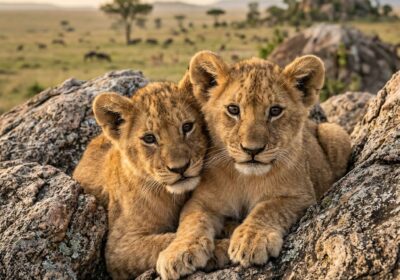
Lion Sightings: Serengeti vs Ngorongoro
- Best for 1 day: Ngorongoro Crater (highest lion density, near-guaranteed sightings)
- Best for 3+ days: Serengeti National Park (behavior, hunts, large prides)
- Key difference: Density vs experience
- Reality: Ngorongoro = fast sightings + crowds (20–30 vehicles), Serengeti = fewer vehicles + deeper encounters
Verdict:
Lion sightings in the Serengeti vs Ngorongoro depend on time and travel style. Ngorongoro Crater offers higher chances of seeing lions in a single day due to its density. In contrast, Serengeti offers deeper experiences, including hunts and pride behavior, especially on safaris of 3 or more days.
After 15 years of guiding the Northern Circuit from our Moshi base, we’ve learned that density isn’t the same as experience. The Crater gives you lions fast; the Serengeti lets you watch them live. Last week, a family we hosted saw five lions in the Crater before breakfast, but found their “magic moment” watching a Serengeti pride hunt at dusk.
Introduction
This guide provides a direct, data-driven comparison of lion sightings in the Serengeti and Ngorongoro Crater. We cut through generic advice to answer the real question: what kind of lion experience do you want? We cover sighting probability, pride behavior, the often-ignored crowding factor, and the practical logistics that determine your daily cost.
It is written for international travelers—from first-time safari-goers and photographers to families planning a detailed itinerary. As a Moshi-based operator, we’ve spent over 15 years guiding the Northern Circuit. We know that the first two hours of daylight in the Seronera Valley are often worth the entire trip. Before you align your route with lion territories, plan your travel dates with our guide on the Best Time to See Big Cats in Tanzania.
Before you align your route with lion territories, plan your travel dates with our guide on the best time to see big cats in Tanzania:
Kilimania Adventure resource: https://kilimania.co.tz/best-time-to-see-big-cats-in-tanzania/
- Ngorongoro Crater: A 260 km² volcanic caldera with one of Africa’s highest lion densities.
- Serengeti National Park: A 14,750 km² ecosystem supporting ~3,000 lions across vast open plains.
The Only Statistic That Matters: Lion Density vs. Total Population
The key difference boils down to one ecological number: density versus total scale.
Ngorongoro Crater: Roughly 60–70 lions reside on a 260 km² crater floor — about 1 lion per 3.7 km², making sightings highly likely in a single day. According to the Ngorongoro Conservation Area Authority (NCAA), this population is genetically isolated with limited male immigration, which directly affects pride dynamics and long-term resilience.
Serengeti National Park: Around 3,000 lions roam across 14,750 km² — about 1 lion per 4.9 km², spread across a vast ecosystem.
If you’re planning based on budget as well as experience, this detailed breakdown explains how park fees, duration, and travel style impact your total spend: https://kilimania.co.tz/tanzania-safari-cost-2026/
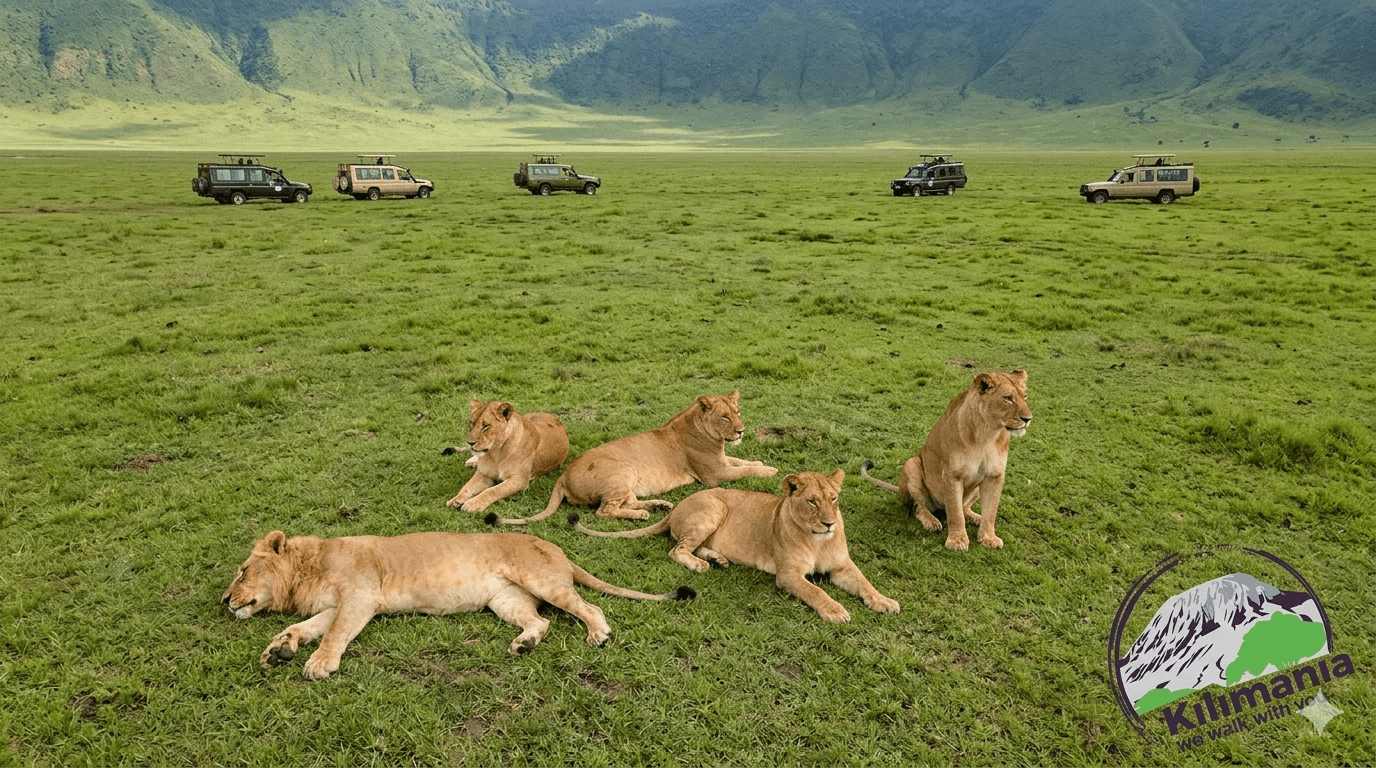
Serengeti vs Ngorongoro: What Actually Matters
- Density versus total scale: the Crater packs lions tightly, the Serengeti spreads them wide
- Time required: 1 day works in the Crater, 3+ days unlock the Serengeti
- Behavior versus static sightings: the Serengeti rewards patience with active lion behavior
- Crowding reality: the Crater can mean sharing a sighting with 20–30 vehicles
- Cost-per-experience insight: daily Crater fees are higher, but Serengeti’s depth justifies the total trip cost
Comparison Table
| Feature | Ngorongoro Crater | Serengeti National Park |
|---|---|---|
| Sighting Probability | Near 100% in 1 day | 90%+ over 3 days |
| Lion Experience | Easy, often static viewing | Complex, active behavior |
| Pride Size | Smaller (6–12 individuals) | Larger (8–30+ individuals) |
| Human Factor | High (can be crowded) | Low to moderate |
| Value for Cost | Higher daily cost, short duration | Costs spread over multiple days |
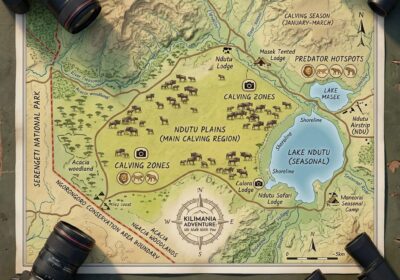
This becomes even more powerful during migration and calving periods—see how timing changes predator activity in our Ndutu vs Serengeti comparison: https://kilimania.co.tz/ndutu-vs-serengeti-safari/
Serengeti vs Ngorongoro (At a Glance)
- Lions: 3,000 vs 60–70
- Area: 14,750 km² vs 260 km²
- Sightings: Slower vs Immediate
- Experience: Behavioral vs Predictable
- Crowds: Low vs High
What This Means
1-day safari: Choose Ngorongoro Crater for fast, reliable sightings
3+ day safari: Choose Serengeti for deeper, more natural lion behavior
If you’re already comparing routes and timelines, explore our full range of Tanzania safari packages to see how these choices translate into real itineraries: https://kilimania.co.tz/tanzania-safaris/
This single comparison explains why the two destinations feel completely different—despite both having strong lion populations.
Ngorongoro Crater Lion Viewing: Guaranteed Sightings, Managed Experience
Where is it easier to see lions in Tanzania? The Ngorongoro Crater is the easiest place to see lions in a single day. The 260 km² floor offers no dense cover, a contained resident population, and a radio network that guides use to share sightings within minutes of entry. You will almost certainly find lions within an hour, often at close range.
I always brief clients before descending the rim of Ngorongoro Crater at 6:00 AM: you will find lions within the hour, but you will not be alone for long.
One July morning, just past the marsh east of Lerai Forest, a black-maned male patrolled the road verge at sunrise. We tracked him for 200 meters as he scent-marked and roared. Clean frames at 200mm. Ten minutes later, a semi-circle of vehicles formed. The private moment ended.
That is the Crater in a sentence: efficient, reliable, rarely solitary.
Why do sightings come so fast
The Crater floor spans roughly 260 km² of short-grass plains.
There is almost no dense cover. Lions cannot disappear easily.
A pride resting near swamps or hippo pools is visible from 300–500 meters.
Every guide on the floor shares sightings by radio. Within 30 minutes of entry, most vehicles are positioned near lions.
For travelers specifically targeting predator action, the Ndutu calving season offers some of the highest chances of witnessing real hunts: https://kilimania.co.tz/ndutu-calving-season/
The caldera’s semi-isolated population also produces black-maned males, darker and heavier-maned than those commonly seen in Serengeti National Park. The NCAA’s own monitoring confirms this genetic isolation, with limited male immigration affecting the crater population’s long-term dynamics and producing these distinctive lions.
The trade-off: a curated, not wild, experience
By mid-morning, sightings near Ngoitokitok or Lerai often attract 20–30 vehicles.
Park rules keep a 25-meter distance and prohibit off-road driving. Lions remain calm and undisturbed.
But the experience shifts.
It becomes less about discovery and more about positioning.
The Crater delivers the photograph.
It does not always deliver solitude.
Accept that, and expectations stay aligned.
Tactics that work (guide-tested spots)
These locations consistently produce lion sightings before traffic builds:
Lerai Forest edges (midday) — ~3.183°S, 35.558°E
Shade zones where males rest near acacia lines.
Eastern slopes near Sopa road (early morning) — ~3.190°S, 35.620°E
Strong for movement before heat slows activity.
Ngoitokitok area fringes — ~3.181°S, 35.586°E
Water access attracts lions early.
Gorigor Swamp edges — ~3.205°S, 35.564°E
Wide visibility; prides are visible beyond 400 meters.
Southern Lerai transition zones — ~3.190°S, 35.552°E
Movement between shade and hunting ground.
Open plains between Ngoitokitok and Gorigor
Best for spotting lions lying flat in short grass.
Where you stay directly impacts your access to early-morning sightings—compare the best seasonal camps here: https://kilimania.co.tz/ndutu-safari-camps-2026/
The Brutal Truth: Crowding vs. Wilderness Experience
Raw numbers define this hard trade-off. On the Ngorongoro Crater floor, a single lion sighting near a popular landmark routinely attracts 20–30 vehicles by 9:00 AM. Engines idle in a semi-circle. Radio chatter fills the background. You get the photo, but the moment is shared with a crowd.
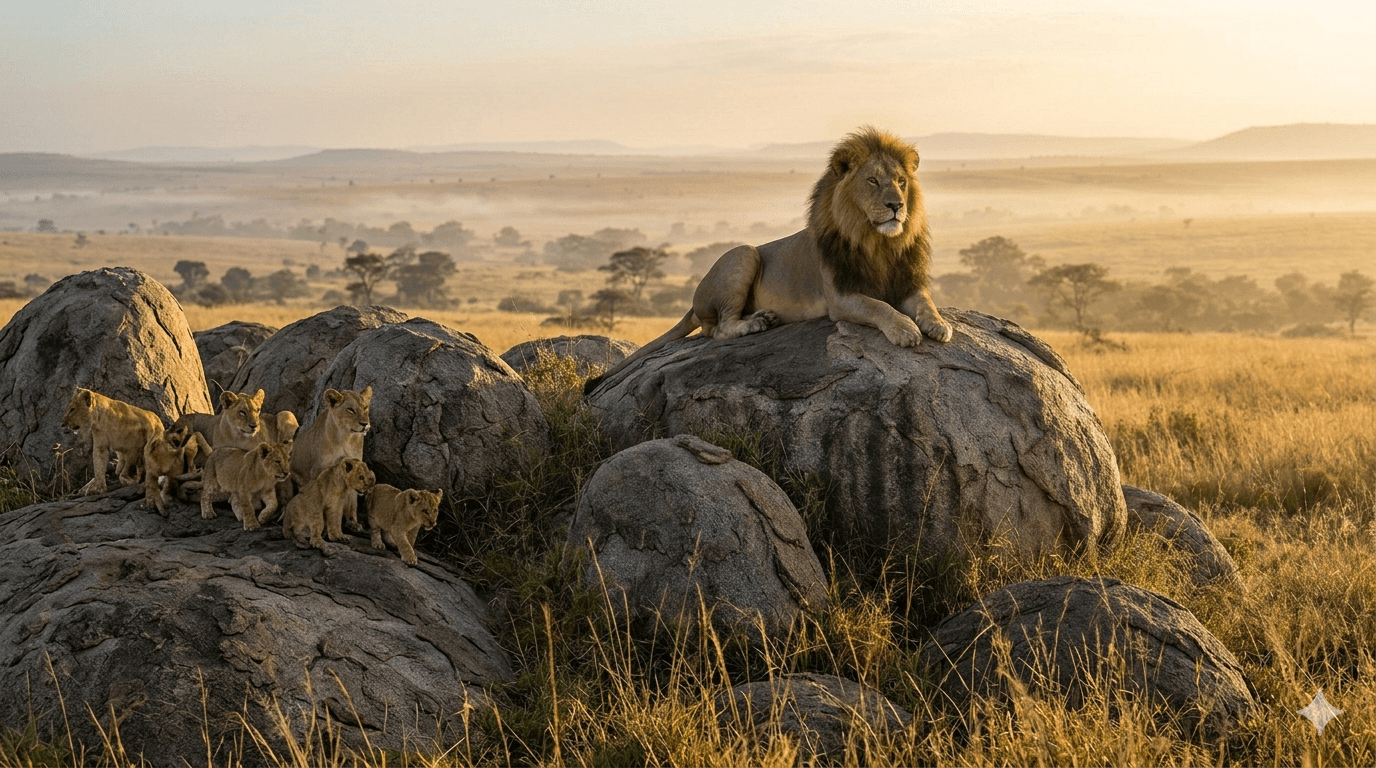
Compare this to the Serengeti. In low-density zones like the southern plains or remote sections of the Seronera Valley, a pride sighting often means 1–3 vehicles—sometimes just you. The emotional contrast is radical. One is a curated spectacle; the other is a private encounter where a lioness locks eyes with you from ten meters, and the silence holds for minutes. That shift from shared to solitary defines what you’ll remember most from your Tanzania safari.
Serengeti Lion Encounters: Where Patience Rewards Real Behavior
Is Serengeti worth it if sightings are less certain? Yes, because the Serengeti delivers lion behavior, not just lion presence. Hunts, territorial patrols, cub interactions, and pride dynamics unfold over hours in low-vehicle environments. The certainty is lower on a single game drive, but the reward—active, unscripted lion life—is exponentially higher over three or more days.
Lion sightings in the Serengeti National Park unfold differently. The landscape is vast, and lions are spread across territories shaped by prey movement, water, and cover.
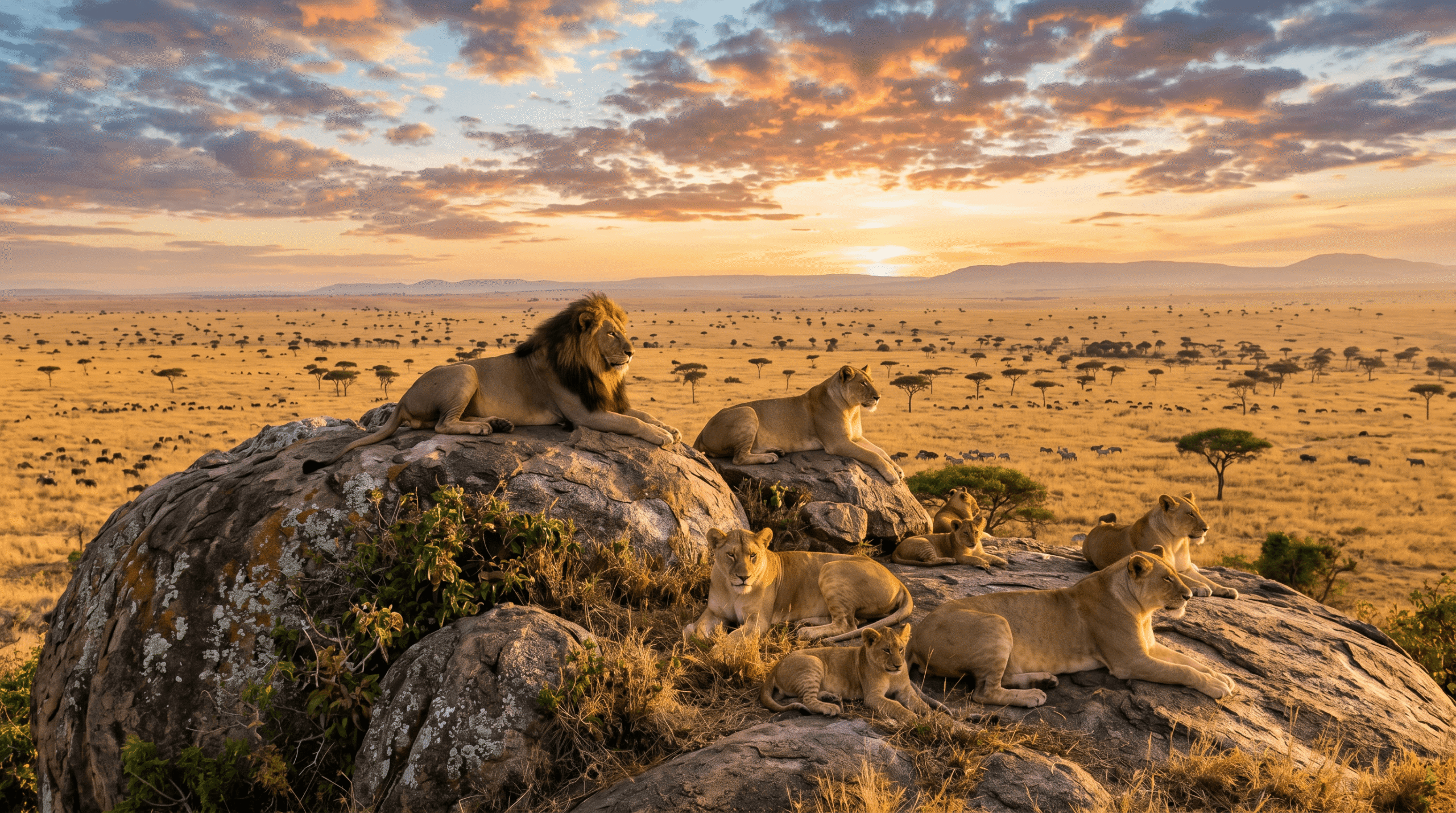
In areas like Seronera Valley, lions remain year-round due to stable prey populations. Kopje systems such as Simba Kopjes and Moru Kopjes act as natural hubs where prides rest, hunt, and raise cubs.
Sightings may take longer to develop, but they often last longer and reveal more. Instead of just finding lions, you observe behavior—movement, coordination, and interaction over time.
I had a morning near Maasai Kopjes where we found a lone lioness crouched rigidly in the grass. She held that position for twenty-two minutes, waiting for the wind to shift as a warthog fed closer. When she finally burst forward, the chase failed by inches—but the patience she taught us that morning was the real reward.
Vehicle pressure is lower, especially outside peak zones. This allows quieter viewing and more natural behavior, particularly during early morning hours.
Three or more days significantly improve results. Returning to the same areas builds understanding of pride movement and increases chances of seeing active behavior rather than resting animals.
4-day predator-focused safari: https://kilimania.co.tz/4-day-big-cats-safari-in-tanzania
Summary:
Lower immediate certainty, but deeper, longer, and more natural lion encounters.
To unlock these zones, you need a guide who knows if a specific pride used a kopje three days ago. That local knowledge makes all the difference. Our 4 Day Big Cats Safari in Tanzania (lion-focused itinerary) is built precisely around this predator-first logic.
People Also Ask About Lion Sightings in Tanzania
Do more lions mean a better safari?
No. I’ve watched guests sleep through 12 lions surrounded by vehicles, then days later call a single lioness stalking a warthog the highlight of their life. Behavioral depth and privacy matter more than headcounts.
Why are Ngorongoro lions easier to find?
The Crater floor is a contained 260 km² bowl with almost no dense cover. Lions can’t vanish. Combine that with a radio network among guides, and sightings happen within an hour of entry.
What time of day are lions most active?
Dawn, 6:00 AM to 8:30 AM, is the prime window for hunting and movement in both parks. By 10:00 AM, lions are typically flat and resting. Early starts are non-negotiable for active behavior.
Why do some safaris feel crowded?
In Ngorongoro, 20–30 vehicles often converge on a single sighting. The Serengeti’s vast road network disperses vehicles, especially in low-density zones, creating private encounters you simply cannot get in the Crater.
Is Ngorongoro better than Serengeti for lions?
Only if “better” means immediate, guaranteed sightings. Ngorongoro’s contained population of 60–70 lions on a 260 km² floor makes encounters nearly certain in a single day. But this density brings high vehicle pressure. The Serengeti’s 3,000 lions offer more complex behavior across a vast, less crowded landscape. One delivers efficiency; the other delivers depth.
Can you see lion hunts in Ngorongoro?
Hunts occur but are less frequently witnessed. The Crater’s short grass and open terrain favor prey detection over predator stealth. You’re far more likely to see post-hunt feeding than the stalk itself. The Serengeti’s kopje edges, reedbeds, and riverine cover create better ambush conditions and higher hunt-witnessing probability.
KILIMANIA GUIDE TIP
Request a 6:00 AM start with a packed bush breakfast.
In the Seronera Valley, the first two hours of golden light often deliver the entire safari’s best lion behavior.
Serengeti vs Ngorongoro: What Actually Matters
- Density vs scale
- 1 day vs 3+ days
- Static sightings vs real behavior
- 20–30 vehicle crowding vs open wilderness
- Cost-per-experience (not just price)
Head-to-Head Comparison: A Decision Matrix for Your Trip Length
Where to see more lions—Serengeti National Park or Ngorongoro Crater?
The honest answer depends on your time, travel style, and expectations.
Decision Table
| If Your Situation Is… | Choose Ngorongoro Crater If… | Choose Serengeti National Park If… |
|---|---|---|
| You have 1 safari day | A near-guaranteed, quick lion sighting is your priority | You’re okay with lower probability in exchange for scenery and scale |
| You have 3+ safari days | You want to add a fast, scenic stop to a longer itinerary | You want deep wildlife immersion and complex predator behavior |
| You are a photographer | You want close-up shots of black-maned males in open grass | You want hunts, golden light, kopjes, and storytelling moments |
| You seek wild solitude | You accept crowds at major sightings | You prefer quieter areas and more natural encounters |
What This Means
Short trip (1 day): Ngorongoro gives certainty
Longer safari (3+ days): Serengeti gives depth
Best overall experience: Combine both in one itinerary
This table makes the choice simple based on how you travel—not just where the lions are.
The Hard Trade-Off: Crowding vs. Solitude and Cost
Here’s what most safari brochures don’t explain clearly: lion sightings, Serengeti vs Ngorongoro is not just about animals—it’s about the experience around them.
By 9 AM on the Ngorongoro Crater floor, a resting pride may have 20–30 vehicles in a semi-circle. The lions are there, close and visible, but the moment can feel shared.
I remember guiding first-time clients down at 6:05 AM. By 7:10, a black-maned male near Ngoitokitok rested just 15 meters from the road. We were vehicle three. Within 30 minutes, over 20 vehicles had arrived. Engines idled. Radios called in more cars. The lion barely reacted. The photos were clear, but the moment felt crowded.
Contrast that with a June morning in the Serengeti near Moru Kopjes. We sat alone with a lioness and her cubs for nearly 40 minutes. She moved them into shade, circled downwind of the zebra, then paused when the wind shifted. That sequence—watching decisions unfold—is what many travelers remember most.
What this means for your safari
Crater: Higher cost per day (often $400+ in fees), but a strong chance of fast lion sightings in a short time
Serengeti: Higher total trip cost, but lower daily pressure and longer, quieter wildlife encounters
I once had a client insist on saving money by booking only one Ngorongoro day instead of two Serengeti days, because the Crater looked “faster” on paper. He saw lions, but returned disappointed that he’d missed the immersion his friends described. Cost-per-experience matters more than cost alone.
For a detailed breakdown of park fees, routes, and daily budgets, see our Tanzania Safari Cost 2026 guide.
Which option fits your travel style
First-time safari: Combine both—one Crater day, then 2–3 days in Serengeti
Limited time or families: Ngorongoro Crater works well for quick, reliable sightings
Photographers and wildlife-focused travelers: 3+ days in Serengeti improves chances of seeing hunts and pride behavior
Kilimania Guide Tip: To avoid the post-breakfast rush and see active behavior, request a 6:00 AM start with a packed bush breakfast. In the Seronera Valley, those first two hours of golden light often deliver the hunt.
Which Should You Choose? (Simple Rule)
- If you have 1 day → Ngorongoro
- If you have 3+ days → Serengeti
- If you want both certainty + story → Combine both
Frequently Asked Questions
Q: Is Ngorongoro actually better than Serengeti for lions?
A: Only if “better” means seeing a lion within 30 minutes. The Crater’s small, enclosed floor holds roughly 60–80 lions, and sightings are almost guaranteed. But according to the NCAA, this population is genetically isolated, which limits pride resilience. The Serengeti holds 3,000 lions in a vast, open system. The Crater gives you the lion; the Serengeti gives you the lion’s life.
Q: Why do people feel disappointed after Crater safaris?
A: Because they weren’t warned about the vehicle traffic. The photographs show wilderness, but by mid-morning, a pride sighting often draws 20–30 vehicles. It’s a managed, semi-curated experience—efficient and photogenic, but not solitary. Travelers who expect raw wilderness can leave feeling the encounter was transactional rather than transformative.
Q: Do more lions equal a better safari?
A: Rarely. I’ve seen guests watch 12 lions sleeping next to 10 other vehicles and feel nothing, then, two days later, spend 35 minutes alone with a single lioness stalking a warthog and call it the highlight of their lives. A better safari is defined by behavioral depth and privacy, not a headcount. The Crater gives you numbers; the Serengeti gives you narrative.
Q: Are the black-maned lions only in Ngorongoro?
A: They are most consistently seen and photographed in the Crater due to the isolated gene pool and cooler altitude, which some researchers link to darker, fuller mane development. Some Serengeti males also develop darker manes, but the Crater remains the reliable location for the black-maned portrait.
Q: What is the best time of day to see active lions?
A: Dawn, between 6:00 AM and 8:30 AM, is the prime window for hunting, territorial patrols, and social interaction in both parks. In the Serengeti, position on the eastern aspects of kopjes for backlit breath and golden manes. In the Crater, descend as the gate opens. By 10:00 AM in both locations, lions are typically flat and resting.
Q: Can I combine both parks in a single safari?
A: Yes, and this is the approach I recommend most. A 6–7 day Northern Circuit combining Tarangire’s elephants, one Crater day for guaranteed lions, and three Serengeti days for behavioral depth gives you the complete picture. The Crater removes the pressure; the Serengeti delivers the reward.
| Situation | Choose Ngorongoro | Choose Serengeti |
|---|---|---|
| 1 day | ✔ | ✖ |
| 3+ days | ✖ | ✔ |
| Photography | Close shots | Story moments |
| Solitude | ✖ | ✔ |
Simple Rule
- 1 day → Ngorongoro
- 3+ days → Serengeti
- Best → Combine both
Conclusion
After 15 years guiding both parks, here is what I tell every client who sits in my Land Cruiser and asks where to go: the Crater delivers the photograph, the Serengeti delivers the story. Choose based on which memory you want to carry home.
Worried about time and budget? Do one Crater day for certainty, then invest two to three Serengeti days for depth. This combination removes the anxiety of “will we see lions?” early in your trip, freeing you to chase the unscripted moments that define a real safari.
Do not choose based on where the lions are—both parks have them. Choose based on which memory you want to carry home.
Our 4 Days Big Cats Safari blends both ecosystems efficiently, with mornings positioned in the territories where prides are most active during your travel dates.
We Walk With You.
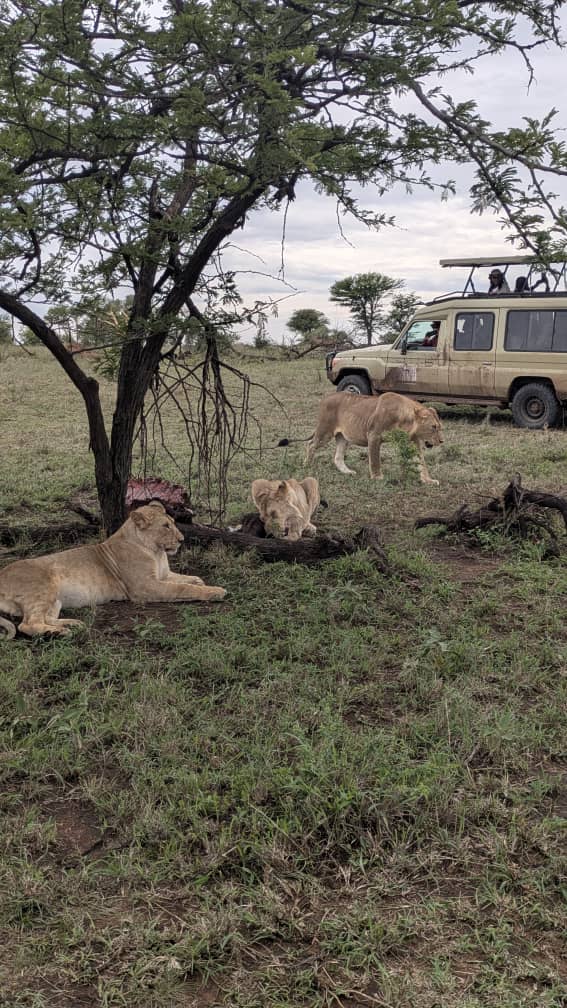
Before CTA Image Suggestion: A Kilimania Adventure safari vehicle with pop-up roof stopped near a lioness and two cubs on Moru Kopjes at golden hour. One guest visible with camera raised, the guide pointing toward the plains beyond.
ALT text: Kilimania Adventure lion sightings Serengeti — vehicle at Moru Kopjes with lion pride at sunset
Ready to build a lion-focused itinerary that balances Crater certainty with Serengeti storytelling? Explore our 4-Day Tanzania Safari with the Ndutu Calving Season or contact our Moshi-based team for a private route tailored to your dates.
As a Moshi-based operator with over 15 years of field experience, Kilimania Adventure specializes in guiding clients through Tanzania’s Northern Circuit with a strong focus on predator behavior and real wildlife encounters.
https://kilimania.co.tz/
Tanzania National Parks (TANAPA): https://www.tanzaniaparks.go.tz
Ngorongoro Conservation Area Authority (NCAA): https://www.ncaa.go.tz
Panthera Lion Conservation: https://www.panthera.org
Tanzania National Parks (TANAPA) official information: https://www.tanzaniaparks.go.tz
Ngorongoro Conservation Area Authority: https://www.ncaa.go.tz
PART 5: TOPICAL AUTHORITY — NEXT ARTICLES
Cheetah vs. Leopard in the Serengeti: How to Tell Them Apart in 2026
Primary Keyword: cheetah sightings Serengeti vs leopard
The Ultimate 7-Day Northern Circuit Safari: Maximizing the Big Five
Primary Keyword: 7 day northern circuit safari Tanzania
Understanding Crater Service Fees: A Real-World Guide to Ngorongoro Costs
Primary Keyword: Ngorongoro crater service fee 2026