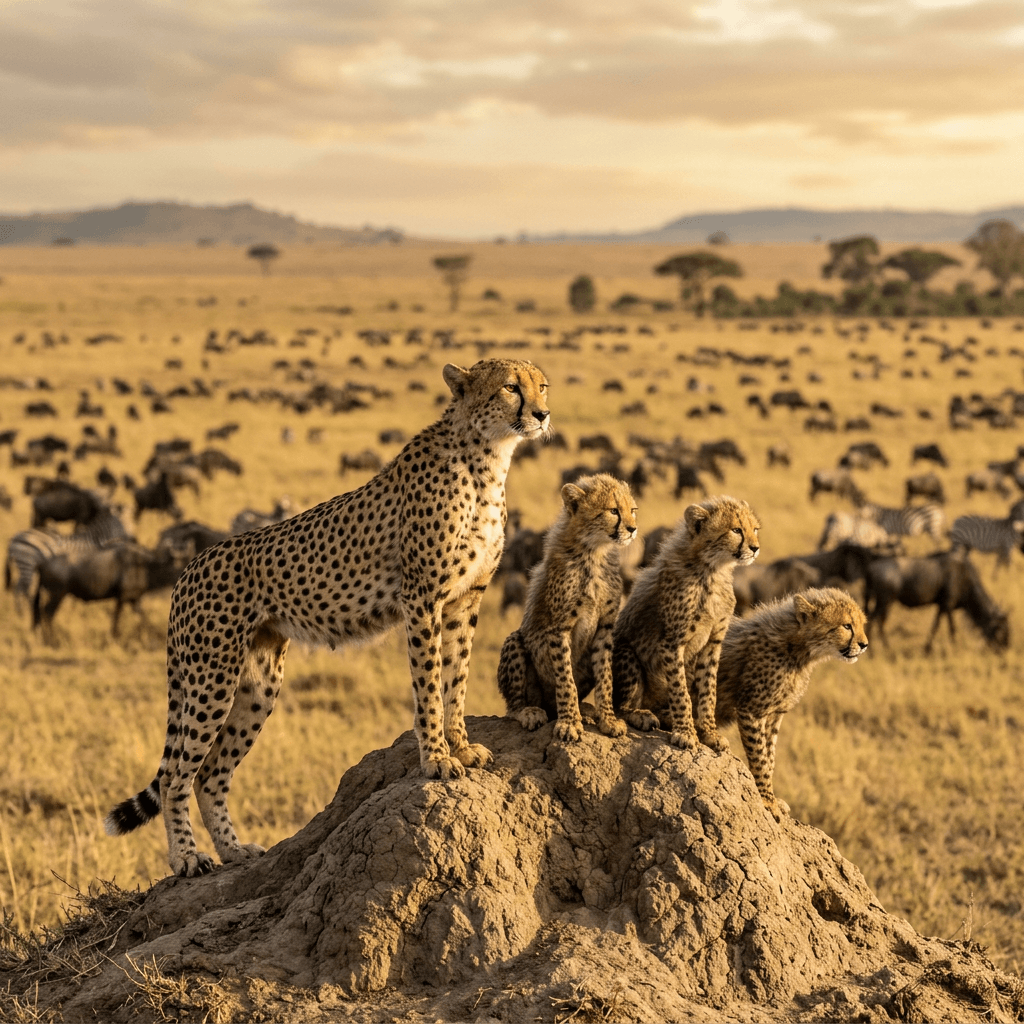
Many travelers book Ndutu based on camp photographs, then realize too late that location matters more than décor. In calving season, the right camp can save two hours of daily driving and be the difference between arriving at a hunt in progress and arriving at its aftermath.
Overview
- Camp location affects wildlife sightings in real time, not just convenience.
Most guides describe rooms and amenities, but do not explain how camp distance to active plains affects arrival time during early morning game drives—when predator activity is typically highest during calving season. - Booking advice lacks real timing and availability pressure.
Typical articles suggest booking early, but do not explain how limited tent inventory and seasonal demand affect availability for January–March travel, or when travelers begin losing access to well-positioned camps. - Camp comparisons rarely match travel style to safari outcomes.
Most comparisons focus on comfort and price, but overlook the more useful decision: whether a camp suits predator-focused travel, wildlife photography, or a comfort-first safari combining Ndutu with Ngorongoro Conservation Area and Serengeti National Park.
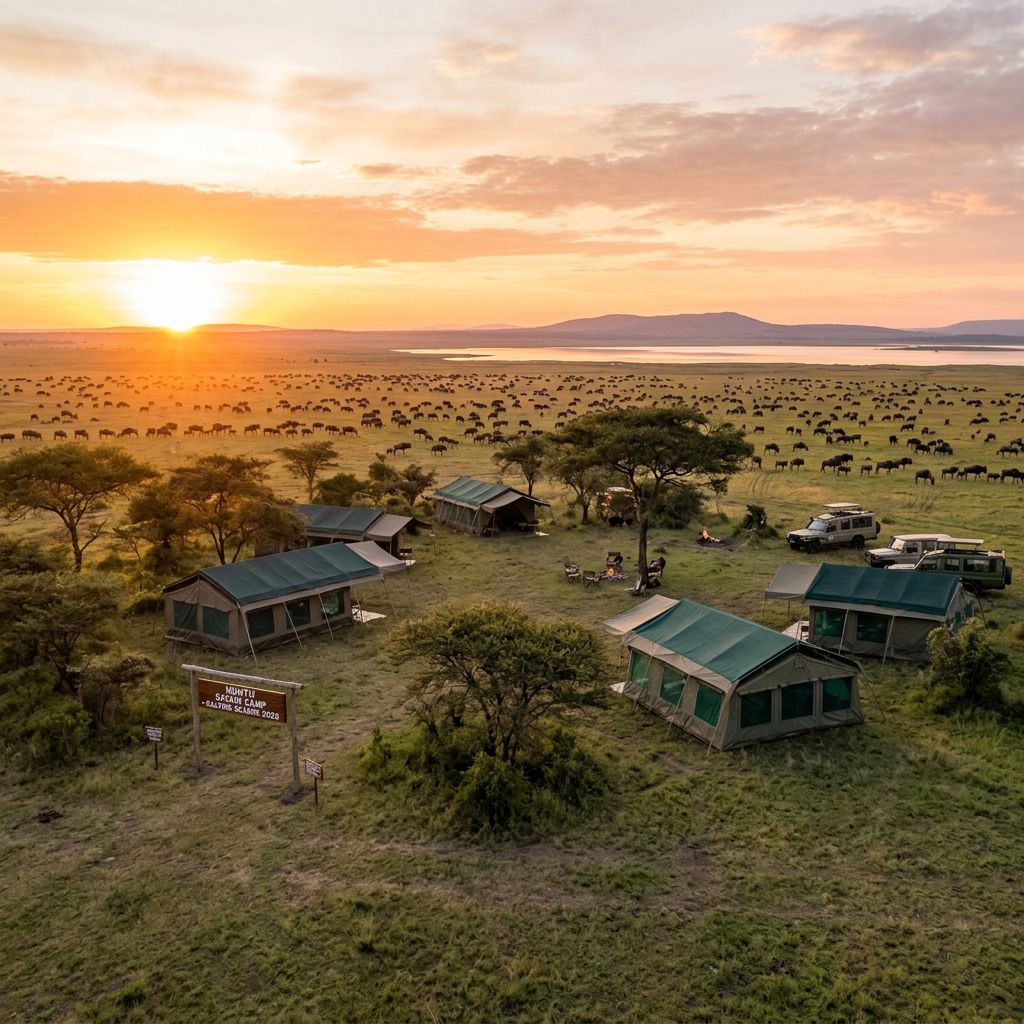
Ndutu Safari Camps 2026,Mobile camps in the NCAA Ndutu zone reposition 2–3 times across the December–March season to stay within 5–15 km of active calving grounds — placing you 15–30 minutes from peak predator action during the 6:00–9:00 AM window. Permanent lodges outside the core zone cost less per night but require 45–75 minute daily transfers, losing the first and most active hour of every morning. Book the leading mobile camps 10–12 months ahead for February 2026 — most reach 70–90% capacity by July–August 2025.
Best Camp Type for Ndutu Calving Season
Mobile camps are usually the best choice for travelers focused on predator sightings and calving season activity, because they are often positioned closer to active wildebeest herds.
Permanent camps can still work well for comfort-focused travelers or those combining multiple parks, but they may require longer drive times to reach the main wildlife areas during early morning hours.
Table of Contents
Introduction
This guide compares mobile and permanent accommodation for the 2026 Ndutu calving season, with specific booking timelines, real cost tiers, and the drive-time mathematics that explain why camp choice directly affects wildlife sightings. It is written for international travelers, wildlife photographers, and value-conscious planners who want specific information rather than a generic camp list.
Our team operates from Moshi and monitors weekly herd positions across the Ndutu zone and southern Serengeti. We track which areas are holding the highest predator activity at any point in the season — and which camp locations put our guests inside that zone before sunrise.
Explore our Ndutu Calving Season guide for the full timing context, or see our 4-Day Big Cats Safari in Tanzania for the most focused calving season itinerary we offer.
Why Trust This Ndutu Guide
This guide is written by a Northern Tanzania-based safari operator with active field experience in Ngorongoro Conservation Area and Serengeti National Park during the calving season.
Our team operates from Moshi and plans safaris across the Ndutu region each year. Camp recommendations are based on real guiding experience, seasonal herd tracking, and guest feedback — not desk research or affiliate listings.
We regularly monitor herd movement across the Ndutu plains and adjust routes based on where predator activity is highest at any given time.
This means the advice in this guide reflects how Ndutu actually works on the ground — not just how camps are marketed online.
How Much Does a Ndutu Safari Camp Cost?
Ndutu safari camp prices vary depending on comfort level, location, and travel style.
In general:
- Mid-range options may start from around USD 350–600 per person per night
- Premium mobile camps and luxury options can range from USD 700 and above
The total safari cost also depends on guiding, vehicle type, and number of days.
Key Facts — Ndutu Safari Camps 2026
| Ndutu Safari Camps 2026 | Mobile Camps | Permanent Lodges |
|---|---|---|
| Location | Inside NCAA Ndutu zone | Outside zone — Karatu, crater rim, Lake Manyara |
| Distance to calving grounds | 5–15 km | 30–50 km |
| Morning drive time to plains | 15–30 minutes | 45–75 minutes |
| Relocations per season | 2–3 times (December–March) | Fixed — does not move |
| Cost per person per night | $450–$1,400+ | $350–$600 |
| Booking deadline (Feb 2026) | April–June 2025 — act now | December 2025 |
| Off-road access | Yes — NCAA zones permit it | Depends on departure zone |
| Season availability | December–March only | Morning drive time to the plains |
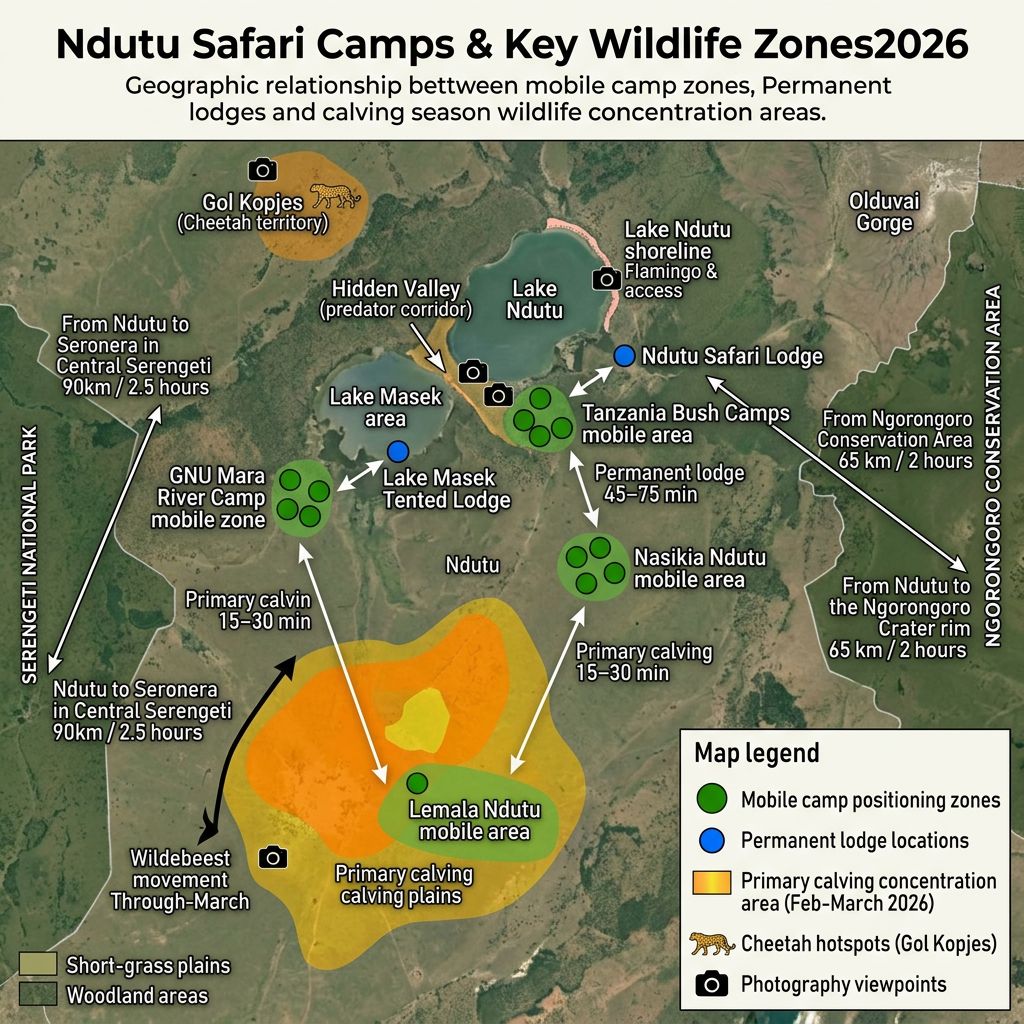
Why Camp Location Matters More Than Camp Design
During the Ndutu calving season, predator activity is often strongest in the early morning hours. In many cases, the most active period runs shortly after sunrise, when temperatures are still low, and wildlife is moving.
Camps located closer to active plains can reach these areas earlier, which may increase the chances of seeing hunting behavior or early-morning movement.
Camps located farther away may still offer excellent sightings, but longer drive times can reduce flexibility during peak wildlife hours — especially on shorter safaris.
In practical terms, even a difference of 30 to 60 minutes in drive time can shape how much of the most active part of the morning is spent with wildlife rather than in transit.
Does Camp Location Affect Wildlife Sightings in Ndutu?
Yes — in many cases, camp location directly affects how much wildlife you see during a safari.
Camps closer to active plains can reach wildlife areas earlier in the morning, when predator activity is often at its peak. Camps located farther away may still offer good sightings, but more time is spent driving rather than observing wildlife.
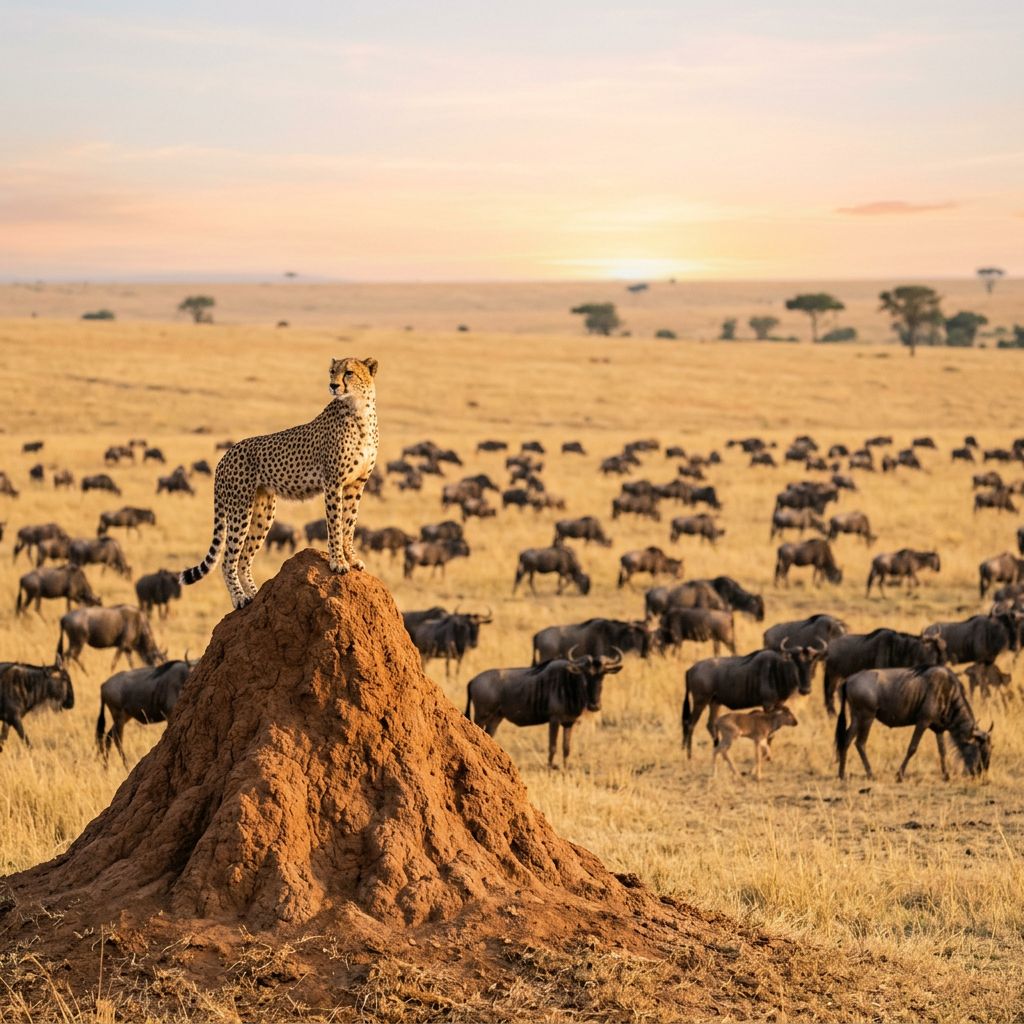
Mobile Camps in Ndutu Safari Camps 2026 — How They Work and What to Expect
Mobile camps are temporary seasonal structures that are set up inside the NCAA Ndutu zone from December and relocate 2–3 times across the season to stay near changing herd concentrations. They dismantle fully by March or April and leave no permanent footprint.
Named mobile and semi-mobile camps operating in the Ndutu zone:
- Lemala Ndutu — repositions based on weekly herd tracking; among the most consistently well-positioned
- Nasikia Ndutu Mobile Camp — smaller capacity, strong guiding, focused on wildlife positioning
- Tanzania Bush Camps (Ndutu) — operator known for flexible relocation and photography-focused approach Safari Camps 2026
- Gnu Mara River / Gnu Ndutu — seasonal operation with direct access to high-density predator zones
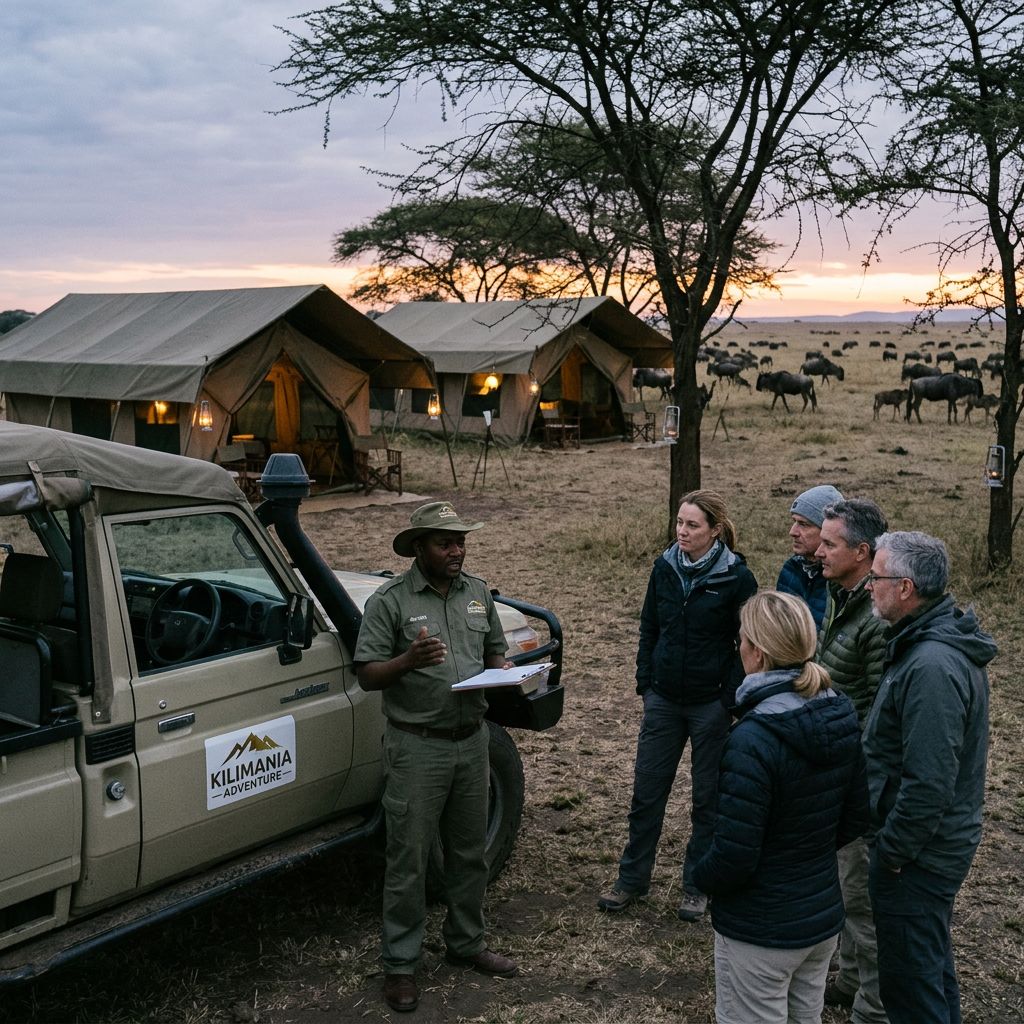
These camps typically offer en-suite canvas tents with hot bucket showers, solar power for charging, and dining tents. Capacity per camp is usually 10–20 guests maximum — the small group size is a direct advantage for sighting quality and vehicle positioning, Ndutu Safari Camps 2026
Facilities are simpler than permanent lodges. WiFi is limited or absent. Power may be available only during set hours. What you gain is proximity. A mobile camp puts you inside the wilderness rather than adjacent to it. Canvas walls do not block sound. You fall asleep to hyenas calling outside your tent and wake to wildebeest moving through camp in the pre-dawn dark. That immersion is a feature, not a limitation — and it cannot be replicated from a stone building.
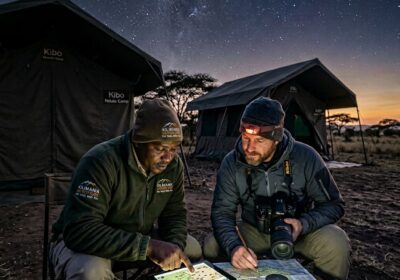
Guide Insight — Kilimania Adventure, Ndutu tracking team We plan departure times based on the previous evening’s radio reports from other guides in the network. If a cheetah coalition was hunting near the Hidden Valley at dusk, we stage near the acacia line before 6:00 AM the next morning. Mobile camps make this possible because the vehicle drive to the zone is 15 minutes, not 75. That 60-minute difference is the first cheetah hunt of the day — the one most travelers come to Ndutu specifically to see in Tanzania predator safari
Permanent Lodges — What They Offer and Who They Suit
Permanent lodges sit outside the core NCAA Ndutu zone, most commonly in Karatu, on the Ngorongoro Crater rim, or in the Lake Manyara region. They offer consistent hot water, reliable electricity, larger rooms, stronger WiFi, and better facilities for travelers recovering from long international flights.
Ndutu Safari Lodge — the only permanent lodge actually inside the broader Ndutu area, located near Lake Ndutu. Cost approximately $350–$550 per person per night. It offers a shorter transfer to calving grounds than Karatu-based options and suits travelers who want some proximity advantage without fully committing to mobile camp simplicity.
Outside this exception, permanent lodges in Karatu or on the crater rim require the 45–75 minute daily transfer. For a traveler spending 2 nights, this adds 3–5 hours of vehicle transfer time across the stay — a significant proportion of total game-viewing time.
Permanent lodges are the right choice for: families with young children who need stable sleeping environments, travelers combining Ndutu with a Ngorongoro Crater descent who want a central base, and travelers for whom the mobility and simplicity of canvas camping is genuinely uncomfortable rather than just unfamiliar.
Booking Timeline — What Actually Happens
For February travel, well-positioned mobile camps are often largely booked several months in advance. In practice, many popular camps begin filling quickly by mid-year, especially those used by photographers and experienced safari planners.
By late in the year, availability becomes limited and options may be restricted to specific dates or locations.
Permanent lodges usually remain available longer, but the best-located options for Ndutu itineraries can still fill before peak travel months.
For the widest choice of camps and dates, it is best to start planning 6 to 10 months in advance — earlier if your travel dates are fixed.
This is the section most camp comparison articles skip. Generic advice says “book early.” The real picture is more specific, Ndutu Safari Camps 2026
The leading named mobile camps — Lemala, Nasikia, Tanzania Bush Camps — reach full capacity for February 2026 dates between July and August 2025. Photography groups and professional safari planners book 10–12 months in advance and often hold multiple provisional dates simultaneously.
Travelers who wait until they have confirmed travel dates in September or October 2025 will find:
- Peak February mobile camp availability is gone
- The remaining options are second-tier in positioning
- Higher rates due to reduced supply
- No flexibility to match the camp position to the actual herd location
The booking strategy for 2026: contact your operator by May 2025 at the latest for February. Provide a 2-week flexible window around your target dates. A flexible window allows your operator to match camp availability to actual herd position at booking time rather than locking into a date before herd patterns are clear.
Is Ndutu Safari Camps 2026 Worth It Compared to Central Serengeti?
Yes — specifically for January–March. During calving season, the wildebeest herds are in the southern ecosystem, not in Central Serengeti. A traveler booking Central Serengeti accommodation for February is making the most common and most costly planning error in northern Tanzania wildlife tourism.
The Ndutu zone’s specific advantages over Central Serengeti during calving season:
- Higher predator density — all major species concentrate where prey concentrates
- Off-road driving is legally permitted in NCAA zones — Serengeti National Park prohibits it
- Short grass (15–30cm) providing clear sightlines for full-speed cheetah pursuit
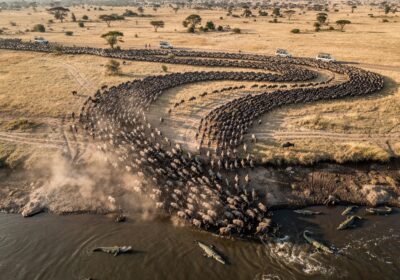
- Synchronized calving producing 6,000–8,000 newborns per day at peak — prey density unmatched anywhere in Africa during this window
Outside the calving season (April–November), Central Serengeti and Tarangire outperform Ndutu for consistent year-round wildlife. The decision is not which destination is permanently better — it is which ecosystem matches the specific travel month.
For a full seasonal comparison of both ecosystems, read our Ndutu vs Serengeti Safari guide.
When Should You Book Ndutu Safari Camps for 2026?
For travel during the calving season (January to March 2026), it is best to book Ndutu safari camps several months in advance.
In most cases, well-positioned camps — especially mobile camps — begin filling early due to limited availability and high demand during peak wildlife periods.
Are Mobile Camps Better for Wildlife Photography in Ndutu?
In many cases, yes — mobile camps are often better suited for wildlife photography during calving season.
Their location closer to active plains allows earlier access to wildlife during first light, which is one of the most important times for photography.
What a Ndutu Wildlife Photography Safari Needs From a Camp
Photography travelers should think about camps differently from general safari visitors. The question is not comfort versus proximity. It is which camp enables the specific shots the photographer came for?
Six questions to ask before booking any Tanzania predator safari as a photographer: Ndutu safari photography tips
- How long is the drive from camp to the current active calving zone at departure time?
- Is power available through the night or only at set solar charging hours?
- Can breakfast be packed for pre-dawn departures, or is there a fixed dining schedule?
- Does the camp allow private vehicles with flexible departure times outside group schedules?
- Is dust-sensitive equipment storage available in a covered, dry location inside camp?
- Does the guide team have specific knowledge of Ndutu’s named sub-zones, not just general Serengeti experience?
A mobile camp that answers all six questions correctly is worth a higher nightly rate than a luxury permanent lodge that cannot answer any of them.
Gear additions specific to the Ndutu safari photography tips and calving season:
- Rain sleeve or dry bag — afternoon thunderstorms arrive without warning in January–February
- ND filter (ND4 or ND8) — balances bright sky exposure against darker wildebeest and calf foreground on open plains
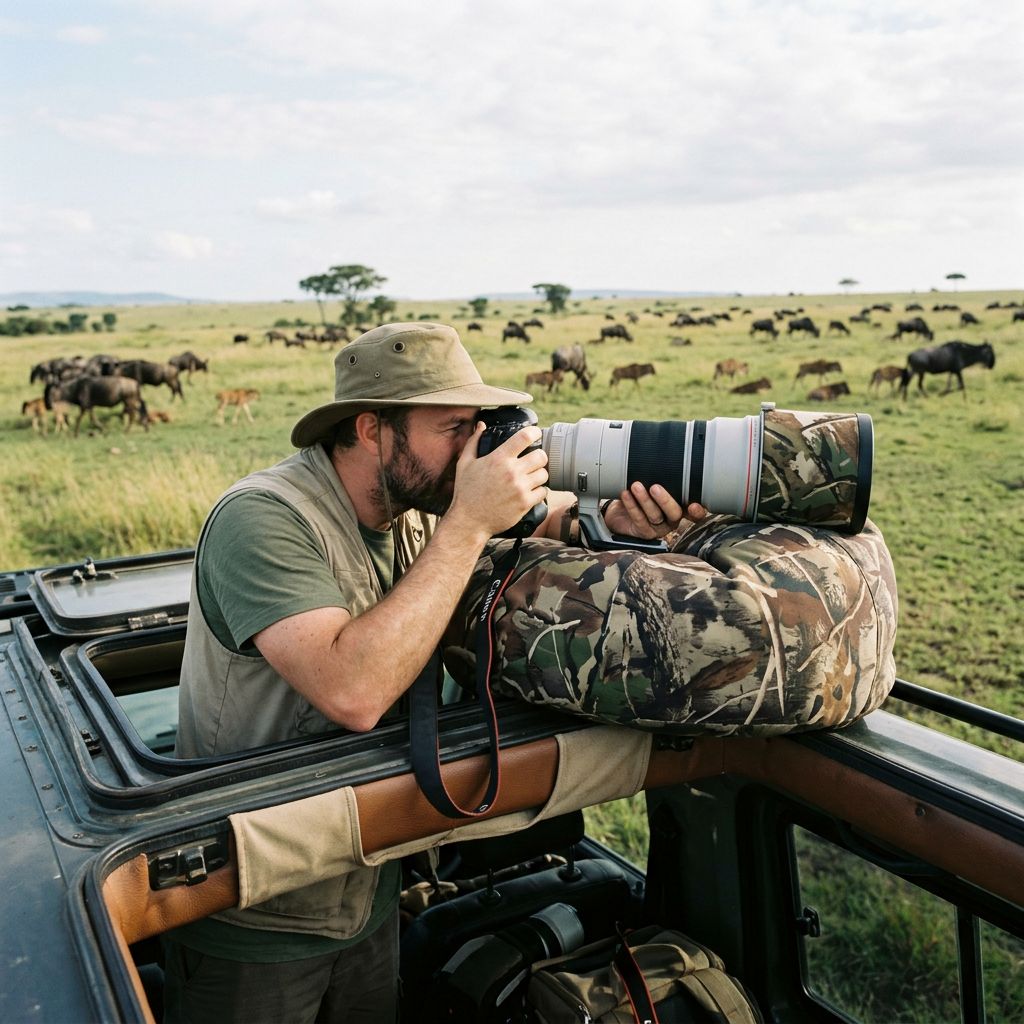
- Monopod or beanbag — beanbag on the roof hatch is more stable than a tripod for tracking a moving cheetah; monopod allows rapid pivot during burst sequences
- Extra batteries — cold pre-dawn departures drain batteries faster; solar power at camp may not fully recharge overnight
- Two camera bodies — reduces lens changes on dusty plains and allows one telephoto (400–600mm) and one wider lens (70–200mm) to be ready simultaneously
Mobile vs Permanent — Full Comparison Table
| Feature | Mobile camp | Permanent lodge | Practical takeaway |
|---|---|---|---|
| Wildlife positioning | Excellent — repositions to herds | Fixed — herds may be distant | Choose mobile for peak calving access |
| Drive time to plains | 15–30 minutes | 45–75 minutes | Mobile adds 1+ hour of wildlife time per day |
| Off-road access zone | NCAA zones — permitted | Varies by departure route | Confirm NCAA zone access before booking |
| Comfort level | Good — canvas, solar, bucket shower | High — stone, hot water, WiFi | Permanent suits families and comfort-first travelers |
| Acoustic experience | Fully immersive — wildlife audible from tent | Sheltered — sound blocked | Mobile connects you to the wilderness at night |
| Cost per night (pp) | $450–$1,400+ | $350–$600 | Compare on total safari value, not nightly rate |
| Season | December–March only | Year-round | Mobile is unavailable outside calving season |
| Booking lead time | 10–12 months for Feb | 4–6 months typically | Mobile requires commitment 6 months earlier |
| Community impact | Maasai labor, no-trace dismantling | Local staff employment | Both support local economy; ask about specific programs |
4-Day Safari Cost Comparison — What You Actually Pay
These figures are all-in estimates for a 4-day Ndutu calving season safari per person, including park fees, guiding, vehicle, accommodation, and meals. International flights and visa fees are separate.
| Inside the NCAA zone, flexible positioning, strong guiding | Camp type | 4-day cost per person | What drives the rate |
|---|---|---|---|
| Budget camping | Basic public campsite | $1,400–$1,600 | Shared facilities, set routes, less flexible guiding |
| Mid-range lodge | Permanent lodge + daily Ndutu transfer | $1,800–$2,400 | Better guiding, private vehicle, comfortable rooms |
| Premium mobile | Well-positioned mobile camp | $2,800–$3,600 | Inside NCAA zone, flexible positioning, strong guiding |
| Luxury mobile | Lemala, Nasikia, Tanzania Bush Camps | $3,600–$5,600 | Top-tier guiding, exclusive positioning, full board |
The most important pricing insight is this: a premium mobile camp at $3,600 for 4 days produces stronger wildlife value than a mid-range permanent lodge at $2,200 if the mobile camp’s positioning saves 1 hour of prime-time game viewing per day. Over 4 days, that is 4 hours of peak predator activity that the permanent lodge traveler does not see.
Common Mistakes When Choosing an Ndutu Safari Camps 2026
Choosing camp comfort over camp location. The most expensive mistake on this list. A beautifully appointed lodge 45 minutes from the calving grounds is less valuable for this specific trip than a simple canvas tent 15 minutes away.
Assuming “Ndutu” in the name means inside the calving zone. Several accommodation options marketed as Ndutu safaris are based in Karatu or on the Ngorongoro rim. These require the long daily transfer. Always confirm the camp’s GPS coordinates or specific NCAA zone position before booking.
Booking without asking about relocation schedules. A mobile camp that does not share its planned relocation dates or herd-tracking methodology is less likely to be well-positioned during your specific travel dates. Ask the operator directly: “Where is this camp positioned in the second week of February, and how do you decide when to move?”
Underestimating the booking competition from photography groups. Professional wildlife photographers and photography tour operators book Ndutu mobile camps 12–18 months in advance and often reserve multiple dates simultaneously. They are your primary competition for the February mobile camp availability.
Is Ndutu Better Than Serengeti for Calving Season?
For January to March, Ndutu is often the better choice because this is where the wildebeest migration concentrates for calving.
During this period, predator activity is higher in the Ndutu and southern Serengeti ecosystem compared to central Serengeti areas.
FAQ: Ndutu Safari Camps 2026
Is the Ndutu Safari Camps 2026 worth it for the calving season?
Yes — for travelers whose dates fall between mid-January and mid-February 2026. This is when wildebeest calving peaks at 6,000–8,000 births daily and predator density reaches its annual high. The combination of legal off-road access, short grass, and synchronized calving makes Ndutu during this window unlike any other wildlife destination in Africa. For travelers outside December–March, Central Serengeti or Tarangire will produce stronger results.
How much does a Ndutu safari camps 2026 cost for 4 days?
Budget camping runs $1,400–$1,600 per person for 4 days. Mid-range permanent lodge options are $1,800–$2,400. Premium mobile camps cost $2,800–$3,600. Luxury named mobile camps — Lemala, Nasikia, Tanzania Bush Camps — run $3,600–$5,600 per person for 4 days. These figures include park fees, vehicle, guiding, and full-board meals. International flights, Tanzania visa, and travel insurance are separate.
Where do I see cheetahs in Ndutu and which camp gives the best access?
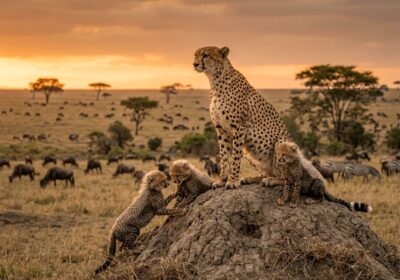
Cheetahs use the short-grass open plains, termite mound lookout points, and open ground near the Hidden Valley and Lake Masek shoreline. Mobile camps positioned within the NCAA zone consistently reach these areas by 6:30 AM — before cheetah activity peaks between 8:30 and 10:00 AM. Permanent lodges arrive at these zones 45–75 minutes later, missing the earliest and most active hunting window. For cheetah photography specifically, a well-positioned mobile camp is the right choice.
How many nights should I spend in Ndutu during calving season?
Two nights is the minimum viable stay — it gives 4 game drives and a reasonable chance of major sightings. Three nights is more practical, allowing weather variability, predator tracking across multiple zones, and at least two strong mornings on the plains. Four nights inside the Ndutu zone, combined with one night in Ngorongoro, produce the most complete calving season experience on a northern circuit route.
Can I see all of the Big Five in Ndutu?
You can realistically see four of the five. Lions, leopards, elephants, and buffalo are all present in the Ndutu ecosystem. Black rhinos are not found in the Ndutu plains — they are concentrated in the Ngorongoro Crater floor, a 60–90 minute drive from most Ndutu camps. Adding a morning Ngorongoro Crater descent to a 4–5 day itinerary is the standard approach for travelers wanting the full Big Five alongside calving season.
Is it safe to stay in a mobile tented camp in Ndutu?
Yes. Mobile camps are managed by experienced operators and are located within the NCAA conservation zone which is patrolled. Wildlife generally treats a tent structure as a solid object and does not attempt to enter. Camp perimeters are marked and staff are present overnight. The most important safety practice is following camp protocols — staying inside the tent from dusk until a guide escorts you in the morning, and never walking outside camp unaccompanied after dark.
Responsible Travel and Community Impact for Ndutu Safari Camps 2026
Mobile camps operating in the Ndutu NCAA zone typically employ local Maasai staff for camp setup, daily operations, and scout roles. Many also contribute directly to NCAA conservation fees and community development programs in nearby villages. When the camps dismantle at the end of the calving season, the sites return to undisturbed grassland — no permanent footprint.
When choosing an Ndutu camp operator, ask specifically which community programs their camp fees support and whether their guides are locally employed or brought in from other regions. A locally employed guide with years of Ndutu-specific experience is a more valuable asset than a generalist guide parachuted in for the season.
For official conservation and park regulations, consult TANAPA (Tanzania National Parks Authority) and the UNESCO Ngorongoro Conservation Area page.
Conclusion
In Ndutu during calving season, camp location consistently matters more than camp quality. A mobile camp 15 minutes from the action on a canvas bed outperforms a comfort lodge 75 minutes away on a sprung mattress — because the first hour of every morning is where this safari lives. If the goal is predator-prey interaction, synchronized calving, and off-road access to wildlife in motion, the camp choice should be made on proximity first, amenities second, Ndutu Safari Camps 2026.
If February 2026 mobile camps are already full when you read this, contact us about late January or early March availability — both are productive windows with the same wildlife and fewer vehicles, Ndutu Safari Camps 20261
Compare routes and book your 2026 calving season dates: 4-Day Big Cats Safari in Tanzania or browse all Ndutu-inclusive routes at Tanzania Safaris.
We Walk With You.
Plan Your Ndutu Safari the Right Way
Choosing between mobile and permanent camps can change your entire safari experience — especially during calving season.
Tell us:
- Your travel dates
- Budget range
- Main priority (big cats, photography, or comfort)
Our team will help you:
- Choose the right camp type
- Check real availability for 2026
- Build a safari route that maximizes wildlife time
Start planning here: https://kilimania.co.tz/contact
We Walk With You.
For park conservation information: TANAPA | NCAA