Most travelers book one or the other without understanding what they are actually trading away. Arrive in Ndutu two weeks too early, and the plains are empty. Choose the Central Serengeti in February, and you will miss the predator density that defines the whole season. This guide cuts through the confusion of the Ndutu vs Serengeti Safari
The Ndutu vs Serengeti decision is a timing decision, not a destination decision. Ndutu delivers the highest concentration of predator activity in Africa during calving season from mid-January to mid-February, with legal off-road access that no other Tanzania safari zone offers. The broader Serengeti provides year-round wildlife viewing across 14,750 square kilometers, with river crossings for migrating animals from July to September in the north. If your dates fall in January or February and you want predator action, choose Ndutu. For any other month, or for habitat variety and migration spectacle, choose Serengeti.
lean more Ndutu Wildlife Photography Safari Calving Season | 12 Ethics
Table of Contents
Introduction
This guide compares Ndutu and Serengeti in specific practical terms — seasonal windows, park fee structures, accommodation realities, off-road access rules, and wildlife density — so you can match the right ecosystem to your travel dates and priorities.
It is written for first-time Tanzania safari travelers, couples, wildlife photographers, and mid- to luxury-level visitors planning a 2026 trip who want honest, specific guidance rather than vague seasonal summaries. Explore more options on our Tanzania safari guide
Our Moshi-based guides have tracked lion prides and cheetah families in both ecosystems for over 15 years. One consistent observation: the travelers who get the most from either park are the ones who choose their location to match their dates, not their dates to match a lodge they liked the look of. Follow the migration, not the map.
Start by exploring our Tanzania Safaris to see which itineraries match your travel window.
Ndutu vs Serengeti Safari: What Is the Real Difference?
Ndutu is not a separate national park. It is a specific zone within the southern Serengeti ecosystem, situated at the boundary between the Ngorongoro Conservation Area and the Serengeti National Park. The name refers to Lake Ndutu and the surrounding short-grass plains where the Great Migration concentrates between late December and March each year.
Here is the logistical detail that most Ndutu vs Serengeti comparisons miss entirely: Ndutu straddles two park jurisdictions with different fee structures and different rules. If your camp sits on the Ngorongoro Conservation Area side, you pay NCA fees of USD 71 per person per day. If your game drive crosses the boundary into Serengeti National Park on the same day, you pay Serengeti fees of USD 83 per person per day on top of that — a total of USD 154 per person for a single day.
Some itineraries require crossing both, but many do not. Our guides recommend staying on the NCA side of Ndutu, where possible, to avoid double fees unless your itinerary specifically benefits from Serengeti access. This can save USD 50–80 per person per day. Always confirm the exact camp location and park boundaries with your operator before booking.
There is a second rule that separates Ndutu from the Serengeti and matters enormously for photographers: the Ndutu Conservation Area legally permits off-road driving. Serengeti National Park strictly forbids it. This means a Kilimania guide in Ndutu can leave the track to follow a cheetah hunt or position closer to an active lion pride — legally and ethically. In the Serengeti, every vehicle stays on designated roads regardless of what is happening 30 meters into the bush.
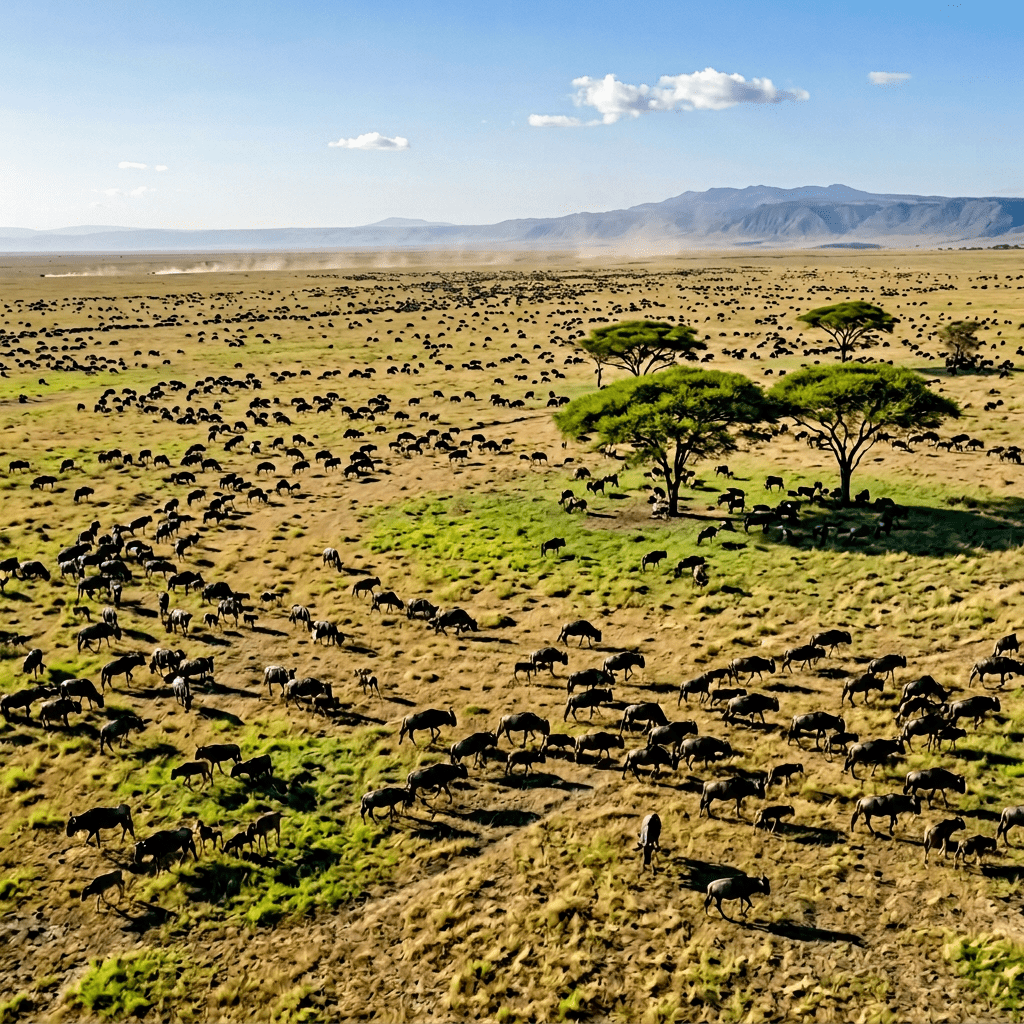
According to TANAPA (Tanzania National Parks Authority), the Serengeti ecosystem supports approximately 3,000 lions and over 1.5 million wildebeest — the largest terrestrial mammal migration on Earth. Ndutu is where that migration concentrates for its most vulnerable and most dramatic period.
When to Visit Ndutu vs Serengeti: The Honest Timing Breakdown
Ndutu Calving Season: Mid-January to Mid-February (Peak)
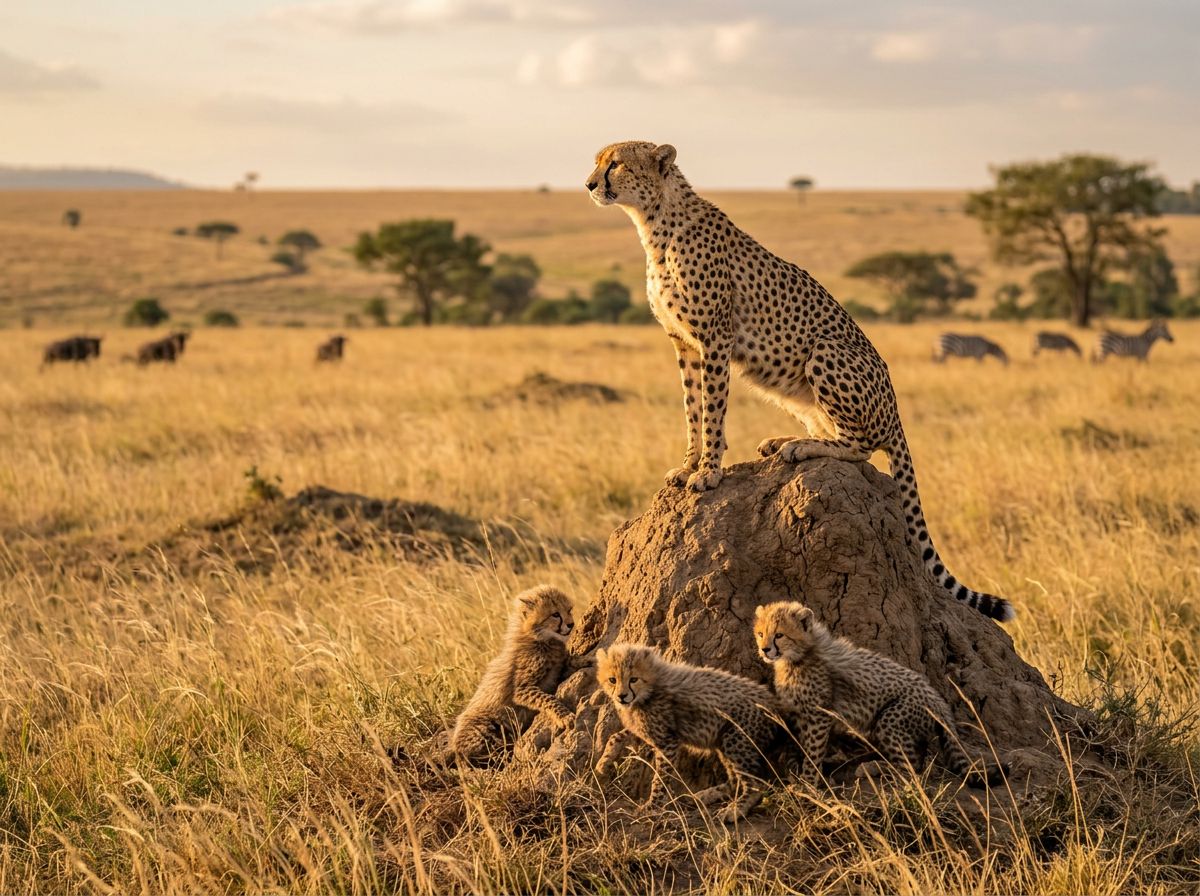
The Ndutu calving season runs from late December to early March. But the peak — the window when predator density, calf vulnerability, and hunting frequency all peak simultaneously — is mid-January to mid-February. Arrive in early December, and the herds are still scattered. Arrive in late March, and the calves have grown legs, the mothers are moving north, and the predators have dispersed.
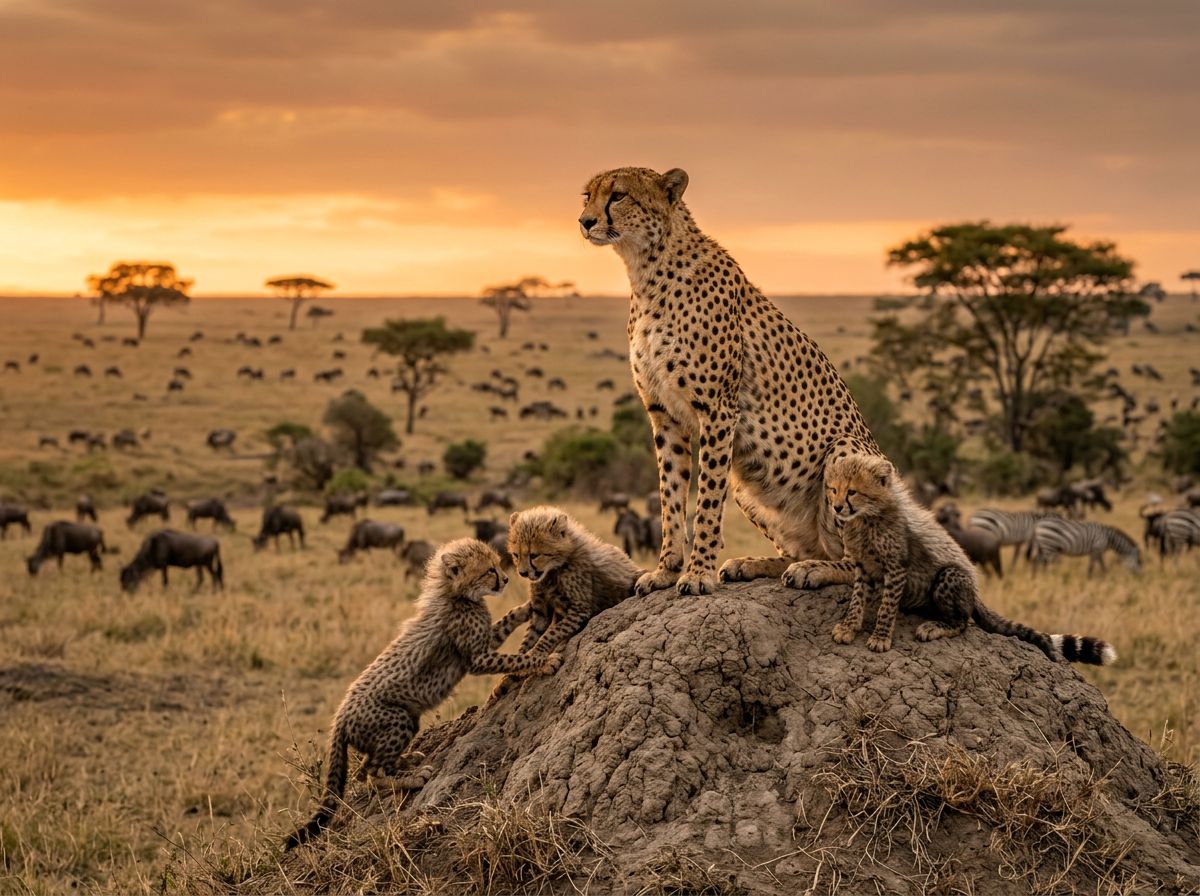
Over 8,000 wildebeest calves are born daily on the Ndutu plains at peak season. Lions exploit coordinated prides. Cheetahs sprint across open short-grass plains with clean sightlines. Hyena clans shadow every birth. Leopards work the acacia thickets. This level of hunting frequency does not occur anywhere else in Tanzania at any other time.
One crowd-avoidance note: mid-February brings vehicle congestion. A single lion kill can draw 15–20 safari vehicles. If you want calving season action with fewer vehicles, book late January or the first week of March. The herds are still present, but tourist numbers drop significantly.
Serengeti Year-Round: Four Distinct Seasons
The Serengeti delivers consistent wildlife across the year, but the experience varies substantially by region and month.
- June to October (dry season): Grass is short, water sources concentrate animals, and the northern Serengeti (Kogatende, Lamai area) hosts dramatic wildebeest river crossings from July to September as the herds move into Kenya’s Maasai Mara. This is the migration spectacle season — movement and volume, not predator density.
- January to March: The southern and central Serengeti overlap with Ndutu. If you stay in Central Serengeti (Seronera) during these months rather than moving to Ndutu, you will see the same prey but far fewer predator interactions because the animals are spread across a much larger area.
- April to May (long rains): Heavy rainfall, some road closures, and the lowest tourist numbers of the year. Some lodges close. Those that remain open offer substantial discounts — 20–30% reductions are common. Wildlife is present, and the landscape is green.
- November to December (short rains): Herds begin moving south toward Ndutu. Transitional wildlife, good birdwatching, and lower crowds before the calving season peak.
“In February 2025, our guide tracked a cheetah hunt in Ndutu that lasted over 18 minutes — something rarely possible in the Serengeti due to road restrictions.”
For a full predator timing breakdown across Tanzania, read our guide on the Best Time to See Big Cats in Tanzania.
Ndutu vs Serengeti: Wildlife and Predator Density
| Feature | Ndutu (Jan–Mar) | Serengeti (Year-Round) |
|---|---|---|
| Primary wildlife | Calving herds + concentrated predators | Migration + resident wildlife |
| Predator density | Extremely high (all species present) | Moderate to high (distributed) |
| Off-road access | Legal and practiced | Strictly prohibited |
| Hunting frequency | Multiple times daily at peak | Variable — hours between sightings |
| Leopard sightings | Moderate (acacia thickets) | High Aug–Oct (Seronera dry season) |
| Photography conditions | Short grass, open sightlines, action | Varied terrain, golden dry-season light |
| Vehicle congestion | High in Feb; minimal other months | Moderate across peak season |
| Park fees per day | $71 NCA or $71+$83 if crossing into SNP | $83 SNP only |
| Accommodation | Seasonal mobile camps (Dec–Mar only) | Permanent lodges year-round |
| Booking lead time | 6–9 months for February | 3–4 months typically |
| Sample mid-range cost | From $1,600–$2,200 per person (4 days) | From $1,400–$1,900 per person (4 days) |
Ndutu is unmatched for predator-prey interaction during calving season. The combination of vulnerable prey, off-road access, flat terrain, and short grass produces a wildlife photography environment that does not exist elsewhere in Tanzania. Serengeti offers more habitat diversity — kopje-dwelling lions, riverine leopards, woodland elephants — and greater year-round flexibility.
For travelers who want both predator action and an aerial perspective, our 4-Day Big Cats and Balloon Safari combines Ndutu ground drives with a hot-air balloon flight over the calving plains.
Accommodation Reality: What Most Articles Do Not Tell You about Ndutu vs Serengeti Safari
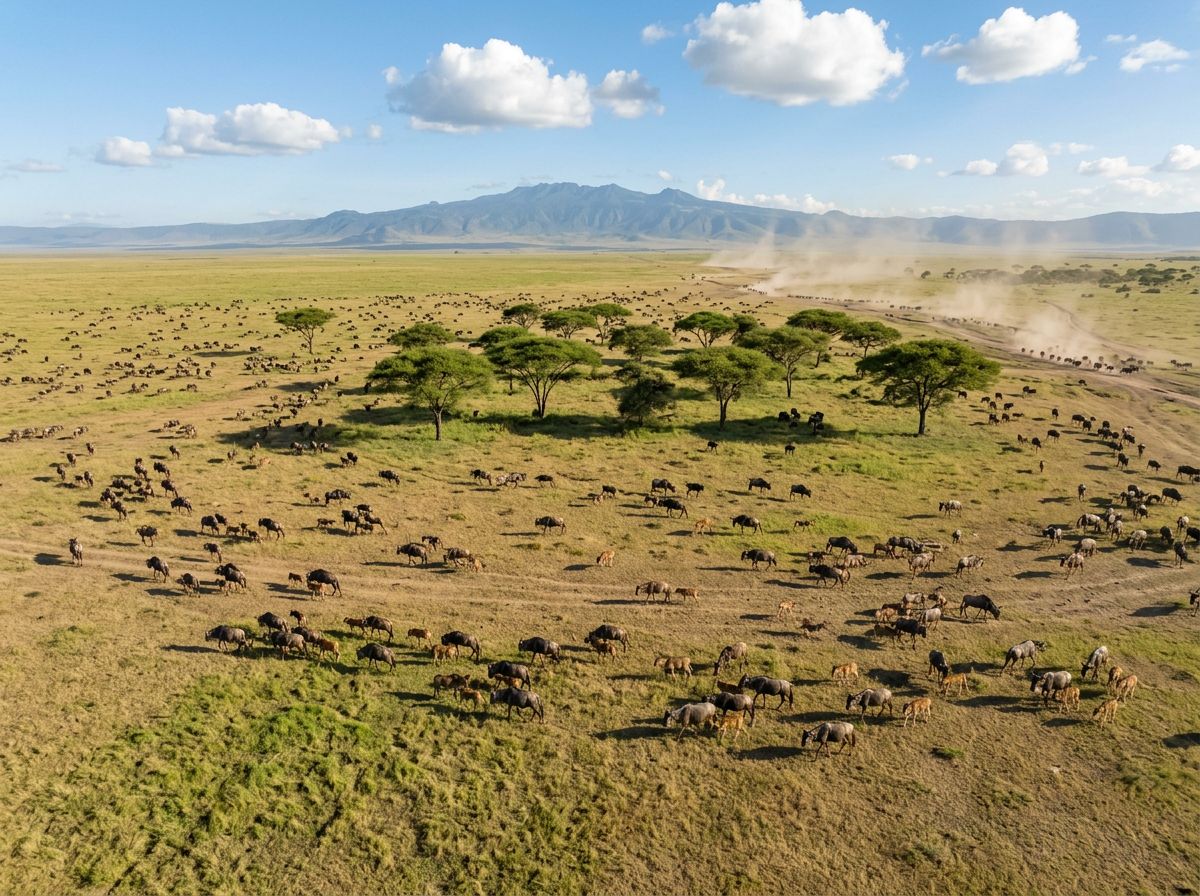
Ndutu has very few permanent structures. Most operators use seasonal mobile camps that set up from December to March and move north with the herds as the calving season ends. These camps are comfortable — en-suite canvas tents, hot showers, dining tents, nightly campfire — but they are not full lodges.
The tactical advantage of mobile camps is proximity. They position themselves within the calving grounds, cutting morning drive time to minutes rather than hours. The disadvantage is availability. February camps in Ndutu book out 6–9 months in advance. January and early March have more availability but still require 3–6 months’ notice.
Here is the accommodation reality that no competitor article mentions: if you want to visit Ndutu outside December to March, you physically cannot stay there. The camps are packed up and gone. You must stay in Central Serengeti (Seronera area) and drive 2–3 hours each way to reach Ndutu for day trips. This adds vehicle time, fuel cost, and removes the option of early-morning and late-evening drives from inside the calving area. It is a substantially different experience.
The Serengeti offers a wider accommodation range and year-round availability — budget camping, mid-range lodges, and exclusive luxury camps at every price point. The northern Serengeti has remote camps near the Mara River, ideal for the migration crossing season, but with a significant price premium.
Ndutu vs Serengeti Safari: Which One Should You Choose? A Decision Framework
Ndutu vs Serengeti Safari: Choose Ndutu if:
- Your travel dates fall between mid-January and mid-February
- Predator action and wildlife photography are your primary goals
- You want legal off-road access to follow hunts and position for shots
- You prefer concentrated short-game-drive days with high action
- You are comfortable booking 6–9 months in advance
Ndutu vs Serengeti Safari: Choose Serengeti if:
- You are traveling from June to October for migration and river crossings
- Your dates do not fall within the January–February calving window
- You want more habitat diversity — kopjes, rivers, woodlands, open plains
- You need flexible booking windows and year-round lodge availability
- You want to combine several different wildlife zones in one trip
Combine both if:
- You have 6–7 days and are traveling from January to March — 3 days Ndutu, 2 days Ngorongoro Crater, and 1–2 days Central Serengeti, covering all three ecosystems in one itinerary
First-time safari travelers: if your dates are flexible, shift them to mid-January. The wildlife difference justifies the calendar adjustment more than any other single decision you can make.
Many travelers combine a safari with Mount Kilimanjaro climbing.
The Most Costly Planning Mistake: Ndutu vs Serengeti Safari
The biggest error our Moshi team sees year after year is travelers choosing their region before choosing their dates.
Booking a Serengeti safari in February without moving to Ndutu means missing the calving season entirely — the herds are in the south, and you are in the central park, driving long distances between sightings. Visiting Ndutu in July means arriving after the camps have closed and the herds have moved north, leaving resident wildlife only, with 2–3 hour transfer drives from Seronera each way.
The second most costly mistake is booking a shared vehicle for a predator safari. Shared vehicles operate on fixed schedules. When a cheetah begins a chase at 7:40 AM, a shared vehicle leaves at 8:00 AM regardless. A private 4×4 stays until the hunt concludes, repositions for the best light angle, and acts on radio tips from other guides in the network in real time. For the kind of wildlife photography that Ndutu makes possible, a private vehicle is not a luxury.
Follow the migration, not the map. Learn more on Ndutu Calving Season 2026: Insider Migration Calendar & Booking Guide
“In February 2024, our guide followed a lion hunt in Ndutu for over 25 minutes — something not possible in Serengeti due to road limits.”
For shorter trips, see our Tarangire walking and night safari.
Essential Gear for Safaris
Telephoto lens (400–600mm minimum): Non-negotiable for predator photography. The ethical distance from an active hunt in Ndutu is 25 meters—a 600 mm lens fills the frame at that distance. Most travelers rent telephoto lenses in Arusha; we coordinate quality-verified rentals before departure.
8×42 binoculars: Essential for scanning kopjes (rocky outcroppings where lions rest at midday) and spotting cheetah silhouettes on termite mounds at 300 metres.
Beanbag support: We carry beanbags in all vehicles. A beanbag resting on the pop-up roof rim stabilizes a 600mm lens far more effectively than any tripod and works in every vehicle position.
Neutral clothing — tan, khaki, or olive green: Avoid blue and black. Dark colors attract tsetse flies in the bush; bright colors disturb animals at closer ranges.
Layered kit: Ngorongoro crater rim mornings drop to 10°C in January. Ndutu plains reach 34°C by 2:00 PM on the same day. Both happen on Day 3 of our Big Cats itinerary. Pack merino wool base layers and a midweight fleece.
Dust protection for camera gear: Ndutu and Serengeti tracks throw significant dust. Bring a dust-proof cover or, at a minimum, a sealed plastic bag for lenses when driving between sightings.
Antimalarial medication: Both ecosystems are malaria zones. Begin medication 1–2 weeks before travel and confirm the right type with your doctor (typically atovaquone-proguanil or doxycycline).
Portable power bank (20,000mAh): Mobile camps in Ndutu often have limited charging hours. Camera batteries and guides’ radio devices drain faster in the field than expected.
For responsible wildlife viewing, both Ndutu and Serengeti operate under TANAPA conservation protocols and the UNESCO Serengeti World Heritage Site guidelines. Our guides maintain a minimum 25metere distance from all active predator sightings and do not use baiting or food to attract wildlife. Choosing a local operator ensures that guides, drivers, and nearby communities benefit directly from the tourism revenue.
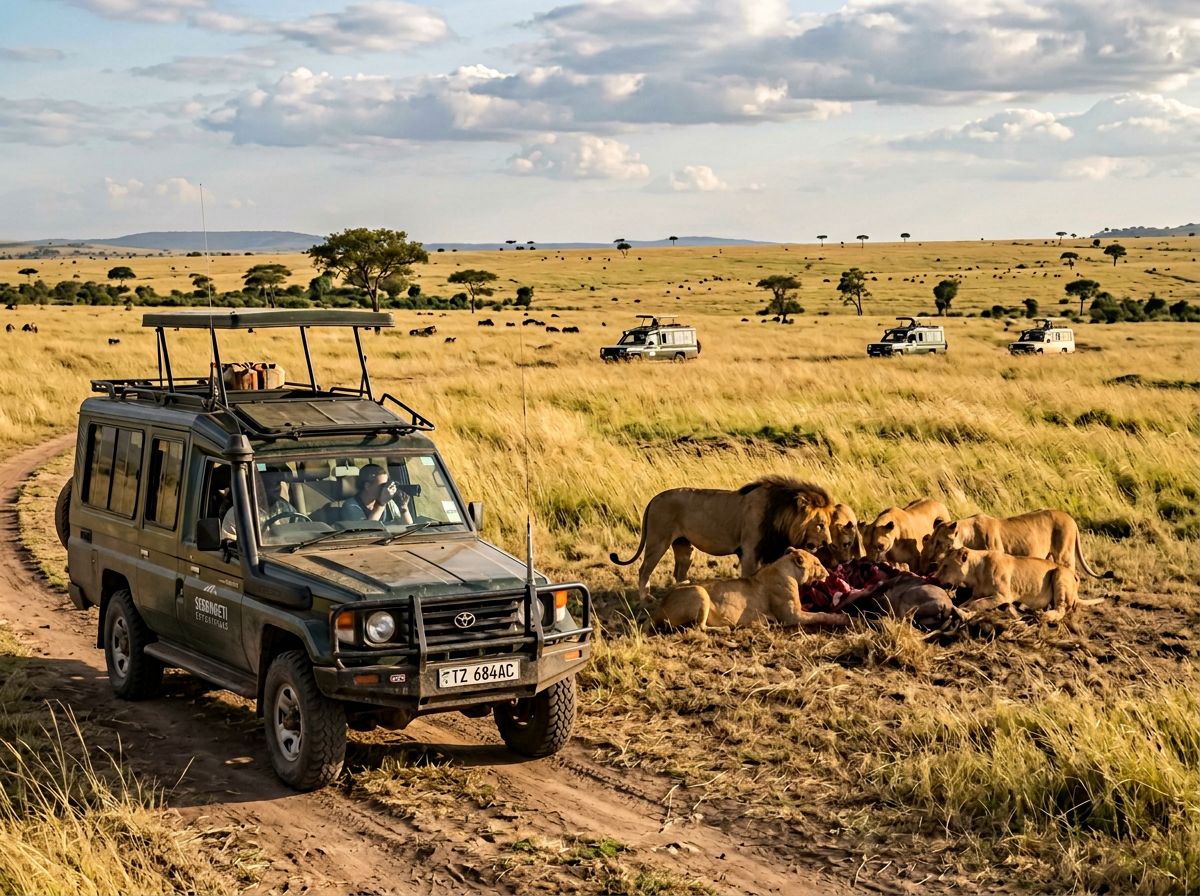
Ndutu vs Serengeti Safari Comparison
Ndutu (Jan–Feb)
– Calving season
– High predator activity
– Off-road driving allowed
Serengeti (Jun–Oct)
– Migration river crossings
– Larger ecosystem
– Year-round safari options
FAQ Ndutu vs Serengeti Safari
Q: Can I visit both Ndutu and Serengeti in one trip?
Yes, and for calving season travelers, this is the recommended approach. A 4-day itinerary typically combines 2 days in Ndutu with 1 day in Ngorongoro Crater and drives through Central Serengeti en route. A 6–7 day itinerary can add a full Seronera game drive and a Ngorongoro Crater descent. Drive time between Ndutu and Central Serengeti is approximately 2–3 hours, depending on the route and conditions.
Q: Is Ndutu worth visiting outside calving season?
For dedicated wildlife travelers, yes — but with realistic expectations. From April to November, Ndutu has resident wildlife including elephants, giraffes, gazelles, and predators. But the camps close, tourist infrastructure disappears, and you must stay in Seronera and make long day trips. The predator density drops by 60–70% compared to February. If you are traveling outside January–March, Central Serengeti or Tarangire will likely produce stronger overall results.
Q: Which is better for first-time safari travelers?
If you can travel mid-January to mid-February, Ndutu produces the most dramatic wildlife encounters and is excellent for first-timers. If your dates fall outside that window, the Serengeti offers more consistent year-round sightings, better permanent infrastructure, and more accommodation options at every price point. Both are strong first experiences — timing is the deciding factor.
Q: Do I need a private vehicle, and how much does that add to the cost?
For serious predator viewing and photography, a private vehicle is strongly recommended. The cost difference between a shared and private 4×4 on a mid-range 4-day safari is typically USD 150–300 per person, depending on group size. Divided across a group of four, this is USD 40–75 per person — a minor addition for the ability to stay at a sighting indefinitely and position for optimal angles.
Q: How far in advance should I book a February Ndutu safari?
Book 6–9 months ahead for February departures. The best camps have only 8–16 beds and fill completely. January and early March departures have more availability but still benefit from 3–6 months’ notice. Contact our Moshi office at kilimania.co.tz/contact, and we will check availability and hold a provisional spot within 24 hours.
Conclusion
Ndutu and Serengeti are not competing destinations — they are seasonal variations of the same ecosystem. The question is not which is better. The question is which one of your travel dates puts you in a position to experience it at its peak. See reviews on our Google Business profile.
If you are traveling mid-January to mid-February, Ndutu’s calving season delivers predator density and off-road access that nothing else in Tanzania matches. If you are concerned about February vehicle congestion, book late January or early March — the wildlife is still present, the crowds are lighter, and the experience is more private, Ndutu vs Serengeti Safari
If your dates fall outside the calving window, the Serengeti provides reliable year-round wildlife, the migration river crossings from July to September, and more accommodation flexibility at every budget level.
Explore our 4-Day Big Cats Safari in Tanzania to see the full calving season itinerary — day by day, camp by camp — and view our Tanzania Safaris page to compare all northern circuit options.
Kilimania Adventure — We Walk With You, from the first date comparison to the moment your guide cuts the engine beside an active cheetah hunt on the Ndutu plains.
Written by Kilimania Adventure Editorial Team
Reviewed by a Tanzania-licensed safari guide based in Moshi, Sabinus S. Msimba
Kilimania Adventure — We Walk With You, from planning to unforgettable experiences. Moshi, Tanzania | kilimania.co.tz