
Among the accessible day trips Tanzania offers from Moshi, Chemka Hot Springs is the most manageable for travelers with limited mobility: the site is flat and getting into the water is relatively easy. Maasai Boma visits and the Arusha City day trip can also work, depending on how far and how long you can comfortably walk.
Materuni Waterfalls, Shira Plateau and the Kilimanjaro day hike are poor fits. Steep, wet trails and, on Shira, high altitude create demands that a slower pace cannot remove. Mobility differs from one person to the next, so treat the ratings below as a starting point, and describe your real limits to the operator before you book.
In this guide
Accessible Day Trips Tanzania: The Honest Assessment
Each trip is rated by what it asks of your body: ground surface, slopes and steps, time on your feet, distance from the vehicle, and altitude. The ratings describe walking demands only. They are not a facility audit, and none of them means a site is wheelchair-accessible.
| Trip | Mobility assessment | Main terrain issue | Who it may suit | Important caution |
|---|---|---|---|---|
| Chemka Hot Springs | Excellent | Flat site; relatively easy water entry | Slow walkers; travelers who need frequent rests | Deeper sections in the pool; rough final stretch of road |
| Maasai Boma | Good | Generally flat, open natural ground | Travelers who can stand and walk short distances | Welcomes and demonstrations involve standing |
| Arusha City | Good | Mostly flat city walking | Travelers who manage short walks between stops | Pavements, kerbs and steps vary by site |
| Materuni Waterfalls | Not suitable | Steep, uneven trail; slippery after rain | Confident walkers with good balance | The trail is the only way to the falls |
| Shira Plateau | Not suitable | 3,400–3,800 m altitude; rough, exposed ground | Fit hikers comfortable at altitude | Altitude affects people unpredictably |
| Kilimanjaro Day Hike | Not suitable | Steep, uneven forest trail | Fit hikers | Roughly 5–7 hours of hiking |
- Excellent means the easiest ground on this list. It does not mean accessible for every disability or condition.
- Good means manageable for someone who walks independently over short distances. It does not mean wheelchair-accessible in every respect.
- Not suitable means the core activity depends on terrain or altitude that slower pacing does not fix.
One pattern surprises people: a shorter drive is not an easier day. Materuni is closer to Moshi than Chemka, yet far harder on the legs, because what counts is the ground you cover once you step out of the vehicle.
Chemka — The Most Manageable Option for Limited Mobility
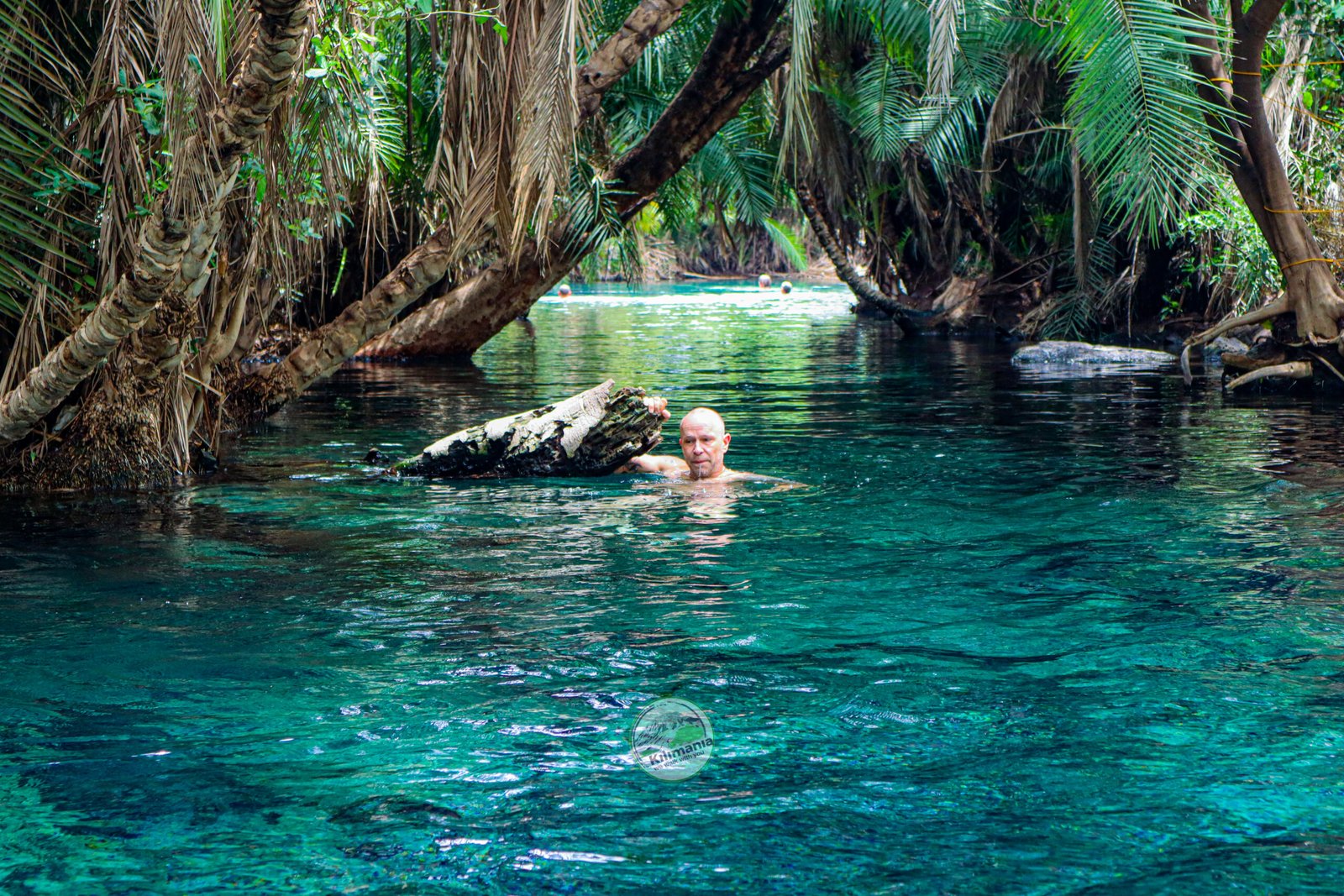
Chemka Hot Springs, also called Kikuletwa, is the most manageable day trip from Moshi for limited mobility because the site is flat and the water can be reached without a climb or scramble. The main activity, sitting beside or floating in clear water, does not depend on how far you can walk.
The name misleads people. Chemka means “boiling” in Swahili and describes the way water bubbles up from the ground, not its temperature. The water is approximately 27°C: warm and comfortable, not a hot tub. For travelers who find cold water hard on stiff joints, that matters.
What still needs checking at Chemka
- Depth: the pool has deeper sections as well as shallow edges. Weaker swimmers stay near the edges, with the guide close by.
- The road in: the drive from Moshi takes about 45–75 minutes, and the final stretch is a rough road. If jolting causes back or hip pain, say so.
- Crowds: weekends are busy with local visitors; weekdays are quieter and easier for anyone moving slowly.
- Distance, seating and toilets: these vary with where the vehicle can park on the day and how busy the site is. If they matter to you, ask at booking how far the walk to the water is, whether there is somewhere to sit, and what the toilet arrangements are.
A private Chemka trip is from $70 per person for a group of five; smaller private groups pay more per person, and the Chemka Hot Springs day trip page shows the full breakdown. For the site itself, see the complete Chemka Hot Springs guide, or compare it with the rest of Kilimania’s private day trips from Moshi.
Maasai Boma — What the Ground Conditions Are Like
A Maasai Boma visit can work for many seniors and low-mobility travelers because the ground is generally flat and the walking is short compared with any hiking-based excursion. It is not, however, a seated performance from start to finish.
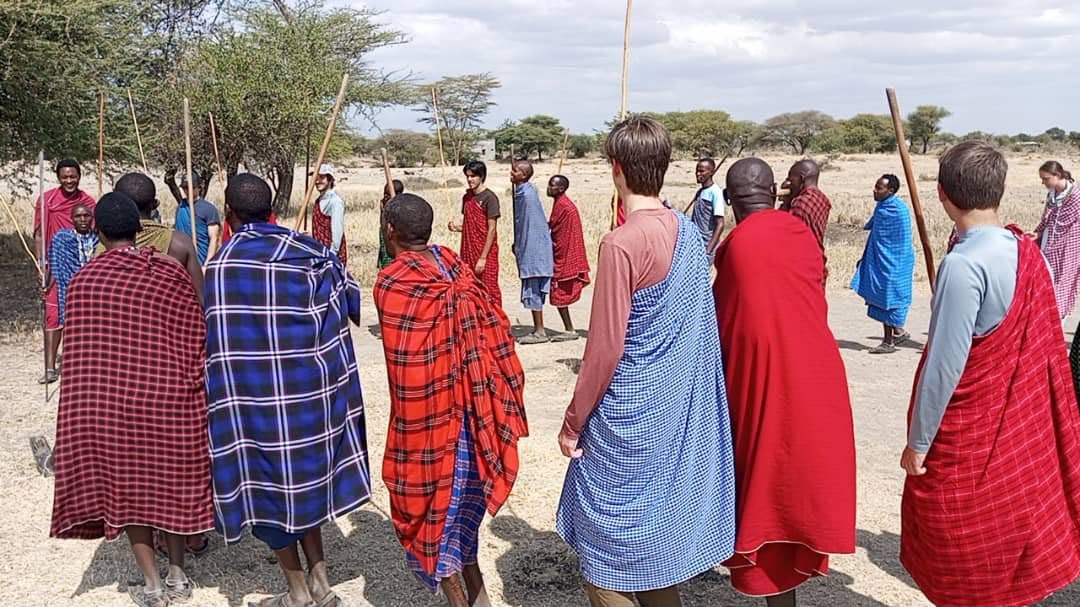
Welcomes, dances and demonstrations usually mean standing, and moving around the homestead means short walks on uneven natural ground. Time on site is typically 2–4 hours. If you need to sit for most of the visit, say so when you book, so the visit can be planned around it. The Maasai Boma cultural day trip is from $75 per person for a private group of five.
Arusha City — Mostly Flat, But Walking Still Matters
The Arusha City day trip suits travelers who can manage short walks, because the city is mostly flat and stops are linked by vehicle. “Mostly flat” still leaves pavements that change from smooth to broken, high kerbs, busy market lanes and standing time in the sun.
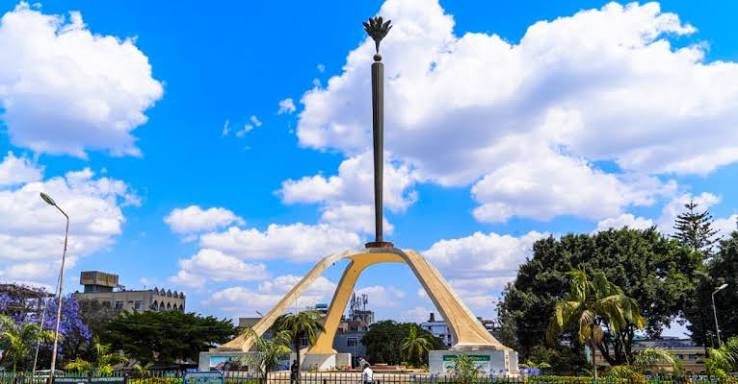
The practical approach is to choose stops around your walking ability rather than taking every stop on offer. Ask which stops are included, whether the vehicle can drop you at each entrance, which stops involve steps, and where the toilets are. The Arusha City day trip is from $75 per person for a private group of five. It is a city trip, not the Arusha National Park safari.
Trips That Are Poor Fits for Limited Mobility
A guide can slow the pace, stop more often and choose the safest line. A guide cannot flatten a trail, dry a muddy slope or lower an altitude. That is why these three trips are rated not suitable rather than “challenging”.
Materuni Waterfalls
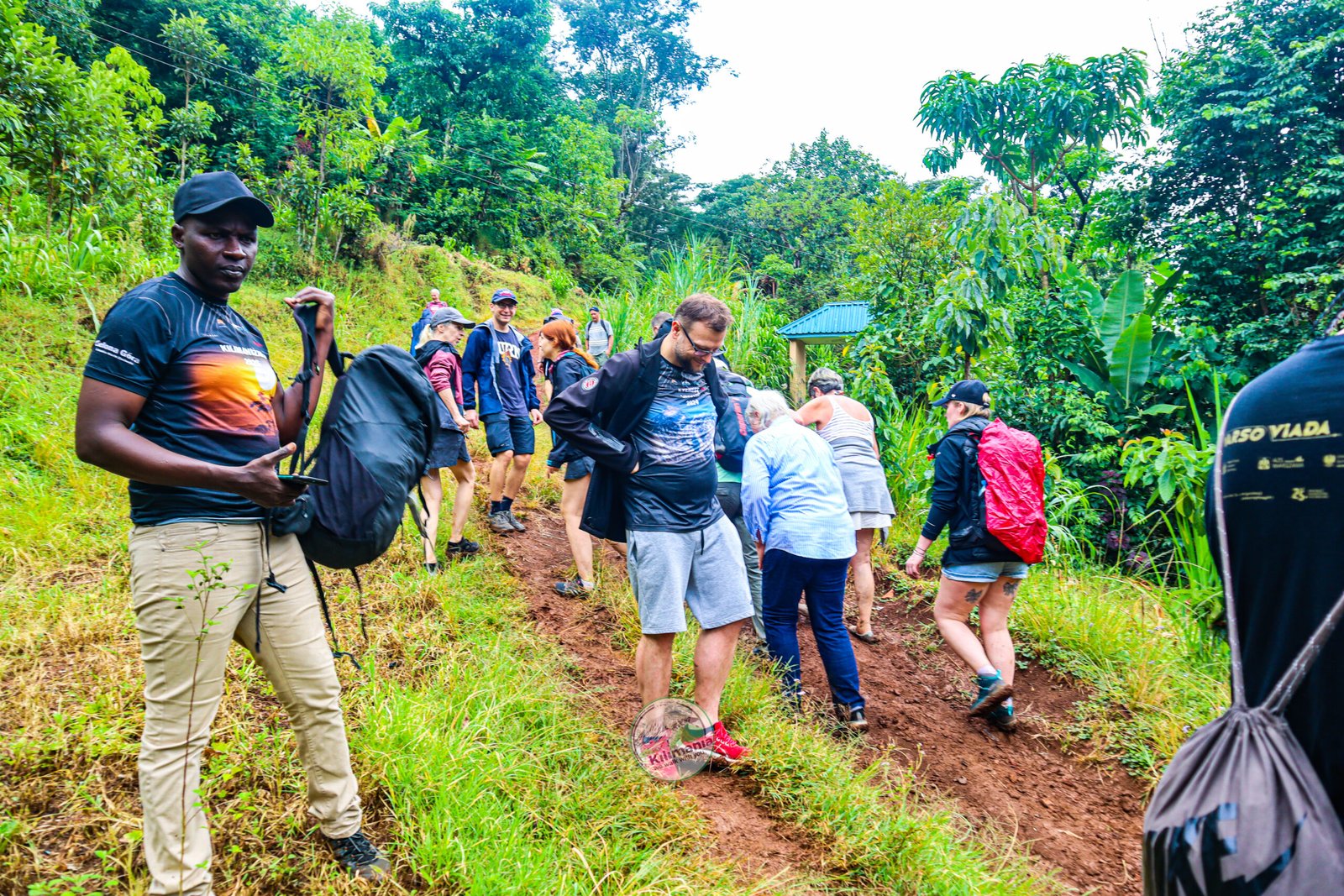
Materuni requires a guided walk of roughly 45–60 minutes each way through farmland and forest, with steep sections, uneven footing and rocks that turn slippery after rain. The waterfall is the destination, so the walk cannot be skipped or shortened to something flat. Descending a wet slope demands balance and knee strength that many travelers with limited mobility do not have. The Materuni Waterfalls day trip is from $85 per person for a private group of five, for active walkers.
Shira Plateau
Shira combines a long approach, about two hours to Londorossi Gate followed by a 4×4 track, with hours on rough, exposed ground on the high plateau of Kilimanjaro National Park, managed by KINAPA.
The Shira Plateau day trip is from $190 per person for a private group of five, and it is not a suitable choice for limited mobility.
Kilimanjaro Day Hike
The Kilimanjaro day hike on the Marangu route, not the Marangu Waterfalls cultural trip, starts at Marangu Gate (about 1,870 m) and involves roughly 5–7 hours of hiking on a steep, uneven forest trail inside the Kilimanjaro National Park World Heritage Site. It is a mountain hike, and no guide can carry or assist a guest through that terrain as a substitute for walking it.
Who These Trips Suit — and Who Should Choose Something Else
May work for
- Travelers who walk independently on flat ground
- Travelers who need a slower, pole pole pace
- Travelers who manage short walks with regular rests
Needs individual assessment
- Travelers using a walking stick or frame
- Travelers with balance difficulties
- Travelers recovering from a recent injury or operation
- Travelers with significant fatigue limits
Should choose something else
- Travelers unable to walk over uneven ground or manage steps and slopes
- Travelers who need confirmed wheelchair-accessible infrastructure: none of these sites has been verified as such
If wildlife is the goal and walking is the barrier, a vehicle-based game drive such as the Arusha National Park safari keeps walking low. Safari parks are managed by TANAPA. Safari vehicles sit higher than a car, so ask about the step height and how getting in and out is handled, and tell the team in advance if you travel with a folding walker or wheelchair.
Whether any trip is appropriate depends on your individual mobility and medical needs. If you have a condition that affects walking, balance, exertion or altitude tolerance, discuss the trip with your healthcare professional before booking.
What to Ask Before Booking
Vague answers such as “it’s easy” or “we’ll manage” are the thing to avoid. These questions force specific ones, from Kilimania or any operator:
- How far will I walk from the vehicle?
- Is the ground flat, uneven, muddy or rocky?
- Are there steps, and how many?
- Can the vehicle get close to the main activity?
- Are there places to sit during the activity?
- How long will I be on my feet in total?
- What happens if I cannot complete the walk?
- What are the toilet arrangements?
- Can the itinerary be adjusted around my walking ability?
- What should I tell you about my mobility before booking?
Rain changes ground conditions on every trail; for conditions through the year, see the month-by-month conditions guide. For what to carry, the day-trip packing list covers each trip type.
Describe your walking the way a guide can use it. Examples: “I can walk on flat ground for about 20 minutes, then I need to sit.” “I use a walking stick and cannot manage steps without a rail.” “I can get into a car but not a high vehicle without help.” One sentence like this is worth more than “I’m a bit slow.”
Tell Kilimania about your actual mobility needs before confirming the trip. Not every itinerary can be modified, and it is better to hear that before you pay.
Not sure your walking ability fits a trip?
Describe how far you walk comfortably, whether you use a stick or frame, and what worries you. The Kilimania team replies within 12 hours, 7 days a week (EAT), and will say plainly which trip fits, including when the answer is none.
Sabinus’s Note From the Trail
- Who
- Sabinus Msimba, senior guide and co-founder, Kilimania Adventure, Moshi
- When
- Every time a family writes to ask whether a parent or grandparent can manage a day trip
- What I look at
- I do not start with age. I ask three things: can you walk on uneven ground without holding on, can you manage a slope down and back up, and how long can you stay on your feet? A fit 75-year-old and a 40-year-old recovering from knee surgery can get very different answers. Most of the time the honest answer points to Chemka first, because the water is the activity and the walking is the smallest part of the day.
- Why it matters to you
- Answer those three questions for yourself before you look at any itinerary. If the answer to the second one is no, Materuni, Shira Plateau and the Kilimanjaro day hike are off the list, however much time you have. Pole pole (slowly, slowly) helps on flat ground; it does not change a slope.
Frequently Asked Questions
What are the most accessible day trips in Tanzania?
From Moshi, Chemka Hot Springs is the most manageable day trip for limited mobility because the site is flat and getting into the water is relatively easy. Maasai Boma visits and the Arusha City day trip can also work for travelers who manage short walks. None has been verified as wheelchair-accessible, so describe your needs before booking.
Is Chemka Hot Springs suitable for seniors?
Chemka suits many older travelers: the site is flat, the water is warm at about 27°C, and getting in involves no climb or scramble. Deeper sections exist, so weaker swimmers should stay near the edges with a guide close by. The last stretch of the drive from Moshi is a rough road, which matters if jolting causes pain.
Is Materuni Waterfalls suitable for seniors with limited mobility?
No. Reaching Materuni Waterfalls means a guided walk of roughly 45–60 minutes each way on a steep, uneven trail that becomes muddy and slippery after rain. The walk is the only way to the falls, so it cannot be skipped. Travelers with balance or mobility limits should choose Chemka instead.
Can a person with limited mobility visit a Maasai Boma?
Often, yes. The ground at a boma is generally flat, open dirt, and walking distances are short compared with any hiking trip. Expect to stand during welcomes and demonstrations and to walk short stretches on uneven natural ground. Tell Kilimania in advance if you need to sit for most of the visit.
Is the Kilimanjaro day hike suitable for older travelers?
Only for fit, confident hikers. The Kilimanjaro day hike on the Marangu route involves roughly 5–7 hours of hiking on a steep, uneven forest trail inside Kilimanjaro National Park. It is not suitable for travelers with mobility limitations, and a guide cannot make the trail easier or carry a guest through it.
Is Shira Plateau suitable for seniors?
Not for travelers with limited mobility. Guests sleep in Moshi at about 900 m but spend several hours at 3,400–3,800 m on rough, exposed ground. Altitude affects people unpredictably, regardless of age or fitness. Anyone with a condition affecting breathing or exertion should discuss altitude with a doctor before considering it.
What should I tell a Tanzania tour operator about my mobility needs?
Be specific: how far you can walk without stopping, whether you use a stick, frame or wheelchair, whether steps or slopes are a problem, how long you can stand, how you manage climbing into a raised vehicle, and any toilet needs. Specific details let an operator give a clear yes or no instead of vague reassurance.
Are there wheelchair-accessible day trips from Moshi?
None of the day trips in this guide has been verified as wheelchair-accessible. Sites such as Chemka and a Maasai boma have natural ground rather than paved paths or ramps, and safari vehicles sit high. A wheelchair user should describe their transfer ability and equipment to the operator before planning anything, and not assume access without direct confirmation.
Can Kilimania adapt a day trip for someone who walks slowly?
Pace is the easiest thing to adjust on a private day trip. What cannot change is the terrain: a slower pace makes Chemka more comfortable, but it does not make the Materuni trail any flatter. Share your walking ability when you enquire and the team will say plainly what can and cannot be adapted.
Plan a day trip around your mobility
Tell us your group size, dates and walking limits, and we will recommend the trip that fits, or say honestly if none does.
The Short Version
When choosing between the accessible day trips Tanzania offers from Moshi, the dividing line is ground, not distance. Chemka’s flat site and easy water entry make it the most manageable choice, even though Materuni sits closer to Moshi. Maasai Boma and Arusha City suit short walkers, while Materuni, Shira Plateau and the Kilimanjaro day hike demand slopes, balance or altitude that pacing cannot remove. For how every option fits together, see the day trips from Moshi guide.
We Walk With You — at your pace.
Disclosure: Kilimania Adventure operates the day trips linked in this article. Mobility ratings reflect the Kilimania guide team’s assessment of terrain and altitude; they are not an accessibility audit or medical advice. Prices are per person in USD for private trips from Moshi, as of September 2026.