
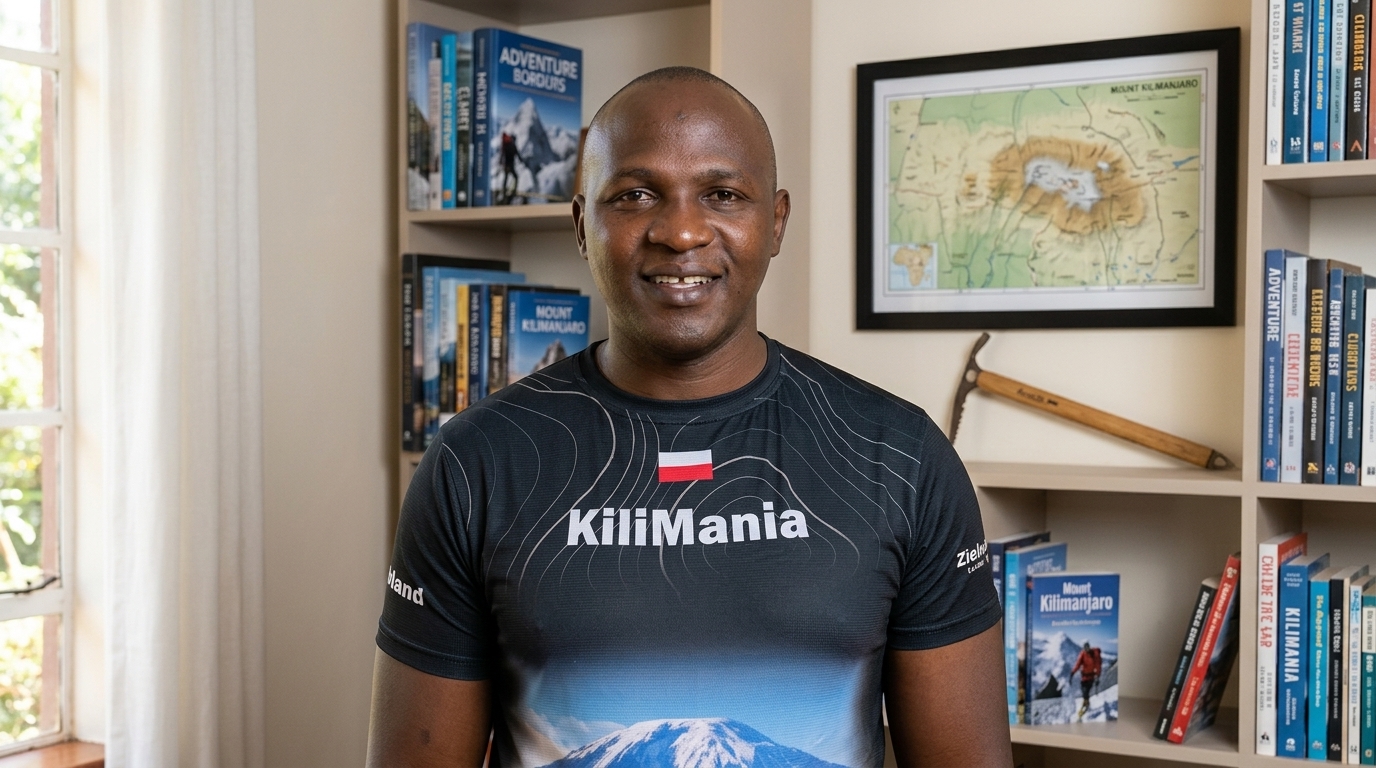
By Sabinus Msimba, senior guide based in Moshi, KINAPA-licensed since 2003
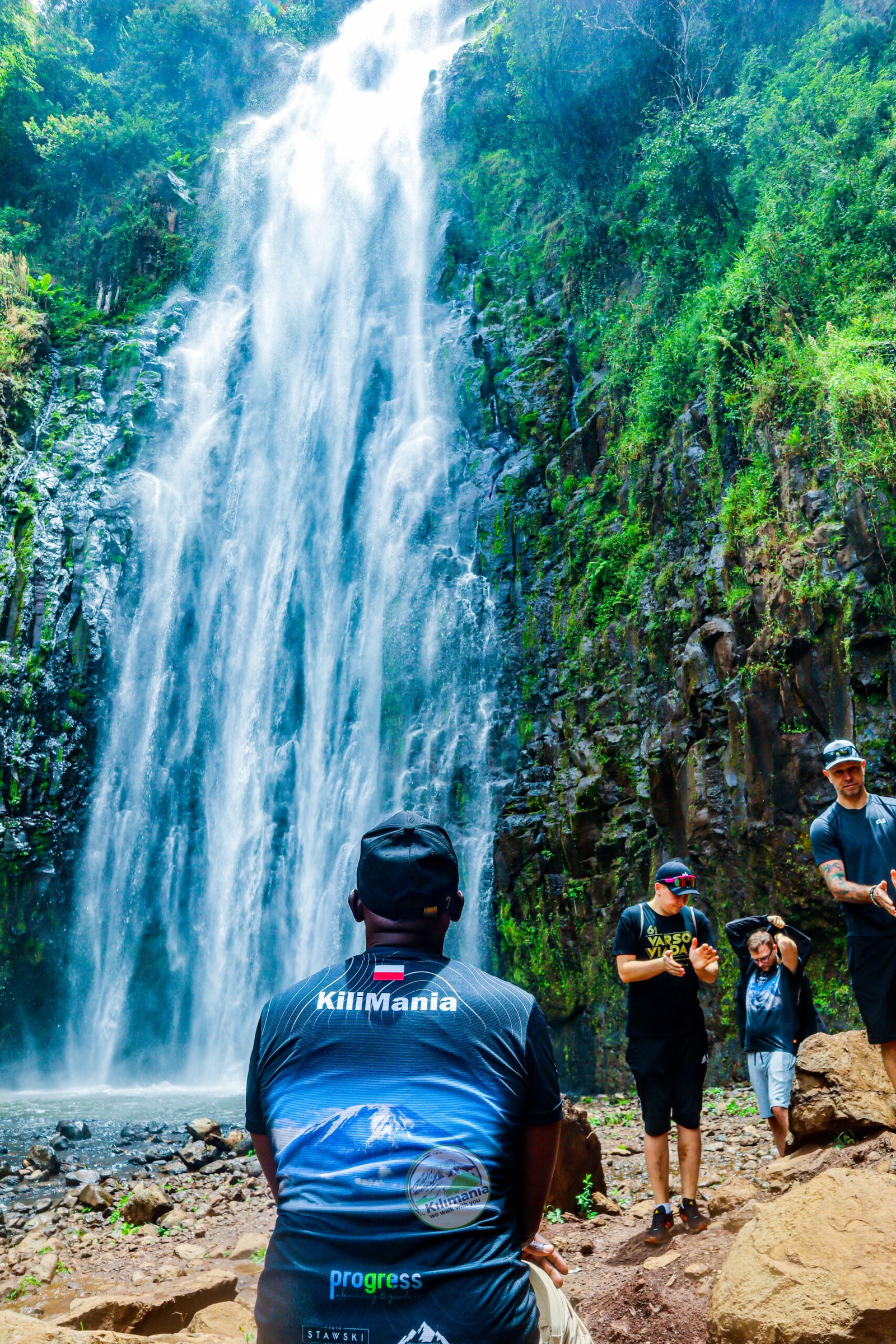
Sources for the facts in this guide: Kilimania Adventure operator records and Sabinus Msimba’s published guide profile and KINAPA licence; park-authority information from TANAPA. Prices are from the 2026 Kilimania day-trip price list.
How to choose a tour operator in Tanzania comes down to five checks you can run before paying anything: a current government tourism licence you can verify, a business identity that matches it, a written quote that lists every inclusion, a named guide whose credentials for the activity are explained, and payment instructions plus cancellation terms in writing. Passing all five does not make an operator the right fit or promise a good day, but if one is missing, pause and verify before you pay.
Quick answer
Ask for the operator’s current tourism licence number and the business name on it, a written quote with inclusions and total price, your guide’s name and the credentials that apply, payment details that name the same business, and the cancellation and rescheduling terms in writing. If any request is refused, delayed, or changes after you pay a deposit, stop and check before going further.
| Check | What to ask for | Why it matters |
|---|---|---|
| Licence | Current Ministry tourism licence: number, business name, activity, expiry date | Tourism businesses in Tanzania need this licence; it is renewed every year |
| Identity | Business name, office location and contacts that match the licence | Shows who you are actually dealing with |
| Quote | Total price per person, inclusions and exclusions, in writing | A clear record of what was agreed |
| People | Guide’s name and the credentials that apply to your activity | Someone specific is accountable for your day |
| Payment and terms | Payment recipient linked to the business, receipt, cancellation terms | Leaves a trail if plans change |
Bottom line
You don’t need to know Tanzanian tourism law to book with confidence. You need a written record and the willingness to ask awkward questions before money moves. Friendly on WhatsApp is not the same as accountable on paper, and that is the heart of how to choose a tour operator in Tanzania.
Travellers who lose money on a Tanzania day trip often weren’t careless. They were tired after a long flight, approached by someone polite, offered a reasonable price, and asked for a small deposit to “hold the car.” None of that looks like a problem in the moment, which is why a few written checks help.
This guide is written for the traveller sitting in a Moshi or Arusha hotel at 11 pm, comparing three WhatsApp quotes and trying to work out which one is real. It covers how to choose a tour operator in Tanzania step by step: the patterns worth recognising, what a trustworthy operator does instead, the specific questions to send before you pay, and why local knowledge changes the quality of the day itself (not just whether the car turns up). It applies to any operator, including the one that published it.
The scam warning: what to watch for
Knowing how to avoid tour scams in Tanzania starts with recognising the pattern. It is usually simple: make contact, quote an attractive price, take a deposit through a channel that leaves no trail, then either disappear, raise the price on the day, or hand you to a guide and vehicle you never agreed to. Each variant below breaks one of the five checks from the opening answer.
Warning signs worth pausing on
An office you can’t verify
A desk with a borrowed company name, a laminated “certificate” with no issuing body or date, or an address that turns out to be a shared building with no signage. Sometimes there is no address at all, only a phone number.
How to check: ask for the registered company name and a street address, then look it up on a map (Street View helps) and on the company’s own website. The names should match everywhere. If you’re still unsure, you can ask for a current photo of the office entrance, or check the address independently.
The price that changes after you commit
You agree a price. On the morning of the trip it has “gone up”: park fees changed, the vehicle is bigger, there are extra guests. Government fees do change occasionally, but a legitimate operator tells you in writing before the day, with the reason and the new total.
How to check: get the total per person in USD, in writing, with what it includes. A written quotation gives both sides a clearer record of what was agreed, including price, inclusions and exclusions.
No written confirmation
A thumbs-up emoji is not a booking. A real confirmation states the trip, date, pickup time and place, group size, total price, deposit paid, balance due, and what is and isn’t included.
How to check: ask for the confirmation by email or PDF before paying. If they say “just trust me,” don’t.
A licence nobody can show you
An operator can’t give you a tourism licence number, or the name on the licence doesn’t match the name on your quote. Four different documents often get blurred together here, and one doesn’t stand in for another; the next section explains each.
How to check: ask for the current licence number, the business name on it and its expiry date, then compare them with your quote and payment details. For park activities, also ask which authority governs the trip; Kilimanjaro, Arusha, Tarangire and Lake Manyara are among Tanzania’s national parks managed by TANAPA.
A payment request that doesn’t identify the business
The deposit is to go to a name you don’t recognise, with no receipt promised. That isn’t automatically fraud (small businesses do cut corners), but a payment request that doesn’t clearly identify the business or provide a receipt is a reason to pause and verify.
How to check: confirm who receives the money, which business name appears on the payment instructions, what the payment covers, and that you’ll get a receipt.
Pressure to pay right now
“Only one car left, send the deposit in the next hour.” Real availability does run out, but a trustworthy operator will still give you time to read the quote and terms.
How to check: say you’ll pay once the written quote and terms arrive. Watch how they respond.
Promises a responsible operator should not make
“You’ll definitely see tree-climbing lions.” “Swim in Lake Chala, it’s safe.” “Ngorongoro and back from Moshi, no problem.” A responsible operator doesn’t promise wildlife, and knows which lakes hold crocodiles.
How to check: ask what could go wrong on the day. A good answer includes real limits.
Reviews that can’t be found, or only one kind of review
A website badge or screenshot of glowing reviews that you can’t locate on the actual platform. Reviews on their own don’t prove an operator is legitimate.
How to check: look for reviews on more than one platform, check that they’re recent and detailed, and see whether they match the service the operator is advertising to you now. Read the critical ones too.
Pole pole, as they say on the mountain. Slowly. None of these checks takes more than a few minutes, and a real operator won’t mind you running them.
How to verify a Tanzania tour operator licence before paying
Tanzania requires anyone who runs a tourism business or activity to hold a licence issued by the Ministry of Natural Resources and Tourism, and tourism licences must be renewed every year (per the government’s investment procedures guide). Under the Tourism Act of 2008, the licensed activities include tour operators, mountain climbing or trekking, and tour guides (per the Ministry’s public notice). This is often called a TALA licence.
- Ask for the licence number.Along with the business name exactly as it appears on the licence, the activity it covers, and the expiry date.
- Check that it is current.Licences are renewed annually, so an expired date is a question to raise before paying.
- Compare the names.The business on the licence should match the name on your quote, confirmation and payment instructions.
- Check the Ministry’s records.The Ministry publishes a list of licensed tour operators. Online records aren’t always complete or up to date, so if you can’t find a company, ask it to send a copy of its current licence rather than assuming the worst.
- Ask about anything that doesn’t match.A reasonable explanation is fine; no explanation is a reason to pause.
Four different checks, not one
- Tourism licence
- Issued by the Ministry; permits the business to run tourism activities.
- Business registration
- Identifies the legal company (registered with BRELA). It does not, on its own, license tourism activity.
- Association membership
- Industry association membership is voluntary; it is not a government licence.
- Guide or park credential
- Relates to the person guiding or the park activity, not the company as a whole.
What legitimate operators do differently
They behave differently not because they are nicer people, but because they have something to lose: a fixed address, a licence, a public review history, and repeat business. That structure is what you are really checking for.
| What to check | Stronger signal | Reason to verify further |
|---|---|---|
| Business identity | Same business name, location and contacts on website, quote and confirmation | Details change between channels or can’t be confirmed independently |
| Quote | Written and itemised: total per person, inclusions, exclusions | Price or inclusions stay unclear |
| Confirmation | Email or PDF confirmation before payment | A chat thread is the only record |
| Guide | Named in advance, with relevant credentials explained; changes disclosed | No clear information until pickup |
| Licences and permits | Operator explains which authority governs the activity and shows credentials on request | “We are registered” with nothing further |
| Payment | Recipient clearly linked to the business; receipt issued | Recipient unclear; no receipt offered |
| Terms | Cancellation and rescheduling terms provided in writing | Terms missing or “don’t worry about that” |
| Honesty about limits | Tells you who should skip the trip and what could change on the day | Promises certain sightings, weather or outcomes |
One weak row doesn’t make an operator dishonest. It tells you where to ask a follow-up question.
What a real written confirmation contains
This is the document that protects you. Whoever you book with, check that yours has every line below before sending a deposit. The layout is an illustration, not a real booking.
- Operator
- Registered company name, office address, phone, email
- Trip
- Trip name and destination
- Date and pickup
- Date, pickup time, pickup point (your hotel by name)
- Group
- Number of travellers
- Guide
- Guide’s name, and any partner operator disclosed
- Price
- Price per person and total, in USD
- Included
- Line by line: transport, park or entry fees, guide, lunch, water (as applicable)
- Not included
- Line by line: tips, drinks, optional extras
- Payment
- Deposit received, balance due, account name the money went to
- Changes
- Cancellation and rescheduling terms, or where to find them in writing
Missing a line? Ask for it before you pay, not on the morning of the trip.
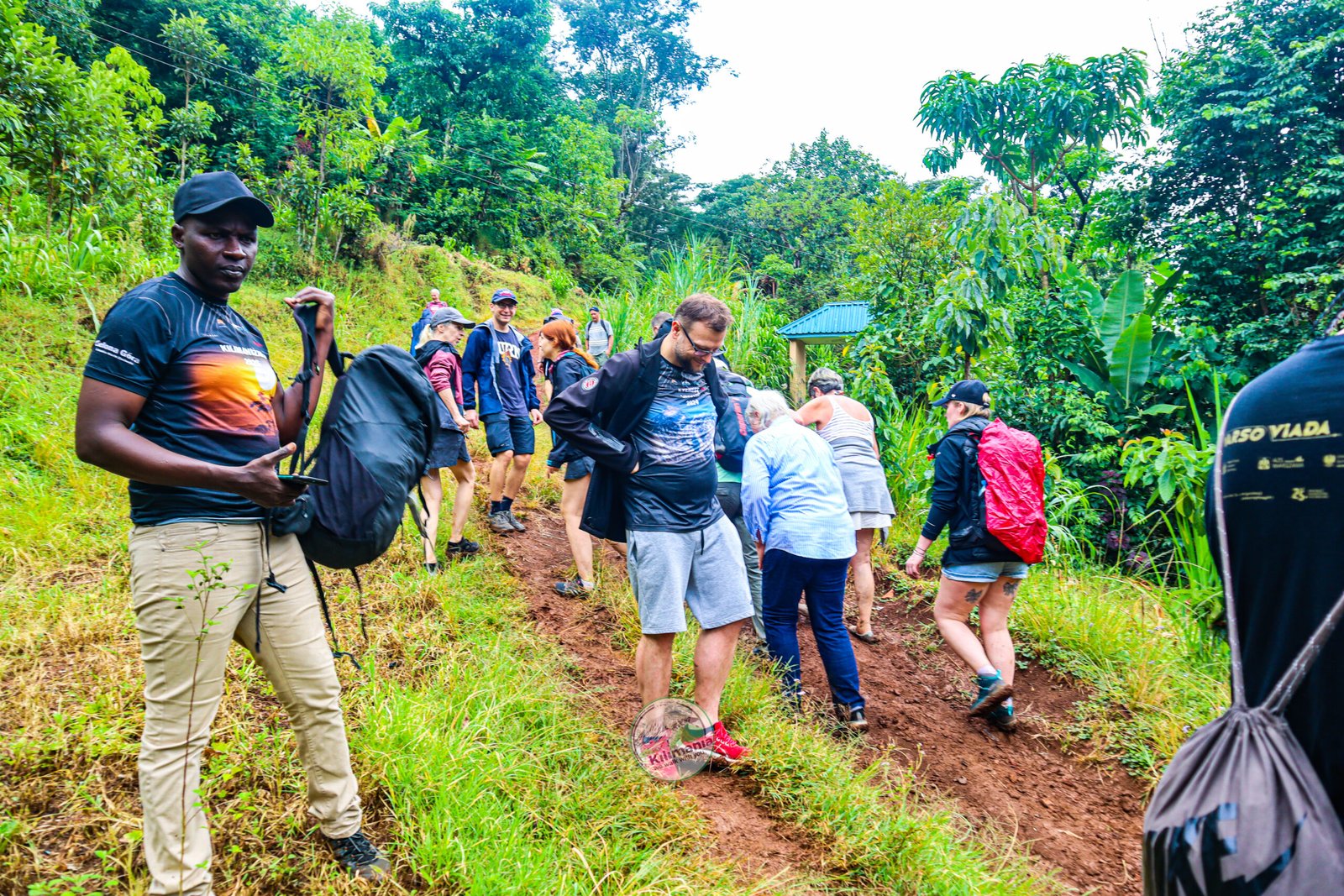
Questions to ask before you book
Send these in writing, by email or WhatsApp. The replies become your record. Here is how to choose a tour operator in Tanzania in practice: run through this list with every operator on your shortlist and compare the answers side by side.
How to verify a Tanzania day-trip operator in eight steps: confirm the business name, office and tourism licence, get the total price and inclusions in writing, ask what is excluded, get the guide’s name and the credentials that apply, request written confirmation before paying, check who receives the payment, find out who actually operates the trip, and get the cancellation terms in writing.
- What is the full company name, where is your office, and what is your tourism licence number?A straight answer with a street address you can check. If the answer is vague, that’s an important reason to pause and verify the details.
- What is the total price per person, and what exactly does it include?Transport, park or entry fees, guide, lunch, water: each listed or excluded. For reference, private day trips from Moshi start from $70 per person for a group of five (Chemka Hot Springs, so $350 in total for five people); the 2026 day-trip cost guide explains how group size changes the price.
- What is not included, and what should I budget for on the day?Tips, drinks, optional activities. Honest operators volunteer this.
- Who is my guide, and which licence or permit applies to this trip?A name, and a clear explanation of which authority governs the activity.
- Will you send a written confirmation before I pay?The answer should be yes, without conditions.
- Where does the payment go, and will I get a receipt?Ideally an account in the company’s name.
- Who actually operates my trip?Ask whether the company quoting you runs the vehicle, employs the guide, or subcontracts any part of the day. Subcontracting isn’t automatically a problem; what matters is knowing who will actually provide the service before you pay.
- What happens if weather, roads or the park change the plan, and what is your cancellation policy?Written terms, not reassurance.
Before I book, could you please confirm in writing:
1. Company name, office address and tourism licence number
2. Total price per person and inclusions / exclusions
3. Guide's name and the licence or permit that applies
4. Payment account name, and receipt
5. Who actually operates the trip (vehicle and guide)
6. Cancellation and rescheduling terms
Asante!
Send these questions to us, too
If you’re comparing operators, include us in the comparison. Send the list above with your date and group size and the answers come back in writing, within 12 hours (EAT, 7 days a week). You can also browse the full range of day trips from Moshi and Arusha first.
Why local knowledge matters

A licence tells you an operator is allowed to run a trip. Local knowledge shows in what they are willing to tell you before you book. A few examples from around Moshi and Arusha:
- Lake Chala is not a swimming lake. Crocodiles are present, so Kilimania never presents it as a swim; the Lake Chala day trip page shows what the day does include. The swimming day trip from Moshi is Chemka Hot Springs. If anyone suggests a swim at Chala, don’t assume it’s permitted or safe; ask for current site guidance before going near the water.
- Chemka is warm, not hot. The water is approximately 27°C, per Kilimania’s trip information. “Chemka” means “boiling” in Swahili and describes how the water bubbles up, not its temperature. Expect warm water, not a hot bath. Details are on the Chemka day trip page.
- Tarangire from Moshi is a long day. On Kilimania’s itinerary, the total door-to-door day from Moshi is approximately 7–9 hours for approximately 4–5 hours in the park. Actual travel time depends on route, traffic and road conditions. An operator should tell you this before you book; the Tarangire day trip page has the full itinerary.
- Ngorongoro in a day from Moshi is a stretch. On a Moshi-based day itinerary it’s a 12+ hour day with approximately two hours in the crater, and time inside depends on access conditions and the day’s schedule. Kilimania doesn’t sell it as a day trip and suggests Tarangire or Arusha National Park instead; the reasoning is in can you do Ngorongoro Crater in a day.
- A Mount Meru day trip is not a Meru summit. The day trip covers the lower slopes; the summit (4,565 m) takes 3–4 days. Watch for listings that blur the two; the Mount Meru day trip is the lower-slopes version.
- Tree-climbing lions at Lake Manyara are real, and rare. They are documented in Lake Manyara National Park, and keeping cool (thermoregulation) is one commonly cited reason for the climbing. Sightings are uncommon and nobody can promise one, whoever runs your Lake Manyara day trip.
There is also the practical side. Before the day, ask whether recent rain, road conditions, park access or seasonal conditions could change the planned route or departure time, and how long the pickup from your hotel really takes. An operator who drives these roads regularly should be able to answer plainly.
If you’re working out where to start, the guides to day trips from Moshi and day trips from Arusha compare the options with the same honesty about limits.
Why book with Kilimania Adventure
Run the same checks on us. Here is what you can verify yourself, and where.
Who runs the trips
- Based in Moshi, Kilimanjaro Region, Tanzania.
- Co-founder and senior guide Sabinus Msimba: 22+ years guiding, KINAPA-licensed since 2003, 300+ personal Uhuru Peak summits (per his published guide profile). His KINAPA licence (PDF) is public.
- More about the team on the about Kilimania Adventure page.
Reviews you can check independently
What you receive before paying
- A written quote with the per-person price for your group size and a list of inclusions.
- Our Ministry tourism licence details on request, so you can check them the way this guide describes, plus an explanation of which permits apply to your trip.
- Your guide’s name, included in the quote.
- A written confirmation, and a reply to any question within 12 hours (EAT, UTC+3, 7 days a week).
When another operator makes more sense
Sometimes one does, and that’s fine. For example:
- You already have an operator you trust and have used before.
- Another operator runs an itinerary that fits your dates, route or interests better.
- You’re staying in Dar es Salaam or Zanzibar and not travelling north; a locally based operator saves you the travel.
- You want a service Kilimania doesn’t run, such as a large shared-coach tour. Kilimania’s day trips run as private trips from Moshi (the Marangu Kilimanjaro day hike also has a joining option).
If you’re also considering the mountain itself, group departures are on the Kilimanjaro joining calendar, and the full picture is on the Kilimanjaro climbing page.
What happens if conditions change?
Weather, washed-out roads, park-gate changes, illness, a late flight: day trips get disrupted. What matters is that the operator’s policy is written down before you pay, so nobody is negotiating on the morning.
Exact terms vary between operators, so ask for them in writing with your quote, from any operator, including us.
What any written policy should tell you
While comparing operators, check that their written terms answer each of these. If one is missing, ask.
- What makes the operator cancel: weather, road access, park closure, a minimum group size.
- What you get when they cancel: a refund, a credit, or a new date, and your choice between them.
- What happens when you cancel, at each notice period they use (for example, several days ahead versus the same day).
- Whether the deposit is refundable, and under what conditions.
- What happens if you miss the departure, for example after a late flight.
- How events outside anyone’s control (force majeure) are handled.
- Which third-party costs can’t be recovered once paid, such as park fees already purchased.
- How long a refund takes, and how it’s paid back.
Whoever you book with, the principle is the same: if an operator won’t state cancellation terms in writing before taking your money, treat that as your answer.
Sabinus’s note from the trail
When I advise a traveller about a day trip, I want the practical details clear before departure: who is guiding, what is included, where the vehicle will meet you, what time the day starts, and what happens if conditions change. If those five things are written down, most misunderstandings never start.
My advice is the same whoever you book with. Ask your questions before you send money, and ask for the answers in writing. A good operator is happy to answer them. Karibu Tanzania.
- Who
- Sabinus Msimba, senior guide and co-founder, Moshi
- Applies to
- Every day trip, from any operator
- Why it matters
- Clear written details before payment reduce misunderstandings on the day.
Frequently asked questions
How do I know if a Tanzania tour operator is legitimate?
Run several checks rather than relying on one: a current Ministry tourism licence whose business name matches your quote, a verifiable office and contacts, a written quote listing inclusions and the total, a named guide whose credentials are explained, payment instructions that identify the business, and written cancellation terms. Then read reviews on more than one platform before you commit.
Is Kilimania Adventure a registered operator?
Kilimania Adventure is based in Moshi, and its senior guide Sabinus Msimba has held a KINAPA licence since 2003; the licence PDF is published on the Kilimania website. Ask us for our Ministry tourism licence details and check them the same way you would for any operator. Independent reviews are on TripAdvisor and Google.
What should I ask before booking a day trip?
Ask for the company name and office address, the total price per person with inclusions and exclusions, your guide’s name and licence, where the payment goes, whether another operator could run any part of the trip, and the cancellation and rescheduling terms. Ask in writing, by email or WhatsApp, so the replies become your record if anything changes later.
What happens if my day trip is cancelled?
Cancellation and rescheduling terms vary between operators, so read them before you pay. Confirm what happens if the operator cancels for weather, roads or park access, what happens if you cancel or miss the departure, whether the deposit is refundable, and which costs, such as park fees already paid, can’t be recovered. Get the answers in writing.
Is it safe to pay a deposit by mobile money in Tanzania?
Mobile money is widely used in Tanzania, so the method itself isn’t the problem. The question is whose account receives it. A payment to an account in the company’s name, followed by a receipt and written confirmation, leaves a clear trail. A payment to a personal number with no receipt leaves you little to point to if the trip doesn’t happen.
Why would the price change on the day of my trip?
Government-set park or entry fees occasionally change, and a trustworthy operator tells you in writing before the day, with the reason and the revised total. A price that rises at pickup with no earlier notice is a reason to pause. Having the agreed total and inclusions in a written confirmation gives you the clearest record of what was agreed.
Which licence should a day-trip guide have?
It depends on the activity. Guiding inside a national park, such as on Kilimanjaro, is governed by the park authority, while an operator’s business registration is a separate matter. Ask which licence or permit applies to your trip, who holds it, and to see it on request. The Kilimanjaro day hike to Mandara Hut guide explains what that particular day involves, and the Marangu day trip page has the booking details.
How do I check a Tanzania tour operator’s licence?
Ask for the licence number, the business name on the licence, the activity it covers and the expiry date. Tourism licences are issued by the Ministry of Natural Resources and Tourism and renewed every year. Compare the name with your quote and payment details, and check the Ministry’s published list of licensed tour operators; if a company isn’t listed, ask for a copy of its current licence.
How can I tell if online reviews of a tour operator are reliable?
Look for reviews on more than one platform, check that they’re recent and describe specific trips, and compare them with what the operator is offering you now. Read the critical reviews and how the operator replied. Reviews support the other checks, such as a written quote and clear payment details, but they don’t replace them.
Ask for a written quote
Tell us your date, group size and which trip you’re considering. You’ll get the per-person price, inclusions and your guide’s details in writing, within 12 hours. No payment is requested at this stage.
How to choose a tour operator in Tanzania: the short version
Five checks, a few minutes: a verifiable business, a written quote, a named guide with credentials explained, payment details that identify the business, and written cancellation terms. These checks can reduce avoidable booking risks, and clear communication before payment reduces misunderstandings on the day. After 22 years guiding in this region, that is the advice I give everyone. Use the checklist on any operator, then compare the options across the Tanzania day trips hub.
We Walk With You.
Sabinus Msimba
Senior Mountain Guide and co-founder, Kilimania Adventure, Moshi
Sabinus has guided in the Kilimanjaro region for more than 22 years, holds a KINAPA licence dating from 2003, and has reached Uhuru Peak more than 300 times. He leads day trips and Kilimanjaro climbs from Kilimania’s base in Moshi.
Sabinus Msimba: full biography and credentials | KINAPA licence (PDF)
Disclosure


This guide is published by Kilimania Adventure, a day-trip, safari and Kilimanjaro operator based in Moshi. It contains general booking guidance that applies to any operator; sections describing Kilimania, including “Why book with Kilimania Adventure”, are identified as such and list credentials you can check yourself. No affiliate relationships are included on this page.
Kilimania Adventure is a member of TATO (Tanzania Association of Tour Operators), and its senior guide holds a KINAPA (Kilimanjaro National Park Authority) licence. Association membership and guide licensing are separate from government tourism licensing, which you can ask us to show and verify as described above. Prices referenced are from the 2026 Kilimania day-trip price list, per person, private group of five. Terms, prices and conditions can change, so verify the details for your own trip in writing before paying any operator.
Written by Sabinus Msimba. Last Updated September 2026.