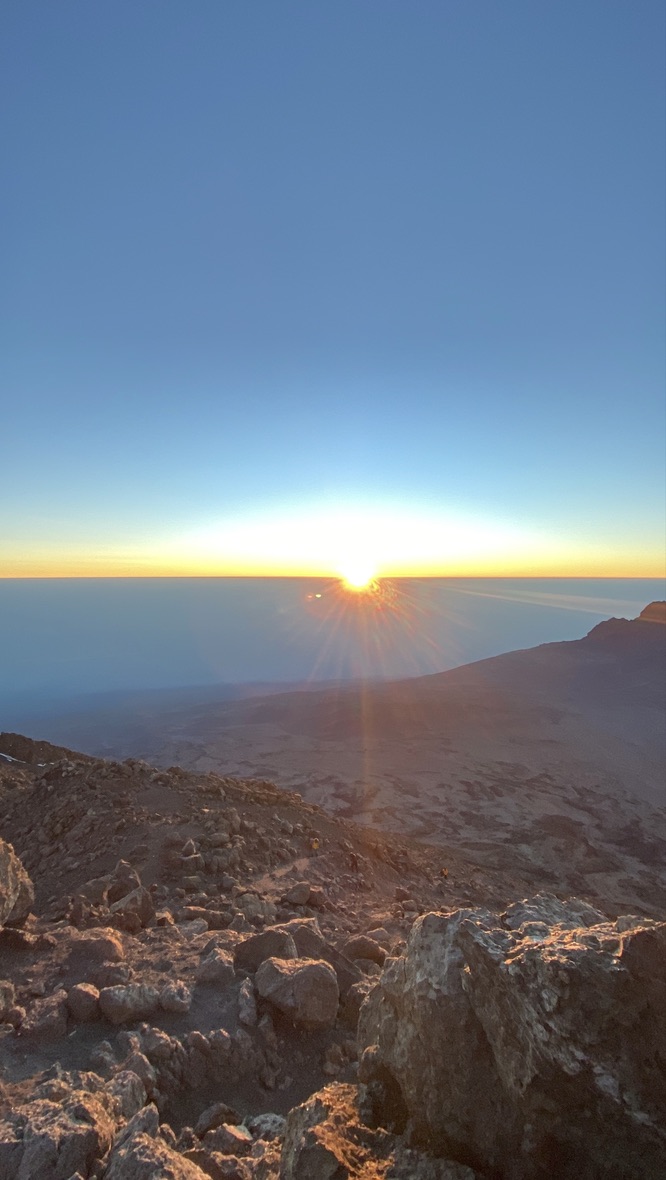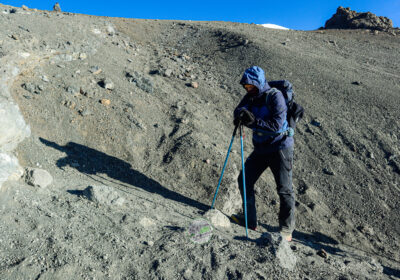
wifi kilimanjaro
Is There WiFi on Kilimanjaro?
Last reviewed: 18 August 2026 | By Sabinus Msimba, Senior Kilimanjaro Guide
Data sources: TTCL and Huawei’s public statements on the Kilimanjaro network rollout (2022), Tanzania Communications Regulatory Authority (TCRA) telecommunications statistics, and Kilimania Adventure’s guiding field experience.
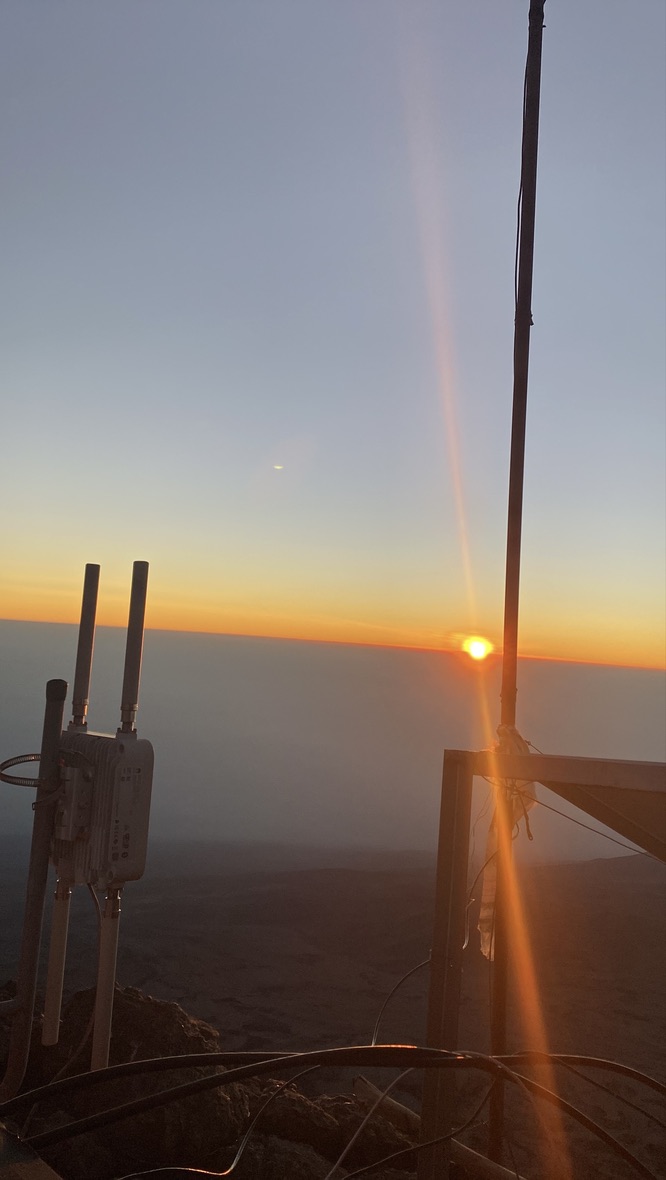
Yes, in part. TTCL — Tanzania Telecommunications Corporation, the state telecoms operator — connected Kilimanjaro’s lower rest camps, including Mandara and Horombo huts, to high-speed internet and WiFi by mid-2022. On 13 December 2022, that coverage was extended to Kibo Hut and Uhuru Peak itself, at 5,895m. This is location-based coverage tied to specific infrastructure along the route, not a signal that follows you continuously along the entire trail.
Tanzania’s national mobile operators — Vodacom, Airtel, Yas, and Halotel — run a separate network from the TTCL mountain infrastructure. Buy a local SIM after you land in Tanzania. This guide explains what each system actually offers, where our guides have experienced a working connection, and how to set expectations with family before you leave.
Quick Answer
TTCL brought high-speed internet and WiFi to Kilimanjaro’s lower huts by mid-2022, then extended coverage to Uhuru Peak on 13 December 2022, according to TTCL and Huawei’s own reporting. Kilimania guides have used this connectivity at several points on the mountain, including at high altitude, though it is not present everywhere and can be affected by weather or equipment status. Mobile signal from Vodacom, Airtel, Yas, or Halotel runs on a separate network and is not documented on a camp-by-camp basis.
How Connectivity Reached Kilimanjaro
Until 2022, Kilimanjaro was known for long stretches without any connection at all. That changed when TTCL, working with equipment donated by Huawei Tanzania, built broadband infrastructure up the mountain as part of the national ICT backbone project. By mid-2022, rest camps below roughly 3,795m — including Mandara Hut (2,700m) and Horombo Hut (3,720m) on the Marangu route — had high-speed internet and WiFi. On 13 December 2022, TTCL and Huawei extended that coverage to Kibo Hut (4,720m) and, for the first time, to Uhuru Peak at 5,895m.
The documented infrastructure runs along the Marangu route: Marangu Gate through Mandara, Horombo, Kibo, and up to Gilman’s Point and Uhuru Peak. TTCL has since referenced Mount Kilimanjaro among the tourist sites reached by its wider national backbone, alongside households and public spaces elsewhere in Tanzania. We have not found a public description of coverage on other routes, such as Machame or Lemosho, or of the current process for accessing WiFi as a climber, so treat anything beyond the documented 2022 rollout as our guides’ own field experience rather than official record.
What Our Guides See on the Mountain
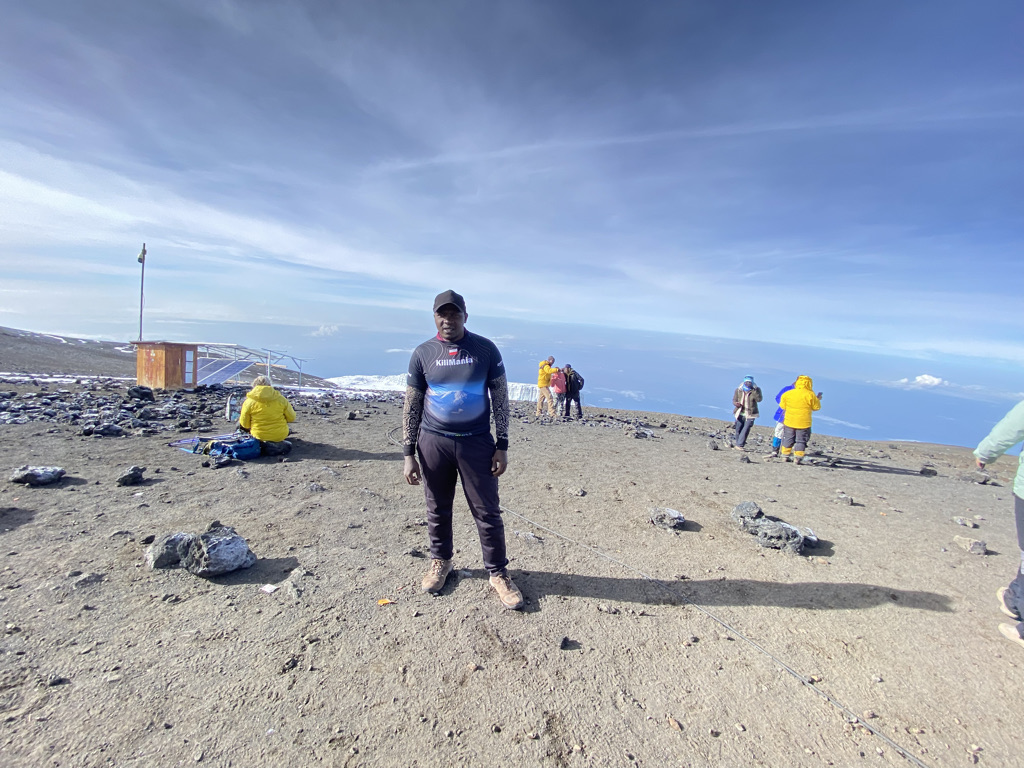
Kilimania guides climb routinely and have used network connectivity at a number of points along the way, including on the upper mountain on clear days. It is a real, useful option — but weather, equipment status, and your exact position all affect whether it connects on a given climb. We treat it as a helpful convenience, not something to plan a summit-night schedule around.
— Sabinus Msimba, Senior Mountain Guide, Kilimania Adventure
Want to know what to expect on your specific route?
Message our Moshi office before you book and we can talk you through connectivity on your planned itinerary.
WhatsApp +255 756 449 990TTCL Network vs Mobile Signal: What’s the Difference
These are two separate systems, and understanding the difference removes most of the confusion around this question.
TTCL Network Infrastructure
- Built and operated by TTCL, Tanzania’s state telecoms corporation
- Documented reaching Marangu-route huts up to Horombo since 2022, with reported extension toward the summit
- Independent of whether your personal SIM has cellular coverage at that location
- Not present along the entire trail — it is tied to fixed infrastructure points
Mobile Network (Vodacom, Airtel, Yas, Halotel)
- Uses standard cellular towers, separate from the TTCL mountain infrastructure
- Requires a Tanzanian SIM card, purchased with your passport for registration
- Operates nationally, but we don’t have reliable evidence of coverage camp-by-camp on Kilimanjaro specifically
- Should not be assumed to work at any particular point on the mountain
Carrying a mobile SIM in addition to whatever connectivity exists through the TTCL network gives you two independent ways to reach a connection, rather than relying on one system alone.
Tanzania’s Mobile Networks
According to Tanzania’s communications regulator (TCRA), four operators serve the national mobile market: Vodacom, Yas (the current name for the former Tigo Tanzania), Airtel, and Halotel, with TTCL Mobile also operating on a smaller scale. That national data confirms these operators exist and roughly how large each one is — it does not tell you which network reaches a specific Kilimanjaro camp. We don’t have a reliable mountain-specific coverage map for any of the four, so treat the table below as an operator directory, not a promise of signal.
| Network | Notes | Where to buy |
|---|---|---|
| Vodacom | Tanzania’s largest operator by active SIMs; widely used by climbers | Moshi town, JRO airport kiosks |
| Airtel | Common alternative with broad national reach | Moshi town |
| Yas | Formerly Tigo Tanzania; strong in Moshi and Arusha | Moshi town |
| Halotel | Smaller network, competitive data pricing | Moshi town |
Buy your SIM after you arrive in Tanzania, with your passport on hand for registration. Bundle prices change periodically, so confirm the current rate locally rather than relying on a fixed figure quoted online.
How to Get Connected Before You Climb
- Arrive with your passport. You’ll need it for SIM registration.
- Buy a Tanzanian SIM in Moshi or at the airport. Vodacom, Airtel, Yas, and Halotel are all available.
- Activate a data bundle before you leave for the gate.
- Ask your guide about current TTCL network access for your specific route, since arrangements can change and should be confirmed locally.
- Test your phone — send a message, check that data works — while you still have reliable hotel WiFi in Moshi.
- Download offline content: maps, your itinerary, insurance details, and anything you’d want without a connection.
Is There a Connection at Gilman’s Point and Uhuru Peak?
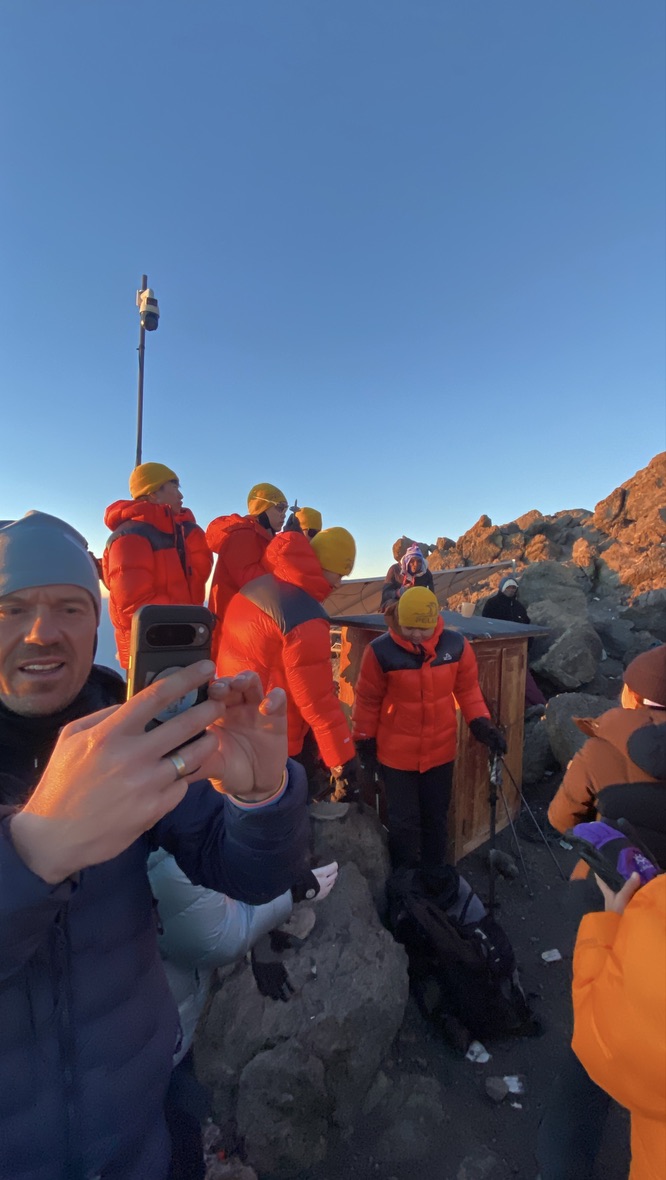
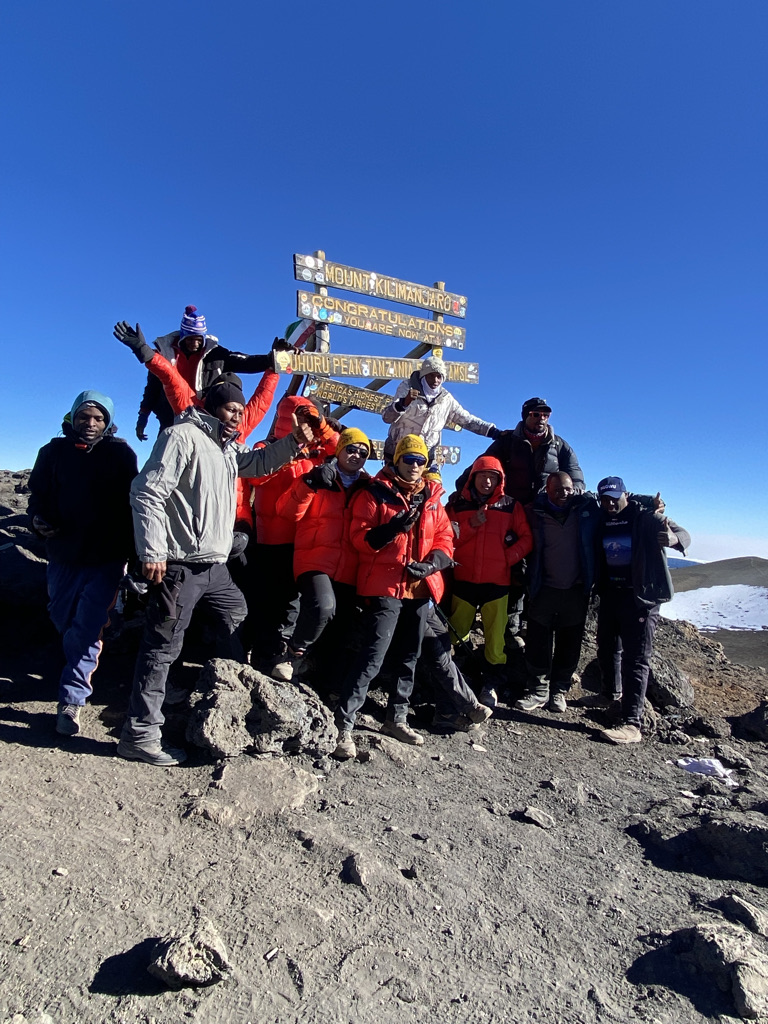
Yes, since 13 December 2022, when TTCL and Huawei extended high-speed internet coverage to Uhuru Peak itself, along with Kibo Hut lower down the route. Kilimania guides have experienced a working connection near the crater rim on climbs since then. This is separate from ordinary mobile signal, which tends to be weaker at that altitude. Treat any connection here as something that may or may not be present on your particular morning — cold, wind, and equipment status all play a part, and it should not factor into how you plan an emergency response.
Satellite Communication: A Separate System
Satellite communication is distinct from both the TTCL network and mobile signal. Kilimania guides carry a satellite communication device on climbs as an operational backup, allowing contact with our Moshi office independent of whether network or mobile coverage is available at that location. This is our own operational practice; we cannot speak to what every operator on the mountain carries.
A satellite device gives an additional way to reach our office when other systems are down, but it does not fix an outcome or a response time on its own. Weather, exact location, and park procedures all still matter.
Talking to Family Before You Go
Because a working connection can turn up at several points on the mountain, most climbers manage the occasional message home — a text from a camp, a call where signal allows. What’s harder to promise is a fixed daily check-in time, since exactly where a connection works can shift.
Set expectations with the people at home before you fly:
- Messages may come through irregularly, from whichever point happens to have a connection that day.
- A message sent with no signal will typically queue and go out once your phone reconnects — that’s normal.
- A quiet day is not on its own a sign that something is wrong.
- For emergencies, our guides carry satellite communication equipment as an additional backup for when network or mobile coverage is unavailable — though the response still depends on the device, location, weather, and park procedures.
Protecting Your Phone Battery
Cold conditions and repeated signal-searching both drain a battery faster than normal use. Download offline maps and music before you leave Moshi, keep your phone in an inner pocket at altitude, and switch to airplane mode when you’re not actively trying to connect. Bring a power bank rated for at least two full charges — our guide to charging your phone on Kilimanjaro covers the options at camp in more detail.
FAQ
Is there WiFi on Kilimanjaro?
Partly, yes. TTCL began installing network infrastructure on Kilimanjaro in 2022, initially reaching the huts on the Marangu route up to Horombo, with coverage later extended toward the summit. Kilimania guides have used this connectivity at multiple points on the mountain, though it is location-based rather than continuous.
Who installed WiFi on Kilimanjaro?
TTCL, the Tanzania Telecommunications Corporation, built the network infrastructure on Kilimanjaro as part of a national broadband expansion project that began in 2022, and has since referenced Mount Kilimanjaro among the tourist sites reached by its wider backbone network.
Does WiFi work at Kilimanjaro camps and huts?
The initial 2022 rollout documented coverage at Marangu-route huts, including Mandara and Horombo. Our guides have experienced connectivity at other points on the mountain since then, though availability is not identical at every camp on every route.
Is there connectivity at Uhuru Peak?
TTCL’s stated goal was to reach the summit, and Kilimania guides have experienced a connection near the crater rim on some climbs. Treat it as a possible bonus rather than something to plan summit night around.
Can I get mobile phone signal on Kilimanjaro?
Yes, in parts of the mountain. Vodacom, Airtel, Yas, and Halotel are Tanzania’s main operators. Coverage on the mountain varies by route, camp, and terrain, so no single network should be assumed to work everywhere.
Which Tanzania SIM card should I buy?
Any of the four national operators can work. Buy your SIM after arriving in Tanzania, with your passport for registration. Coverage differs by location, so one network may prove more useful than another at a particular camp.
Do I need a satellite phone or Garmin inReach?
Most climbers do not buy one. Kilimania guides already carry a satellite communication device as an operational backup. If you want your own daily check-in independent of coverage, a rented satellite messenger is worth discussing with us in advance.
The Bottom Line
Kilimanjaro is more connected than its reputation suggests. TTCL brought internet and WiFi to the mountain’s lower huts by mid-2022 and reached Uhuru Peak that December, and a separate mobile network from Tanzania’s national operators covers parts of the country more broadly. Neither system is present everywhere on the mountain, so plan around gaps: buy a Tanzanian SIM after you land, download what you need before you leave Moshi, and tell family at home to expect irregular messages rather than a fixed schedule.
Deciding on a route or dates?
Talk to a Kilimania guide about connectivity, preparation, and which itinerary fits your plans.
See Kilimanjaro ClimbsSources and further reading: TTCL and Huawei’s December 2022 announcement of network coverage on Mount Kilimanjaro; Tanzania Communications Regulatory Authority (TCRA) for national operator data; Kilimanjaro National Park (KINAPA); TANAPA. Confirm current TTCL access arrangements and mobile bundle pricing locally before departure, as these details change periodically.
Sabinus Msimba
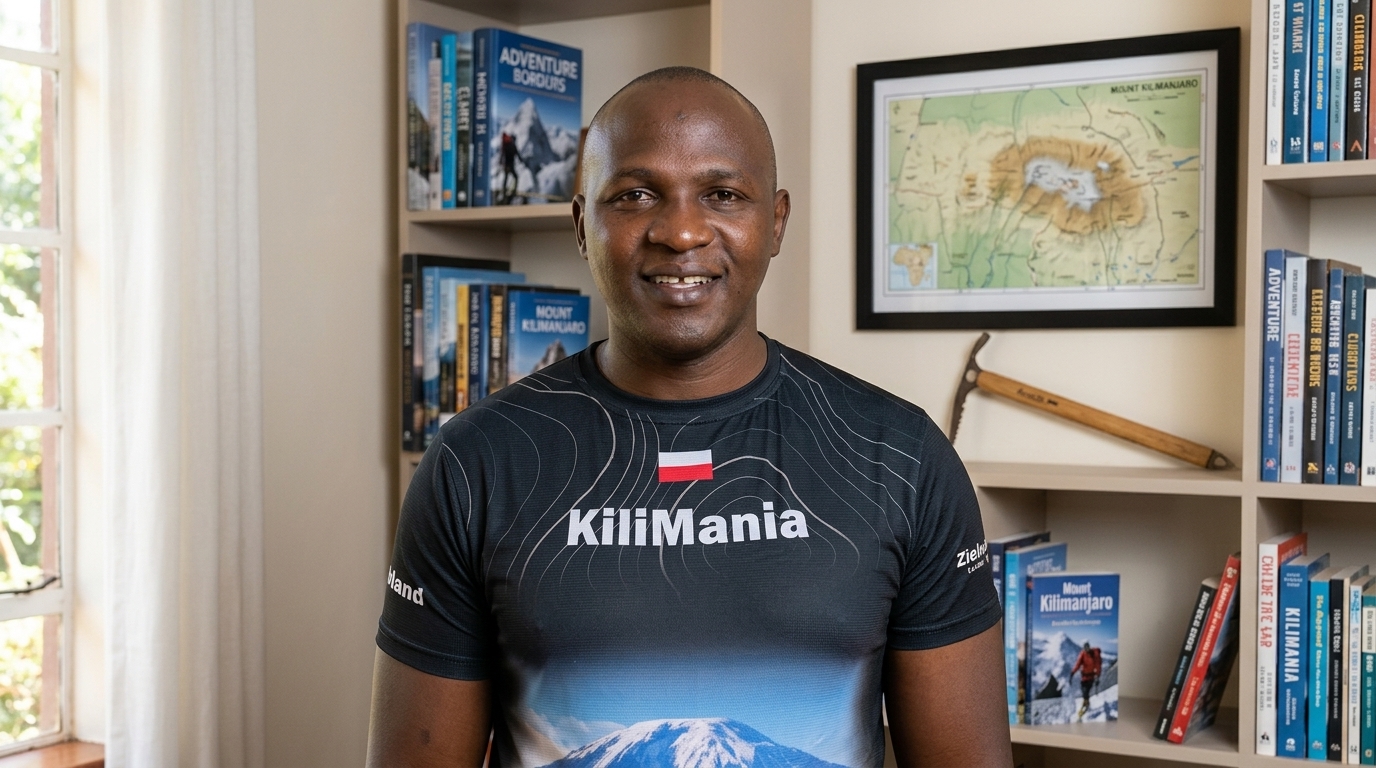
Senior Mountain Guide and Co-founder of Kilimania Adventure, based in Moshi. KINAPA-licensed since 2003, guiding on Kilimanjaro for 22+ years across every major route.
Kilimania Adventure is a KINAPA-licensed, TATO-registered tour operator. The 2022 TTCL/Huawei rollout details in this article are drawn from TTCL and Huawei’s own public statements; current camp-by-camp conditions and access arrangements reflect our guides’ field experience and should be confirmed locally before departure, as they can change. This article is not a promise of continuous connectivity or emergency response. Last reviewed 18 August 2026.