You have decided on Tanzania. You have the Northern Circuit locked in. Now comes the decision that shapes your entire trip: mid-range at $400–$700 per person per day, or luxury at $850–$1,500 per day? Over 7 days for two people, that gap is $6,300–$11,200. This guide tells you exactly what moves with that money — and what stays the same regardless of what you pay.
Quick Answer: Luxury vs Mid-Range Safari Tanzania
Mid-range Tanzania safaris ($400–$700/day) deliver excellent wildlife access with comfortable en-suite lodges, private or small-group vehicles, and licensed guides. Luxury safaris ($850–$1,500/day) add lodges inside parks, guaranteed private vehicles, senior naturalist guides with 10+ years of specialist knowledge, and premium dining.
The wildlife you see is identical across both tiers — Tanzania National Parks Authority applies the same rules to every vehicle. Luxury buys proximity to wildlife zones, comfort after long drives, and time efficiency. It does not buy better animals.
Introduction
This guide compares exactly what separates mid-range and luxury Tanzania safaris in 2026: accommodation location and quality, vehicle exclusivity, guide expertise, meal standards, and the hidden costs that appear at both tiers. You will learn which upgrades deliver measurable value, which are comforts without practical benefit, and how to build a hybrid safari that captures the most important luxury advantages while controlling total cost.
From our base in Moshi, Kilimanjaro, Kilimania Adventure designs both mid-range and luxury private safaris across Serengeti National Park, Ngorongoro Conservation Area, Tarangire National Park, and Lake Manyara National Park, with pickups from Kilimanjaro International Airport (JRO) and Arusha Airport (ARK).
Our lead guide, Kanti Kessy, has 17 years of tracking leopards in the Seronera corridor and has operated at both tiers — he knows which upgrades travelers remember on day 7 and which they forget by day 3.
Luxury vs Mid-Range Tanzania Safari (2026 Quick Comparison)
- Mid-range: $400–$700 per person/day
- Luxury: $850–$1,500+ per person/day
- Key difference: location, time, comfort — not wildlife
Wildlife sightings are the same. Luxury buys time and privacy.
For full pricing across all tiers, see our Tanzania safari cost 2026 breakdown. If you have already decided on luxury, read our luxury safari Tanzania cost guide. Kilimania Adventure is a registered member of the Tanzania Association of Tour Operators (TATO).
Key Insight:
Luxury safaris do not improve wildlife sightings — they increase time in wildlife areas, reduce fatigue, and improve overall comfort.
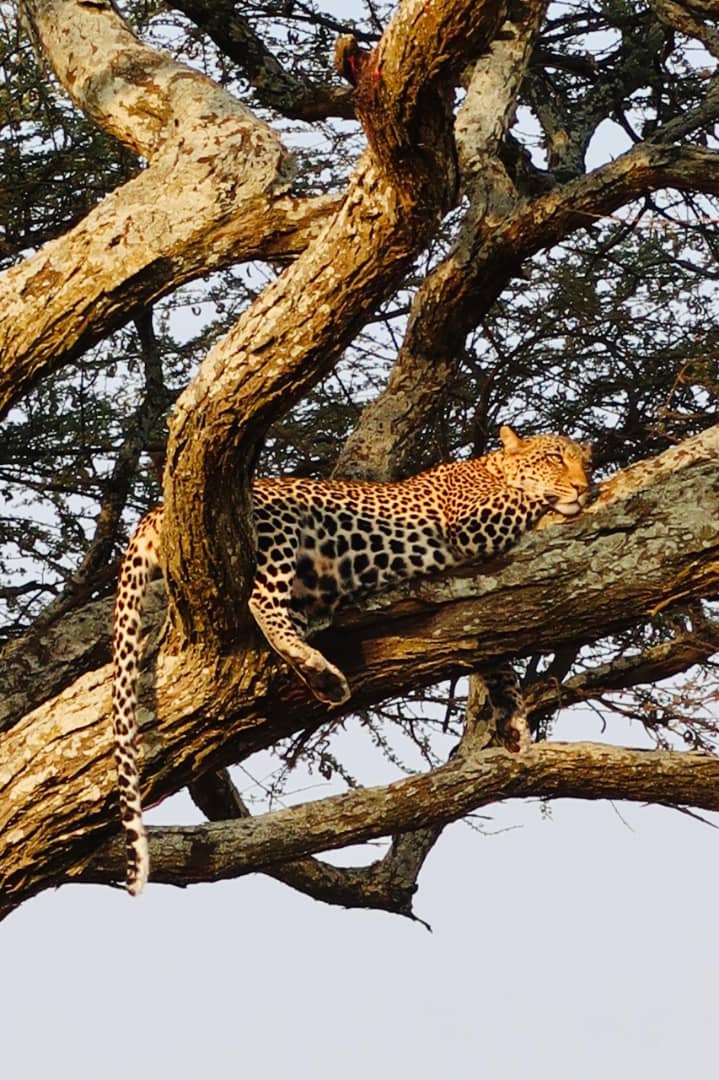
Tanzania Safari Cost Comparison: Mid-Range vs Luxury (2026)
Mid-Range Safari
- Cost: $400–$700 per person/day
- 7-day total (2 people): $5,600–$9,800
- Lodge location: Outside the park or near the boundary
- Vehicle: Private or shared (max 6 guests)
- Guide: 3–7 years of experience
- Meals: Buffet-style, house drinks
- Room: En-suite tent or lodge room
- Wildlife access: Same as luxury
Luxury Safari
- Cost: $850–$1,500+ per person/day
- 7-day total (2 people): $11,900–$21,000
- Lodge location: Inside park or private concession
- Vehicle: Guaranteed private Land Cruiser
- Guide: 8–15 years specialist experience
- Meals: À la carte, premium wines
- Room: Private suite, deck, possible plunge pool
- Wildlife access: Same as mid-range
Key Difference
- Additional cost: $450–$800 per person/day
- What you gain: time, comfort, flexibility
- What stays the same: wildlife sightings
“Luxury buys time, not better animals.” “A private vehicle matters more than a luxury tent.” “Serengeti is where luxury delivers real value.”
The core insight: Tanzania National Parks Authority (TANAPA) applies the same park rules to every vehicle. Serengeti National Park does not give priority access to luxury guests. Your accommodation tier does not change which animals appear or how close you can approach them. The $450–$800 daily gap buys proximity, comfort, and time — not better lions.
What a Typical Safari Day Looks Like: Mid-Range vs Luxury
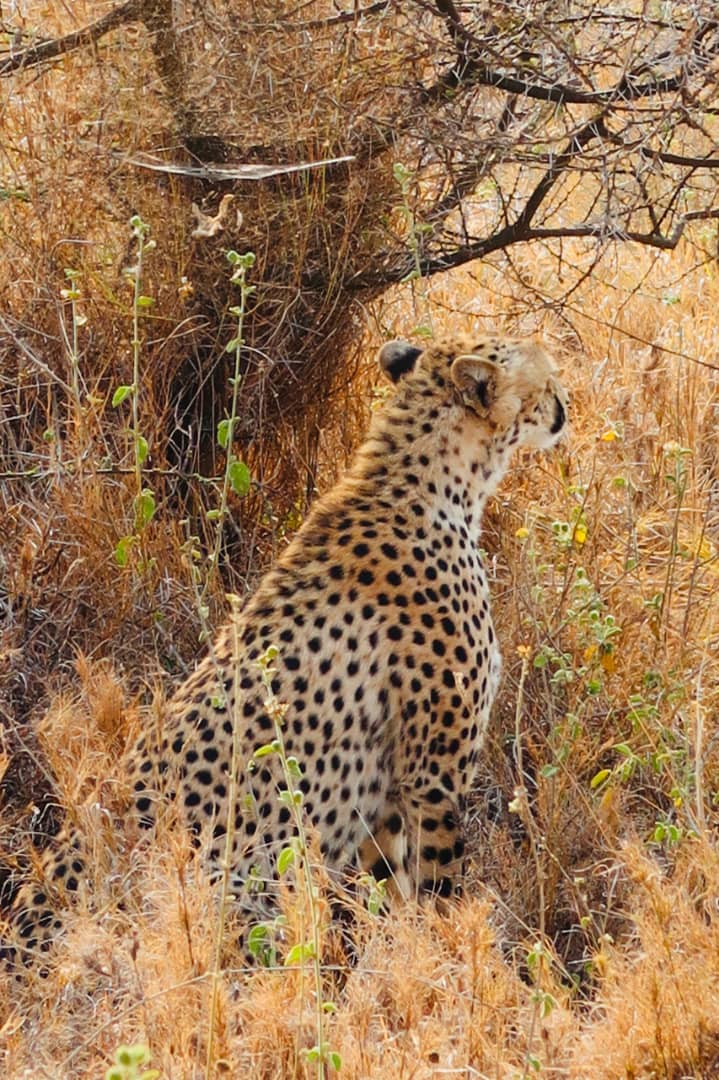
The daily rhythm reveals where luxury delivers real value and where it is simply more comfortable.
Mid-Range Safari Day (Serengeti)
5:30 AM — Wake-up call. Walk 100 meters to the main lodge for a buffet breakfast.
6:15 AM — Board the Land Cruiser. Drive 40–55 minutes from the lodge outside Serengeti National Park to Naabi Hill Gate.
7:00 AM — Enter the park. Begin game drive in the Seronera wildlife corridor.
12:30 PM — Packed picnic lunch under an acacia. Sandwiches, fruit, juice.
6:30 PM — Exit the park before the 7 PM gate closure. Drive 40 minutes back to the lodge.
7:30 PM — Buffet dinner. Hot shower (sometimes inconsistent pressure). Sleep.
Total wildlife time in park: approximately 9 hours. Non-game-drive transfers: 1.5 hours.
Luxury Safari Day (Serengeti)
5:45 AM — Wake-up call. Coffee delivered to your private deck overlooking the Serengeti plains.
6:15 AM — Walk 50 meters to your private Land Cruiser. Your lodge sits inside Serengeti, 15 minutes from the Seronera wildlife zones.
6:30 AM — Already on game drive. No gate wait — you are inside the park.
12:30 PM — Three-course bush lunch at a scenic site. Chef-prepared, chilled wine, white tablecloth.
2:30 PM — Afternoon game drive continues, or return to camp for a siesta.
6:45 PM — Sundowner cocktails at a viewpoint.
7:30 PM — Three-course dinner with premium wine. Dietary preferences accommodated.
Total wildlife time in park: approximately 10.5–11 hours. Non-game-drive transfers: near zero.
The measurable gap: In most itineraries, a luxury lodge inside Serengeti National Park can add roughly 1–2 extra wildlife hours per day compared to a mid-range lodge outside the boundary — primarily by removing gate entry and exit drives. Over 7 days, that accumulates to 7–14 extra hours on game drive. For photographers who need maximum light, this matters.
Where the Price Difference Comes From (Per Person / Per Day)
Accommodation
- Mid-range: $180–$280
- Luxury: $500–$800
- Difference: +$320–$520
Vehicle
- Mid-range: $50–$80
- Luxury: $120–$180
- Difference: +$70–$100
Guide
- Mid-range: $40–$65
- Luxury: $80–$130
- Difference: +$40–$65
Meals
- Mid-range: $30–$45
- Luxury: $60–$100
- Difference: +$30–$55
Service & Extras
- Mid-range: $20–$35
- Luxury: $50–$90
- Difference: +$30–$55
Total Daily Difference
Approximately +$490–$795 per person
If your trip is 7 days → choose hybrid
If your trip is 10+ days → mid-range or hybrid
If the budget is above $9,000 →, luxury or hybrid
If photography is a priority → luxury (private vehicle essential)
Where Luxury Delivers Measurable Value
Time in wildlife zones. In most Serengeti itineraries, staying inside the park saves 1–2 hours of daily transfers. Over a 7-day trip, that can mean up to 14 extra hours with animals.
Schedule flexibility. A private vehicle means you control departure time, sighting duration, and route. If a leopard is at a kill at 5:45 AM, you leave at 5:45 AM.
Reduced fatigue on longer trips. Better beds, quieter camps, and reliable hot showers make a measurable difference from day 5 onward. Travelers on luxury safaris consistently report sharper focus on late-trip game drives.
Photography positioning. A private vehicle lets you reposition for light without negotiating with other guests. A solo cheetah in perfect morning light requires patience that a shared vehicle cannot always accommodate.
Where Luxury Is Comfort Without Practical Benefit
Plunge pools. Appealing in principle. In practice, you are rarely at camp during daylight hours.
Butler service. A thoughtful experience that does not change what you see on a game drive.
Premium alcohol. Valuable if you are a wine enthusiast. Irrelevant if you do not drink.
Suite dimensions. You spend 7 hours sleeping. The remaining hours are spent on drives, at meals, or watching wildlife.
Our honest assessment: For couples over 50, honeymooners, and photographers, luxury’s time savings and fatigue reduction justify the premium in most itineraries. For physically active travelers under 40 who prioritize wildlife volume over comfort, mid-range delivers approximately 85% of the experience at 55–65% of the cost. Neither answer is wrong — they reflect different priorities.
Who Should Choose Luxury, Mid-Range, or Hybrid?
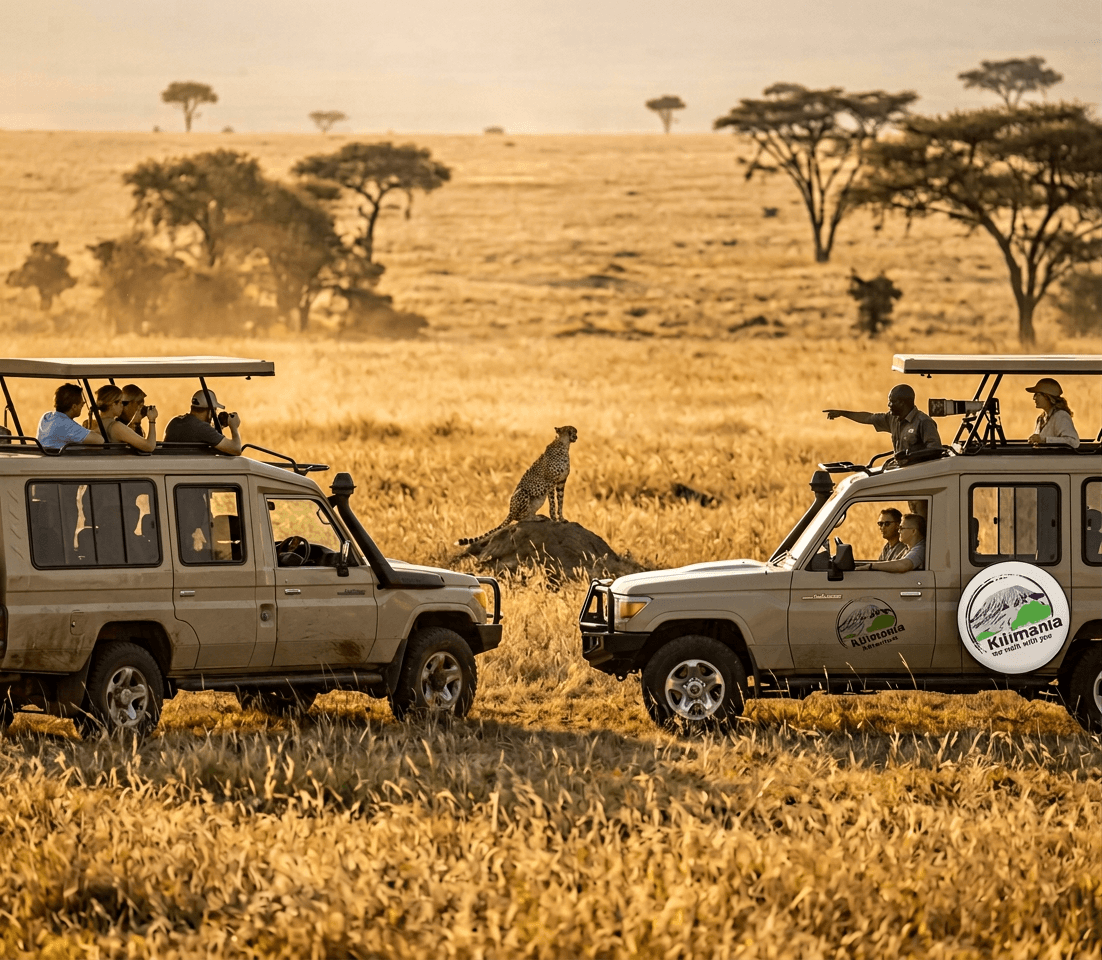
This section gives you a direct answer based on your situation.
Choose Mid-Range If:
- Your primary goal is maximum wildlife viewing, and accommodation is secondary
- You are traveling with a group of 4 or more (vehicle costs split to mid-range economics, even on private)
- You are under 40 and comfortable with simpler lodging after long active days
- You are visiting during the green season (November–April), when mid-range lodges drop to $300–$450/day and wildlife remains strong
- You have 10+ days and need to manage cumulative daily costs
- This is an exploratory first safari, and you are not yet sure what tier suits you
Choose Luxury If:
- Maximum time in wildlife zones matters more than cost
- You or your travel partner is over 50 and needs reliable comfort after 10-hour days in a vehicle
- This is a honeymoon, a significant anniversary, or a milestone trip
- You are a photographer who needs private vehicle positioning and early morning light access
- You have 7 days or fewer, and cannot afford to lose 2 hours daily to gate transfers
- You want a senior specialist naturalist guide rather than a licensed driver-guide
Choose Hybrid If:
- You want the key luxury advantages where they matter most — Serengeti and Ngorongoro — without paying luxury rates across every park
- Your budget is approximately $7,000–$9,000 per person for 7 days
- Tarangire National Park is on your itinerary (compact park, proximity matters less)
- You want the best value per wildlife hour across the full Northern Circuit
Plan Your Tanzania Safari — Get a Fast Quote
Speak to a Local Tanzania Safari Expert
If you want a clear, transparent quote with no hidden fees, speak directly to a local safari expert based in Tanzania.
Our team in Moshi designs private luxury safaris across Serengeti, Ngorongoro, Tarangire, and beyond — with full cost breakdowns so you know exactly what you’re paying for.
📞 Call or WhatsApp: +255 756 449 990
Explore itineraries: Tanzania Safaris — Kilimania Adventure
The Hybrid Strategy: Where to Upgrade and Where to Save
Most travelers do not need 7 days of luxury accommodation. Strategic upgrades deliver the most important benefits at a significantly lower total cost.
Sample 7-Day Hybrid Itinerary (2 people, private vehicle throughout)
| Inside the park, private camp | Destination | Tier | Accommodation Type | Cost/Person/Day |
|---|---|---|---|---|
| 1–2 | Tarangire National Park | Mid-Range | Tented camp, outside park | $430–$550 |
| 3–5 | Serengeti National Park | Luxury | Inside park, private camp | $900–$1,100 |
| 6 | Ngorongoro Crater | Luxury | Crater rim lodge | $950–$1,200 |
| 7 | Arusha / Moshi transfer | — | Airport hotel | $120–$180 |
Hybrid 7-Day Total: approximately $5,100–$6,500 per person
All-luxury 7-Day equivalent: approximately $7,000–$9,100 per person
Saving: $1,500–$2,600 per person, primarily from mid-range accommodation in Tarangire, where the park’s compact size means lodge proximity matters least.
What you give up: A more comfortable Tarangire tent. The elephant herds at the river will not notice.
For well-structured Northern Circuit itineraries that suit this approach, see our 6-day Tarangire, Serengeti, and Ngorongoro safari and our 4-day Tarangire, Serengeti, and Ngorongoro safari.
Accommodation Deep Dive: What the Price Difference Looks Like
Mid-Range Lodges and Camps
Location: Outside park boundaries or on the park edge. A 30–60 minute drive to wildlife zones each morning and evening.
Room features: 20–30 square meter en-suite tented room or lodge room. Flush toilet, hot shower (reliability varies by property), queen or twin beds with mosquito nets, small veranda, limited solar power in evenings, and fan cooling.
Common areas: Shared buffet dining room, bar with house wines and local beers, swimming pool at better properties, WiFi in common areas only.
Staff ratio: Approximately 1 staff member per 3–4 guests.
Examples: Kati Kati Tented Camp (Serengeti border), Eileen’s Trees Inn (Karatu near Ngorongoro), Tarangire Sopa Lodge.
Luxury Lodges and Camps
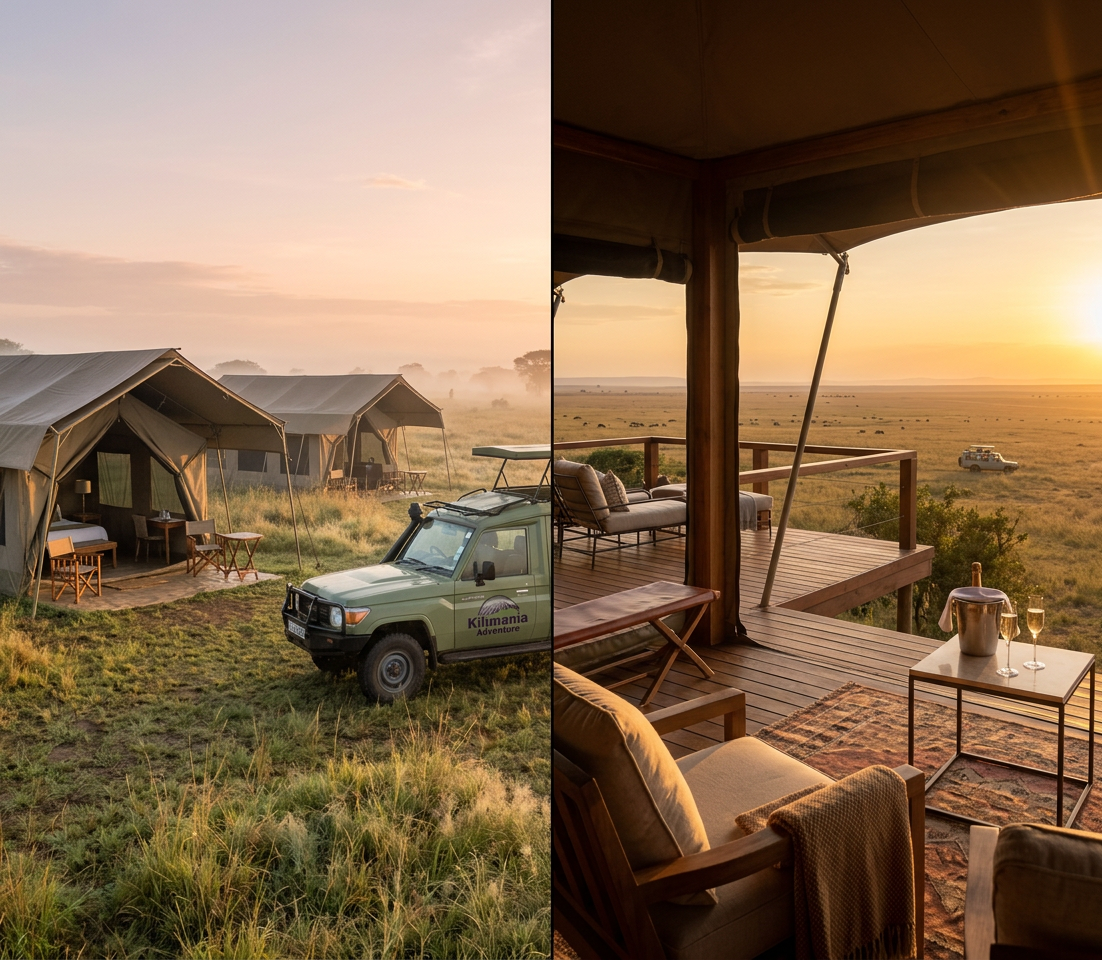
Location: Inside parks or on private concessions adjacent to Serengeti National Park, Ngorongoro Conservation Area, or Tarangire National Park. 5–20 minutes to prime wildlife zones.
Room features: 40–70 square meter private suite. Double vanity, rain shower and sometimes outdoor shower, king bed with premium linens, private deck with daybed, plunge pool at top properties, 24-hour power, air conditioning, in-room minibar, daily laundry included.
Common areas: Private bush dining, premium bar with South African wines and imported spirits, infinity pool with wildlife views, spa at top properties, and reliable WiFi in rooms.
Staff ratio: Approximately 1 staff member per 1–2 guests.
Examples: Four Seasons Serengeti, Lemala Ngorongoro, Sanctuary Swala Camp (Tarangire).
The honest comfort gap: After 10 hours in a dusty Land Cruiser, luxury’s powerful shower, firm mattress, and quiet private setting improve sleep quality and next-day alertness. Mid-range delivers adequate rest. Over 7 days, fatigue accumulates — particularly for travelers over 50 or anyone with back or joint sensitivity from long vehicle hours.
Vehicle and Guide: The Upgrade That Matters Most
Vehicle exclusivity is where the tier gap delivers the clearest practical difference. It is also where the smartest budget decision hides: a private vehicle in mid-range outperforms a shared vehicle in a luxury camp on almost every practical measure.
Mid-Range Vehicle and Guide
- Land Cruiser with up to 6 guests, pop-up roof, basic binoculars
- Guide with 3–7 years of experience, Tanzania Wildlife Authority licensed, English-speaking
- Standard park radio network — hears major sightings after they are reported
- Moderate flexibility — if sharing, guide balances your preferences with other guests
Luxury Vehicle and Guide
- Private Land Cruiser for your group only (2–4 guests maximum), charging ports, fridge, spotting scope, premium binoculars
- Guide with 8–15 years experience — often a specialist (Big Cat expert, ornithologist, or Serengeti ecosystem naturalist), frequently multilingual
- Premium lodge radio network — direct communication with rangers, camp scouts, and other luxury guides for real-time wildlife positioning
- Complete flexibility — wake-up time, sighting duration, lunch location, and route are yours to decide
A senior guide’s 12+ years in Serengeti National Park delivers behavioral prediction that cannot be standardized. They know which kopjes leopards use by season, how far a pride moves before dawn, and how to read vulture behavior to intercept a kill before other vehicles arrive. This expertise typically produces 2–3 sighting moments per trip that a skilled but less experienced guide has not yet accumulated.
Last month, our guide Sabinus Msimba — 14 years in Serengeti and Tarangire — positioned at a tree-cached impala at 5:15 PM. The leopard returned at 6:40 PM and was fed for 35 minutes in golden light. Three other vehicles arrived 15 minutes after the leopard descended. Predictive positioning. That is the senior guide difference.
Hidden Costs: Mid-Range vs Luxury
Park Fees (TANAPA)
- Mid-range: Included
- Luxury: Included
- Notes: Same for all travelers
Ngorongoro Crater Fee
- Mid-range: Usually included
- Luxury: Usually included
- Notes: ~$295 per vehicle
Guide Tips
- Mid-range: $20–$30/day
- Luxury: $30–$40/day
Camp Staff Tips
- Mid-range: $10–$15/day
- Luxury: $15–$25/day
Laundry
- Mid-range: $5–$10 per item
- Luxury: Usually included
Premium Alcohol
- Mid-range: Extra
- Luxury: Sometimes included
Balloon Safari
- Both tiers: $595–$650
- Notes: Never included
Visa
- Both tiers: Not included
- Notes: $50–$100 depending on nationality
Estimated Total Hidden Costs (7 Days)
$800–$1,200 per person
Quick Insight:
The biggest cost difference comes from accommodation and location—not wildlife access. Choosing where to upgrade strategically has the biggest impact on total value.
Budget $800–$1,200 per person for all hidden costs over a 7-day safari, regardless of tier. For the full breakdown of charges operators do not always highlight, read our hidden costs of Tanzania safari guide.
When Mid-Range Makes More Sense Than Luxury
Luxury is not always the optimal choice. Consider mid-range when:
You are traveling with 4–6 people. A private vehicle for 4 guests costs $50–$90 per person per day, delivering luxury vehicle exclusivity at mid-range economics. The accommodation is simpler, but you retain full schedule control.
You are visiting during the green season (November–April). Mid-range lodges drop to $300–$450/day in this period while wildlife in Ndutu and Southern Serengeti peaks during the January–March calving season. A skilled mid-range guide during calving season consistently outperforms a junior guide in a luxury camp in July. See our 4-day Tarangire, Ndutu, and Ngorongoro safari for a green season routing that takes advantage of this.
You are under 40 and physically active. If you have camped before and enjoyed it, mid-range Tanzania feels comfortable. The wildlife experience is identical. The money saved funds another safari day, a Zanzibar extension, or a balloon flight over the Serengeti.
You are on a 10+ day itinerary. Cumulative luxury costs across 12 days become very large. A hybrid approach — mid-range for Tarangire and Lake Manyara, luxury for Serengeti and Ngorongoro — captures the key proximity benefits while reducing total cost by $3,000–$5,000 per person.
For travelers exploring Tanzania on a tighter budget, see our budget safari Tanzania cost guide for camping options on the Northern Circuit.
What the Serengeti and Ngorongoro Change About This Decision
Not every park makes the luxury-vs-mid-range gap equally significant. Geography changes the calculation.
Serengeti National Park is where luxury’s inside-park proximity delivers the highest return. The park covers 30,000 square kilometres. A lodge inside the park cuts 45–90 minutes of daily driving compared to border-area lodges. Morning predator activity peaks between 6:00 and 8:30 AM. Every minute of that window has value.
Ngorongoro Conservation Area has a slightly different dynamic. The crater descent takes all guests through the same gate. A luxury rim lodge means a shorter morning drive to the descent road — but the difference is 20–30 minutes rather than 90. Here, guide quality matters more than lodge proximity.
Tarangire National Park is compact — approximately 2,850 square kilometres. Elephant herds, baobab landscapes, and predator activity are accessible from most lodge positions within 15–25 minutes. The proximity premium matters least here.
Lake Manyara National Park is very compact. Any lodge within 30 minutes of the gate provides equivalent access. Luxury at Lake Manyara primarily buys accommodation quality, not wildlife proximity.
The practical conclusion: If you must choose where to spend luxury budget, spend it in Serengeti. That is where inside-park location changes your daily experience most measurably.
The Tanzania National Parks Authority (TANAPA) and the Ngorongoro Conservation Area Authority (NCAA) publish current fee schedules — always confirm these are included in your quoted package before signing.
Practical Tips: Getting the Best Value at Either Tier
- Always ask for the lodge name, not just the tier label. “Luxury” means different things to different operators. Ask for the exact property name and verify its map location relative to the park gate.
- Private vehicle first, accommodation tier second. A private vehicle at a mid-range camp gives you better wildlife control than a shared vehicle at a luxury camp. This is the single most important budget decision.
- Book 8–12 months ahead for peak season (July–October). Top Serengeti properties have 6–12 tents and fill early. Mid-range requires 4–6 months for peak season bookings.
- Ask whether the Ngorongoro Crater descent fee is included. It is a per-vehicle charge (~$295) that some operators quote separately.
- Tips are not optional at either tier. Budget $20–$40 per person per day at mid-range, $30–$50 at luxury. See our Tanzania safari tipping guide for daily amounts by staff role.
- Travel insurance must include emergency evacuation. A medical evacuation from Serengeti can cost $15,000–$40,000 USD. Neither tier includes this.
Luxury vs Mid-Range Tanzania Safari — Final Verdict
- Choose mid-range if: budget matters more than comfort
- Choose luxury if: time, privacy, and fatigue matter most
- Choose hybrid if: you want maximum value per dollar
For most 7-day safaris, hybrid delivers the best overall value.
FAQ: Luxury vs Mid-Range Safari Tanzania
Q: Is a luxury Tanzania safari worth the extra $3,000–$8,000 per person over 7 days?
A: For honeymooners, travelers over 55, and photographers — yes, in most itineraries. The time savings (1–2 hours more wildlife daily in Serengeti), better sleep on longer trips, and senior guide expertise deliver measurable experience differences. For active travelers under 40 who prioritize wildlife volume over comfort, mid-range delivers roughly 85% of the experience at 55–65% of the cost.
Q: Do mid-range safaris see fewer animals than luxury safaris?
A: No. Tanzania National Parks Authority applies identical access rules to all vehicles inside Serengeti National Park, Tarangire National Park, and other parks. Wildlife sightings depend on guide knowledge, timing, season, and luck — not accommodation tier. A skilled mid-range guide often produces better sightings than a junior guide in a luxury vehicle.
Q: Should I choose a private vehicle at mid-range or a shared vehicle at a luxury camp?
A: Private vehicle at mid-range, without hesitation. Vehicle exclusivity directly controls your schedule, sighting duration, and route flexibility. A shared vehicle at a luxury camp means you negotiate those decisions with other guests. The vehicle tier matters more than the tent quality.
Q: Can I mix mid-range and luxury on the same itinerary?
A: Yes — and this is what most experienced safari travelers do. The hybrid approach (mid-range for Tarangire and Lake Manyara, luxury for Serengeti and Ngorongoro) captures the proximity benefits where they matter most while saving $1,500–$2,600 per person over 7 days compared to all-luxury.
Q: What is the biggest practical difference between mid-range and luxury Tanzania safaris?
A: Lodge location. In most itineraries, mid-range properties sit 30–60 minutes outside park gates, requiring 1–2 hours of daily vehicle time for entry and exit. Luxury lodges inside parks eliminate this, giving you more time on game drive. Over 7 days, this difference can accumulate to 7–14 extra hours in wildlife zones.
Q: How far in advance do I need to book each tier?
A: Luxury in peak season (July–October): 8–12 months minimum — top Serengeti camps have 6–12 rooms and fill early. Mid-range in peak season: 4–6 months. Both tiers have more flexibility in shoulder and green seasons.
Q: Does Kilimania Adventure offer both tiers?
A: Yes. From our base in Moshi, Kilimanjaro, we design private mid-range and luxury safaris — and hybrid combinations — across Serengeti National Park, Ngorongoro Conservation Area, Tarangire National Park, Lake Manyara, Ndutu, and Lake Eyasi. Contact us at +255 756 449 990 or browse Tanzania Safaris — Kilimania Adventure.
About the Author
This guide is based on real safari planning and field experience in Tanzania’s Northern Circuit, including Serengeti, Ngorongoro, Tarangire, and Lake Manyara. The insights reflect practical differences observed across both mid-range and luxury safaris over hundreds of trips.
Conclusion
The tier decision comes down to three honest questions: How much does comfort matter after 10 hours in a vehicle? How important is extra time in wildlife zones each day? And can your budget absorb a $6,000–$11,000 per person premium over 7 days?
For most travelers on a 7-day Northern Circuit, the hybrid approach produces the best return: mid-range in Tarangire and Lake Manyara where proximity matters least, luxury in Serengeti and Ngorongoro, where inside-park location changes your mornings. You save $1,500–$2,600 per person without giving up a single meaningful wildlife moment.
If that calculation does not resolve it, call us. From Moshi, we will build two fully costed itineraries — one mid-range, one luxury, one hybrid — and walk you through the real differences for your travel dates, group size, and priorities. Browse starting itineraries at Tanzania Safaris — Kilimania Adventure or reach us at +255 756 449 990. We Walk With You.
Plan Your Tanzania Safari — Both Tiers, Honest Prices
Still deciding between mid-range and luxury?
Plan Your Tanzania Safari — Get a Fast Quote
Speak to a Local Tanzania Safari Expert
If you want a clear, transparent quote with no hidden fees, speak directly to a local safari expert based in Tanzania.
Our team in Moshi designs private luxury safaris across Serengeti, Ngorongoro, Tarangire, and beyond — with full cost breakdowns so you know exactly what you’re paying for.
📞 Call or WhatsApp: +255 756 449 990
Explore itineraries: Tanzania Safaris — Kilimania Adventure