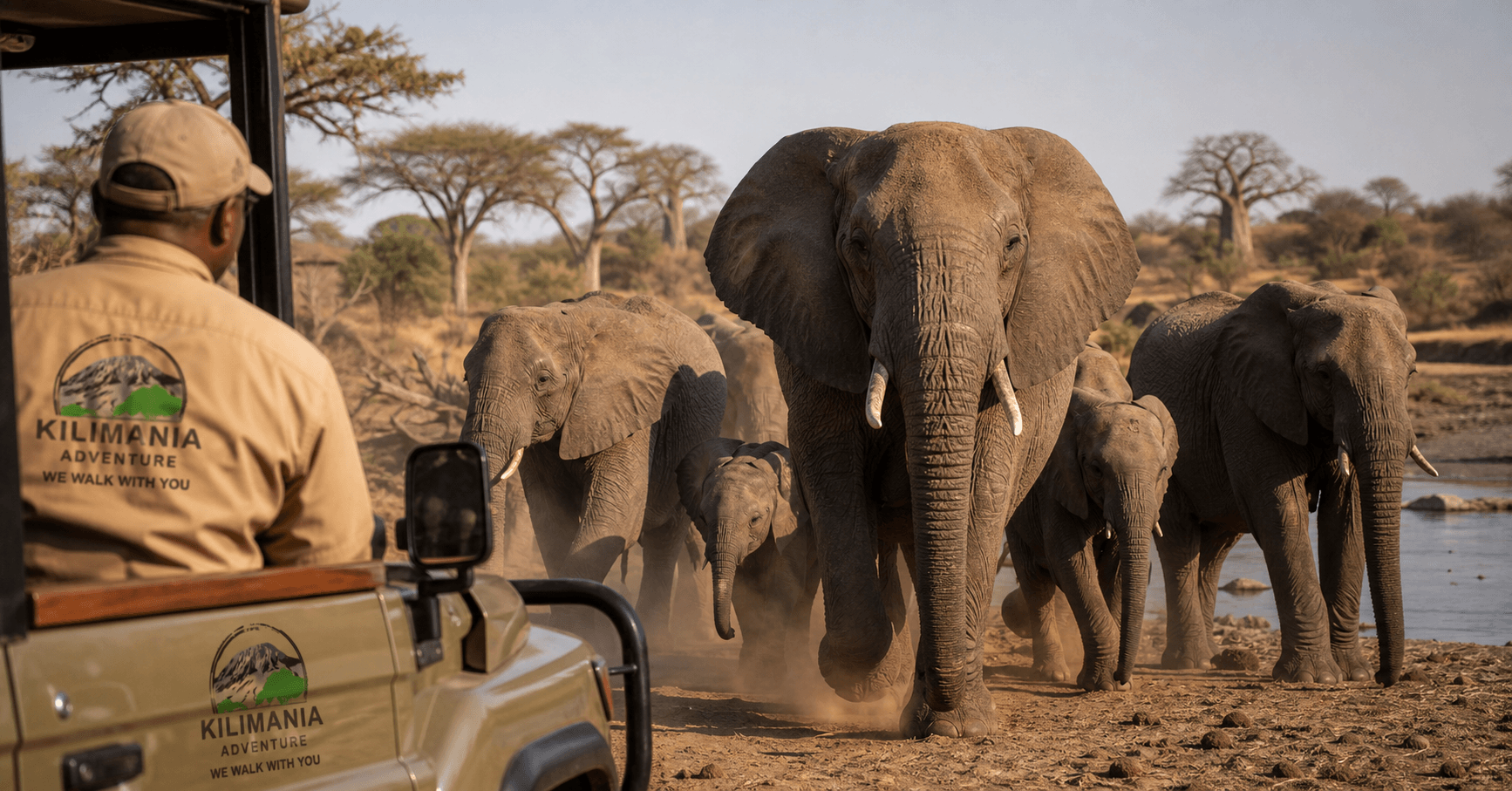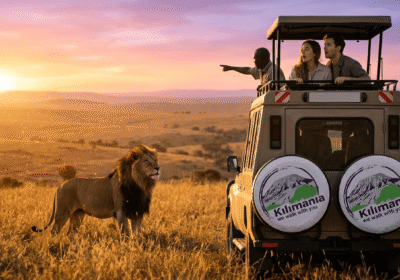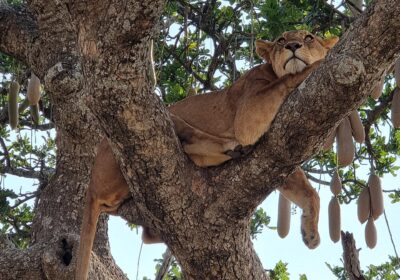
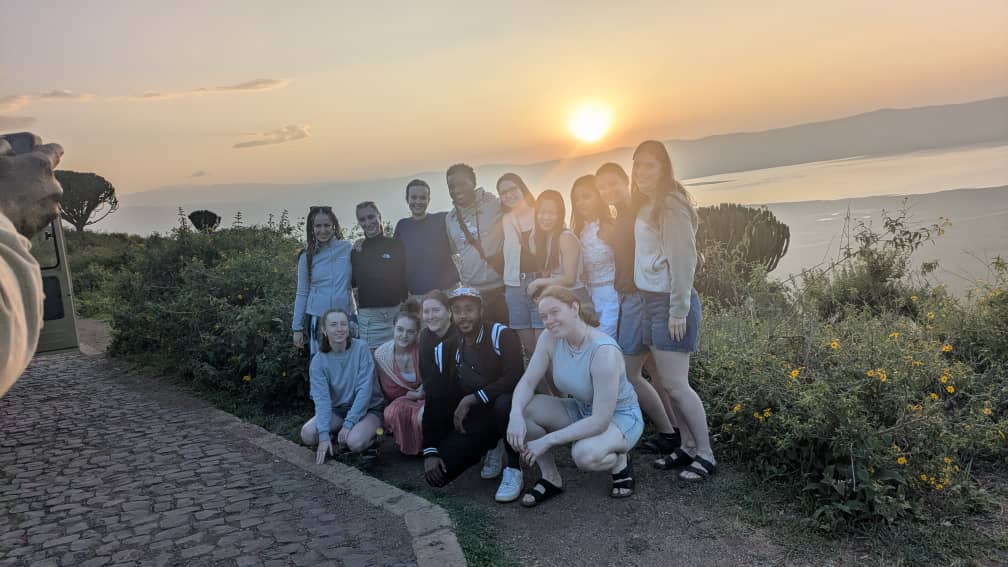
Joining a group safari in Tanzania means booking a seat in a shared 4×4 Toyota Land Cruiser with up to 5 other travelers, departing from Moshi or Arusha on a fixed date. Group departure safaris cost $280–$350 per person per day — roughly 40% less than a private vehicle. Kilimania Adventure runs weekly group departures to Serengeti National Park, Ngorongoro Crater, Tarangire National Park, and Lake Manyara National Park with a minimum of 2 confirmed travelers per vehicle.
Luggage weight limit on group safaris is 15 kg per person in a soft bag. Safari packages and group departure dates are at Safari Packages 2026 | Daily Departures From Moshi.
For International Travelers
All prices are in USD. Current conversions: $1,800 ≈ £1,410 | €1,670 | AU$2,750
- New York or Los Angeles → JRO: $850–$1,400 return (via Ethiopian Airlines, KLM, or Qatar Airways)
- London → JRO: £600–£950 return (via KLM, British Airways, Ethiopian Airlines from Heathrow)
- Sydney → JRO: AU$1,500–AU$2,300 return (via Singapore Airlines or Emirates) — note: Australian winter (June–August) = Tanzania peak season
Tanzania e-visa: $50 most nationalities | $100 US citizens — apply at immigration.go.tz at least 7 days before departure. Use Visa or Mastercard. Use Google Chrome or Firefox.
Yellow fever certificate: Required only from endemic countries. Not required for direct flights from USA, UK, EU, or Australia.
Pre-safari accommodation in Moshi: $35–$80 per night at budget guesthouses. Book one night before and one after your safari.
Table of Contents
- How is a group safari vehicle set up?
- How does the group joining and matching process work?
- How does Kilimania confirm a group departure?
- What are the luggage limits for a shared safari vehicle?
- What does a group safari in Tanzania cost in 2026?
- What does a typical group safari day look like?
- What are the honest trade-offs of sharing a vehicle with strangers?
- Is that cheap group safari quote real or a scam?
- Common myths about group safaris in Tanzania
- Frequently Asked Questions
Why Trust This Guide
This guide draws on operational experience running group and private safaris across Tanzania’s Northern Circuit from our base in Moshi, including Serengeti National Park’s Seronera Valley, Ngorongoro Crater floor, Tarangire National Park along the Tarangire River, and Lake Manyara National Park. Vehicle specifications, luggage limits, and group dynamics data come from 200+ field days per year. Park fees and regulations are verified against current TANAPA guidelines and updated within 72 hours of official tariff changes.
At 6:00 AM at the Naabi Hill Gate on the southern edge of Serengeti National Park, a 4×4 Toyota Land Cruiser idles in the queue. Inside: six travelers who met 24 hours earlier in Moshi. By afternoon, they watch a cheetah (Acinonyx jubatus) kill a Thomson’s gazelle 40 meters from the vehicle, and nobody checks their phone for six hours.
This article covers the operational mechanics of joining a group safari in Tanzania in 2026 — specifically how group departures work, how you get matched to other travelers, what the vehicle looks like, what happens if the group is too small, and what nobody warns you about before you arrive.
This guide does not repeat the group vs private cost comparison covered in depth at our group safari vs private safari Tanzania breakdown, nor does it cover solo traveler cost analysis. This article answers the practical question: how do you actually join a group departure, and what happens once you do?
From our base in Moshi, Kilimanjaro Region, Kilimania Adventure runs daily safaris to Serengeti National Park, Ngorongoro Crater, Tarangire National Park, and Lake Manyara with pickups from Kilimanjaro International Airport (JRO) and Arusha Airport (ARK).
According to the Tanzania Tourism Board, over 60% of first-time safari travelers to the Northern Circuit book shared vehicle experiences rather than private departures, making group joining safaris the standard entry point into Tanzania’s wildlife parks.
How Is a Group Safari Vehicle Set Up in Tanzania?
The vehicle is a Toyota Land Cruiser 76 or 78 Series with a hardtop pop-up roof. When you raise the roof, every passenger stands and has an unobstructed 360-degree sightline across the savanna. The driver-guide operates from a fixed seat with direct radio contact to other guides reporting sighting locations across the park.
Every seat is a window seat. The configuration runs two rows of three, with large windows on both sides and the rear. There are no middle seats. Six passengers is the maximum under both TANAPA and NCAA (Ngorongoro Conservation Area Authority) regulations — any operator claiming 7 or 8 passenger spots in a standard Land Cruiser is outside compliance.
The vehicle carries a cool box for water and snacks, a first-aid kit, and a radio. Most Kilimania vehicles carry a backup set of park entry vouchers and gate receipts, which you can request to see at any point. Our driver-guides, including Kanti Kessy who has 17 years of experience on the Northern Circuit, carry TATO-affiliated guide credentials that you can verify on departure morning.
One detail operators rarely publish: the pop-up roof section covers approximately 60% of the vehicle length. The two passengers in the rear seats have a slightly narrower standing area than those in the middle row. On longer game drives in Serengeti’s Seronera Valley or Kogatende, this matters for photographers with long lenses who want to swing left and right freely.
How to Join a Group Safari in Tanzania and Matching Process Work for Solo Travelers?
The process works by departure date, not by group size. When you contact Kilimania Adventure via WhatsApp at wa.me/255756449990 or email at info@kilimania.co.tz, you select a departure date from the monthly group calendar. We check availability — meaning how many confirmed seats are already booked on that date — and confirm within 12 hours.
You pay a 30% deposit to secure your seat. The remaining 70% is due 30 days before departure. Kilimania does not request full payment more than 60 days before your travel date — any operator requesting 100% payment 90+ days ahead is a risk signal.
Group matching happens by geography and itinerary. If you book the 7-day Northern Circuit itinerary departing the first Monday of the month, you join all other travelers confirmed on that departure. You receive a confirmation list showing first names, nationalities, and departure logistics 72 hours before the start date. You meet your driver-guide and fellow travelers at the Moshi pickup point or at Kilimanjaro International Airport (JRO) on departure morning.
Solo travelers on Kilimania’s 7 days Tanzania safari Northern Circuit Big Five itinerary pay the same rate as any other seat on the vehicle. There is no solo supplement on group departure dates — the cost-sharing structure is why group joining safaris in Tanzania exist.
How Does Kilimania Confirm a Group Safari Departure — and What Happens If Numbers Are Too Low?
The minimum group size for a guaranteed Tanzania group departure safari at Kilimania is 2 confirmed travelers. This is the cost floor for running a shared vehicle economically. With 2 passengers, the per-person cost increases slightly compared to a full 6-person vehicle — we notify you of any adjustment before you confirm your deposit.
The confirmation sequence is:
- Day of booking: Seat reserved, deposit invoice issued within 2 hours
- 30 days before departure: Balance payment due, group status communicated
- 7 days before departure: Departure confirmed in writing via WhatsApp or email — group size, vehicle number, guide name, and pickup time provided
- 72 hours before departure: Full logistics briefing — meeting point, luggage check reminder, park entry process, and emergency contact numbers
- Departure morning: Guide contacts you directly by 6:30 AM EAT
If a departure does not reach minimum numbers within 7 days of the scheduled date, we offer a reschedule at zero cost to the next available group departure with the same itinerary. The average wait for the next equivalent group departure from Moshi is 3–7 days. We have never cancelled a group departure with less than 48 hours’ notice without offering a full refund.
One thing competitors do not publish: the 7-day pre-departure confirmation window is important for travelers who have booked internal flights within Tanzania or connecting international flights with tight margins. Tell us at booking if you have inflexible onward travel, and we build a contingency plan into your confirmation.
What Are the Luggage Limits for a Shared Group Safari in Tanzania?
The 15 kg per person rule exists because the Land Cruiser 4×4 rear storage compartment has a fixed volume. With 6 travelers each carrying 15 kg, the vehicle loads correctly and the rear door closes properly. Exceeding 15 kg or using hard-shell suitcases disrupts the load balance and can result in your bag being left at the lodge or camp for the duration of the safari.
Soft duffel bags are the required format. A standard 65-litre duffel bag filled to 15 kg fits in the compartment. Backpacks of equivalent volume also work. Camera bags and day packs go under your seat or in your lap during game drives — there is a small under-seat storage space in the Land Cruiser but it is not large enough for a 30-litre pack.
Pack for 7 days in 15 kg using this approach:
- 4 sets of lightweight clothing in neutral colors (khaki, olive, tan — not white or bright)
- 1 fleece or light down jacket (Ngorongoro Crater rim drops to 8–12°C at night, even in June)
- Binoculars (8×42 or 10×42 — essential, not optional)
- Dust-proof camera bag if carrying camera equipment
- Headlamp for public campsite use at night
- Malaria prophylaxis as prescribed — start before departure
- Sunscreen SPF 50+ and lip balm — the equatorial sun at 1,500m altitude is severe
- Reusable water bottle — Kilimania provides refill water at camps
What Does a Budget Group Safari in Tanzania Cost Per Person in 2026?
The cost of a group joining safari in Tanzania breaks down into fixed components that every legitimate operator must include. Understanding these fixed costs protects you from fraudulent quotes. For a detailed cost breakdown covering all tiers, see our Tanzania Safari Cost 2026: Full Price Breakdown.
| Cost Component | Budget Group Safari | Mid-Range Group Safari | What It Covers |
|---|---|---|---|
| Serengeti Park Fee (3 days) | $247.80 pp | $247.80 pp | $82.60/person/day — TANAPA fixed rate |
| Ngorongoro Conservation Fee (2 days) | $130 pp | $130 pp | $65/person/day — NCAA fixed rate |
| Crater Descent Fee | ~$49 pp (÷6) | ~$99 pp (÷3) | $295/vehicle — split by passenger count |
| Tarangire Park Fee (1 day) | $59.40 pp | $59.40 pp | $59.40/person/day — TANAPA fixed rate |
| Lake Manyara Park Fee (1 day) | $53.10 pp | $53.10 pp | $53.10/person/day — TANAPA fixed rate |
| Accommodation (7 nights) | $350–$490 pp | $700–$1,050 pp | Public campsite vs tented camp |
| Meals (full board) | $140–$210 pp | $210–$280 pp | Camp cook or lodge dining |
| Guide & Vehicle (÷6 or ÷3) | $280–$350 pp | $420–$560 pp | Driver-guide + 4×4 Land Cruiser |
| VAT (18%) | Included | Included | Must be stated in writing |
| TOTAL 7 DAYS | $1,960–$2,450 pp | $3,100–$4,200 pp | Per person, shared vehicle |
📱 Table is best viewed on desktop. Mobile card view above shows the same data.
Note on the crater descent fee: $295 is charged per vehicle, not per person. On a 6-person group vehicle, each traveler pays approximately $49. If an operator quotes you $295 per person for the crater descent, they are quoting incorrectly — either through error or deliberate inflation. On a 2-person vehicle, the split is $147.50 each, which is why group vehicles offer genuine cost savings on this specific fee.
Want a Real Quote for Your Specific Dates?
We run weekly group departures from Moshi to Serengeti, Ngorongoro Crater, Tarangire, and Lake Manyara. Park fees itemized by park and by day. VAT treatment stated in writing. Crater descent calculation shown per passenger count.
No platform markup. No hidden fees. Direct from the operator in Moshi. Response within 12 hours, 7 days per week (EAT, UTC+3).
What Does a Typical Group Safari Day Look Like on a Shared Vehicle?
- 5:30 AMWake-up and camp tea/coffee. Guides prep vehicle, check tire pressure, refill cool box. This is when lion prides return from night hunting — the most productive 90 minutes for predator sightings.
- 6:00 AMMorning game drive departs. At Serengeti’s Seronera Valley, guides radio-share fresh sighting coordinates. A full 6-seat vehicle departs in under 5 minutes — this is a logistics advantage of the group structure.
- 9:30–10:30 AMReturn to camp for breakfast. Full breakfast prepared by camp cook. Typically 45–60 minutes. This is the only significant stop before the midday heat reduces wildlife activity.
- 11:00 AMMidday game drive. Activity slows between 11 AM and 2 PM in most parks. Guides use this time for longer drives between zones — e.g., Seronera to Retima Hippo Pool or toward the Moru Kopjes area.
- 12:30–3:30 PMLunch and midday rest. At Ngorongoro Crater, lunch boxes are packed for the crater floor — eating at the designated picnic site near Ngoitokitok Spring. At Tarangire, camp lunch is served under shade near the Tarangire River.
- 3:30 PMAfternoon game drive. Predator activity resumes. Lions emerge from shade at kopjes. Cheetahs (Acinonyx jubatus) begin hunting runs across the open plains. This session runs until 30 minutes before the park gate closes.
- 6:00–6:30 PMReturn to camp. Most Northern Circuit parks require vehicles to exit by 7:00 PM. Guides know the gate closing times precisely — being caught inside after closing carries a $200 fine paid by the operator, not the guest.
- 7:00 PMDinner at camp. At public campsites in Serengeti, this is a communal campfire dinner. At tented camps, dinner is served in the dining tent. Most groups spend 1–2 hours reviewing the day’s sightings before lights-out at 9:30–10:00 PM.
One item that surprises first-time group safari travelers: the guide controls the departure time, not the group. If one passenger is 10 minutes late to the vehicle, the entire group loses the first 10 minutes of golden-hour light. Experienced guides give a hard departure time the night before. On Kilimania departures, we enforce it — and travelers overwhelmingly prefer this once they see what 6:05 AM at a lion kill looks like versus 6:15 AM after it ends.
What Are the Honest Trade-offs of Sharing a Safari Vehicle with Strangers?
What Nobody Tells You About Group Safari Dynamics
Is That Cheap Group Safari Quote Real, or Is It a Scam?
Five Patterns of Fraudulent Group Safari Quotes
- 1Deposit theft: Operator takes a 30–50% deposit, then does not appear on departure day. WhatsApp number goes silent. No TATO registration to trace. Verify any operator at tatotz.org before paying anything.
- 2Park fee exclusion: Quote shows a low headline price with park fees listed as “excluded” or “to be confirmed.” Cash is demanded at the gate on arrival day. The correct TANAPA gate receipt should match the fees listed in your original quote exactly.
- 3Crater descent omission: The $295 per vehicle NCAA crater descent fee is absent from the quote entirely, or quoted incorrectly as a per-person charge. This fee is mandatory and per vehicle — demand it itemized in writing before paying your deposit.
- 4Bait and switch: Quote confirmed in writing, then a “fuel surcharge” or “VAT revision” is demanded on arrival in Moshi or at the gate. Legitimate operators include VAT treatment in the original written quote.
- 5Unlicensed operation: Real vehicle, real departure, but no TATO registration, no TANAPA-licensed guide credential, no NCAA authorization for crater floor access. An unlicensed vehicle on the Ngorongoro Crater floor faces confiscation — leaving you stranded on the rim.
How to Verify a Group Safari Operator Before Paying
- Search the operator name at tatotz.org — TATO registration is public and searchable by company name
- Request the written quote showing park fees itemized by park and by day — not a total “park fee” lump sum
- Confirm the Ngorongoro Crater descent fee appears as $295 per vehicle, not per person
- Confirm VAT (18%) treatment is stated explicitly — either “VAT included” or “VAT charged additionally at X%”
- Confirm the deposit is 30% maximum — not full payment at booking
- Request the guide’s TANAPA license number — licensed guides carry a physical wallet card
Red Flags to Watch in Any Group Safari Quote
- Park fees listed as “excluded,” “to be advised,” or as a single undifferentiated total
- Ngorongoro Crater descent fee absent — the correct 2026 fee is $295 per vehicle
- VAT treatment not stated in writing — this is a legal requirement in Tanzania
- Total price below $1,800 per person for a 7-day Northern Circuit with 2 people
- Crater descent fee quoted per person rather than per vehicle
- Full 100% payment demanded more than 60 days before departure
Common Myths About Joining a Group Safari in Tanzania
| Common Myth | Tanzania Reality |
|---|---|
| Group vehicles get worse sightings than private ones | All vehicles in Serengeti use the same guide radio network reporting sightings in real-time. A shared vehicle reaches a lion kill as fast as a private vehicle from the same distance. |
| You’ll be stuck with difficult people for the whole trip | Kilimania groups across 17 years of Northern Circuit departures report positive group dynamics in approximately 80% of trips. The shared intensity of wildlife viewing accelerates connection faster than most social environments. |
| Group safaris are only for backpackers on the lowest budget | Kilimania runs group departures at budget ($280/day), mid-range ($380/day), and comfortable camping tiers. The vehicle and guide are identical across tiers — accommodation changes, not the game drive experience. |
| Solo travelers pay a supplement on group departures | On group departure dates, there is no solo supplement. You pay the per-seat rate. A solo traveler on a 6-person group vehicle pays exactly the same as each person in a couple or group of four. |
| Group sizes are unpredictable and sometimes just 2 people | Kilimania communicates group size 72 hours before departure. Minimum 2 guaranteed. You know your group size and fellow travelers’ nationalities before you arrive in Moshi. |
| The camping on group safaris is rough and unpleasant | Public campsites in Serengeti and Ngorongoro have long-drop toilets and cold water showers — an honest limitation, not a hidden one. Camp cooks on Kilimania departures prepare full hot meals. The campfire evenings in Serengeti are a specific highlight of budget group travel that lodge guests do not experience. |
What Group Safari Travelers Say
“I was nervous sharing a vehicle with strangers for 7 days. By day 4 we were finishing each other’s sentences about lion behavior. Fifteen years of solo travel — these are the best connections I’ve made.”
“The solo supplement was the only thing stopping me booking. The group departure was the right call — same cost as a couple would pay and better company than I’d have had alone.”
“Honest warning: July nights at Ngorongoro rim are freezing. Bring thermal underwear. But we saw a leopard kill at 6 AM because we were already at the gate.”
“Priced the same 7-day safari through an Australian agent: $2,950. Emailed Kilimania directly: $2,100 for the same itinerary. The $850 we saved paid our Zanzibar flights.”
Why Trust Kilimania Adventure for This Information
Safety and Health Information in This Article
Malaria: Tanzania’s Northern Circuit parks, including Serengeti National Park and Tarangire National Park, are malaria zones. Consult a travel medicine physician at least 4 weeks before departure. Standard prophylaxis options include atovaquone-proguanil (Malarone), doxycycline, and mefloquine — your physician will advise based on your medical history. Long sleeves and insect repellent (DEET 30%+) reduce exposure during dusk and dawn game drives. Financial accuracy: All park fees cited are May 2026 figures verified against TANAPA and NCAA published schedules.
FAQ: Joining a Group Safari in Tanzania 2026
Final Thoughts
The single most important fact about joining a group safari in Tanzania is the cost floor: a legitimate 7-day Northern Circuit group safari costs a minimum of $1,960 per person total once park fees ($539.30 per person across all four parks), the Ngorongoro Crater descent fee ($295 per vehicle), accommodation, meals, guide, and vehicle are correctly calculated. Any quote materially below this figure excludes mandatory costs or is structurally fraudulent.
The common hesitation about sharing a vehicle — that it compromises the experience — is contradicted by the practical reality that all vehicles in Serengeti National Park access the same radio sighting network, meaning group and private vehicles reach the same lion kill from the same distance at the same time. What changes is pace flexibility, not access quality. For detailed information on our group departure itineraries, see the 4 days Tanzania safari Tarangire Serengeti Ngorongoro and Safari Packages 2026 | Daily Departures From Moshi.
We Walk With You.
Plan Your Tanzania Group Safari — Get a Fast Quote
Tell us your travel dates, number of travelers, and budget tier. We return a full itemized quote within 12 hours — park fees by park and by day, crater descent calculation per passenger count, VAT treatment stated in writing, complete inclusion and exclusion list.
Messages after 6PM EAT replied next morning
- Your travel dates
- Number of travelers
- Budget tier: budget / mid-range / luxury
- Whether you’re interested in adding a Kilimanjaro climb