The best time to visit Serengeti for the great migration depends on which phase you want and what your budget allows. The 1.5-million-animal herd stays inside Tanzania year-round — it never leaves. January–February delivers calving season: 300,000+ newborn calves, intense predator activity, and costs 30% below peak at $1,800–$2,100 per person for 7 days. June–July delivers Grumeti River crossings with crocodile predation at $2,200–$2,800. August–September delivers Mara River crossings at slightly lower cost with fewer vehicles.
Key Stats
- $82.60 — TANAPA Serengeti daily entry fee per adult (2026)
- $1,800 — Budget 7-day safari floor, calving season (Jan–Feb)
- $2,800 — Budget 7-day safari ceiling, peak crossing season (July)
- 6–8 vehicles — TANAPA maximum per wildlife sighting, year-round
- 85% — Sighting probability, Ndutu Plains calving season
- 90–95% — Sighting probability, Grumeti crossings (June–July)
- 300,000+ — Newborn wildebeest calves during calving peak
The migration is continuous. You are not choosing whether to see it — you are choosing which phase, at what cost, with how many other vehicles. July is genuinely productive. It is also the most profitable month for operators. June and August deliver equivalent wildlife at 15–20% lower cost and noticeably better sighting dynamics. Choose based on your priorities, not on which month receives the heaviest marketing.
Does the Great Migration Have a Season — or Is It Year-Round?
The Serengeti migration is a continuous, year-round movement of 1.5 million wildebeest (Connochaetes taurinus), 200,000 zebras (Equus quagga), and 300,000 Thomson’s gazelles (Eudorcas thomsonii) across a 1,800 km² ecosystem spanning Tanzania and Kenya. The herd never stops. What changes each month is the concentration zone, event type, cost, and vehicle density.
After 22 years guiding this circuit from Moshi, the single most useful reframe I offer every traveler is this: stop thinking of the migration as a seasonal event. Think of it as a rotating calendar of phases — each with its own wildlife character, cost profile, and crowd dynamics.
Your decision is not “can I see the migration?” You will see it in any month. Your decision is: which phase, at what budget, and with how much sighting competition?
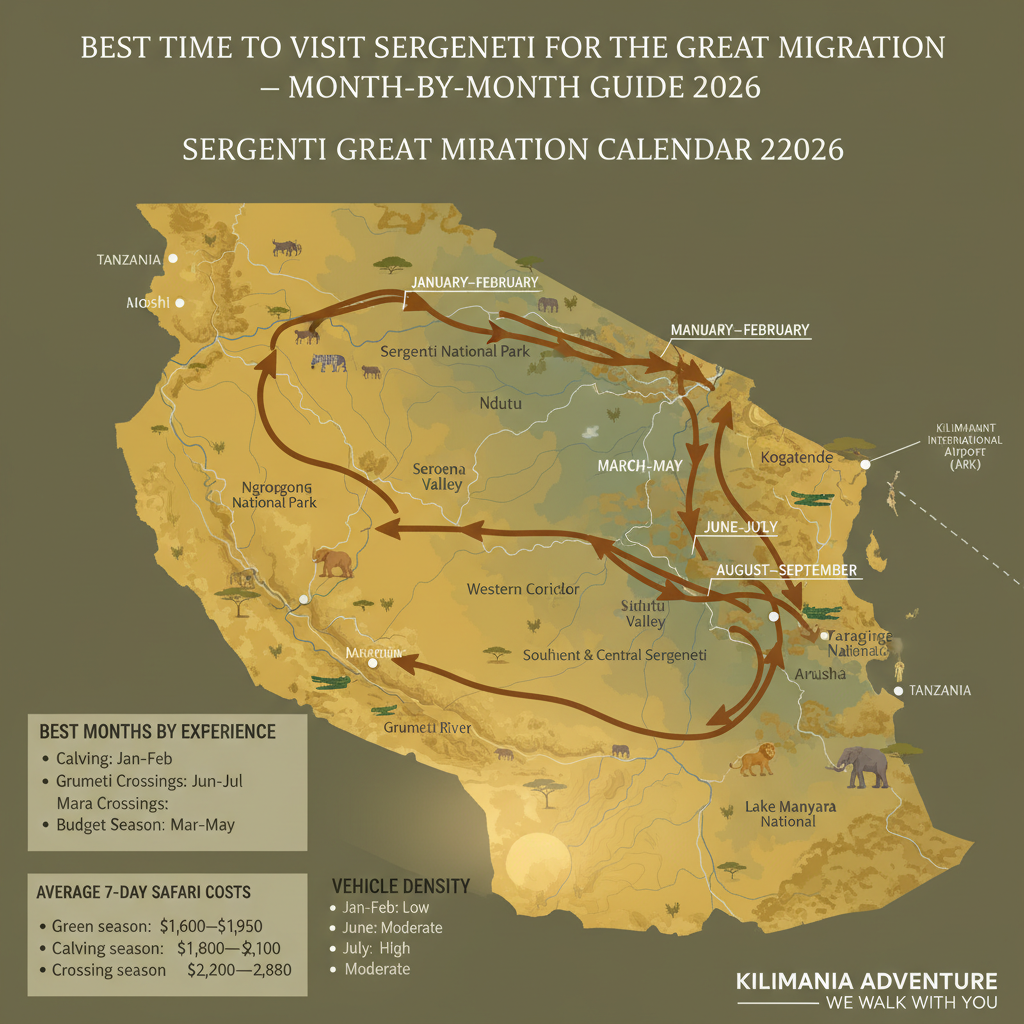
The ecosystem functions as a continuous loop. The Serengeti–Ngorongoro–Masai Mara corridor forms a roughly circular route that the herd completes annually — driven entirely by rainfall and grass availability, not by a calendar.
Migration Geography — Where the Herd Actually Moves
- Ndutu Plains (NCA): Southern zone where calving concentrates, January–February
- Southern Serengeti: Dispersal after calving, March–May
- Central Serengeti – Seronera Valley: Transit zone, April–June
- Western Corridor – Grumeti River: First major river crossing zone, June–July
- Northern Serengeti – Kogatende: Approach to the Mara River, July–August
- Mara River (Tanzania side): Second major crossing zone, August–September
- Return south: October–December, herd moves back toward Ndutu
Full Month-by-Month Migration Calendar
All costs: per person, two travelers sharing a vehicle, public campsite accommodation, budget tier. Groups of three reduce per-person cost by 15–18%.
Calving Season vs River Crossings — Which Phase Is Right for You?
Calving season (January–February) saves $600–$900 per person compared to July, delivers the highest frequency of predator interactions in the Northern Circuit calendar, and puts you at Ndutu Plains with 4–5 vehicles per sighting instead of 8. You will not see a river crossing. River crossings (June–September) deliver explosive five-to-fifteen-minute events — crocodile kills, mass crossings, maximum drama — at maximum cost and maximum vehicle competition.
The honest comparison:
Calving Season (Jan–Feb)
Typical Cost: $1,800–$2,100
Wildlife Style: Predator interactions and newborn calves across Ndutu Plains
Crowds: Lower vehicle pressure
Vehicle Density: Usually 4–5 vehicles per sighting
Viewing Experience: Longer wildlife observations with less movement pressure
Best For: First-time safari travelers, families, photographers, budget-conscious travelers
River Crossings (Jun–Jul)
Typical Cost: $2,400–$2,800
Wildlife Style: Grumeti and Mara River crossings with crocodile predation
Crowds: Higher during peak migration movement
Vehicle Density: Often 6–8 vehicles at major crossings
Viewing Experience: Shorter but highly dramatic wildlife moments
Best For: Travelers focused specifically on iconic migration crossings
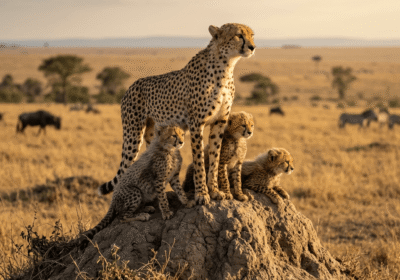
Kanti Kessy, with 17 years on the Northern Circuit, documents more predator interactions per game drive during calving season than any other month. Lions (Panthera leo), cheetahs (Acinonyx jubatus), and spotted hyenas (Crocuta crocuta) concentrate at Ndutu because calves under three weeks old cannot outrun them. It is sustained, accessible predator behavior — not a five-minute explosive moment, but a continuous field drama that plays out across the whole game drive.
If a river crossing is specifically what you are booking this safari to witness — book June, July, or August. If you want to maximise predator interactions per dollar spent, calving season is the correct answer.
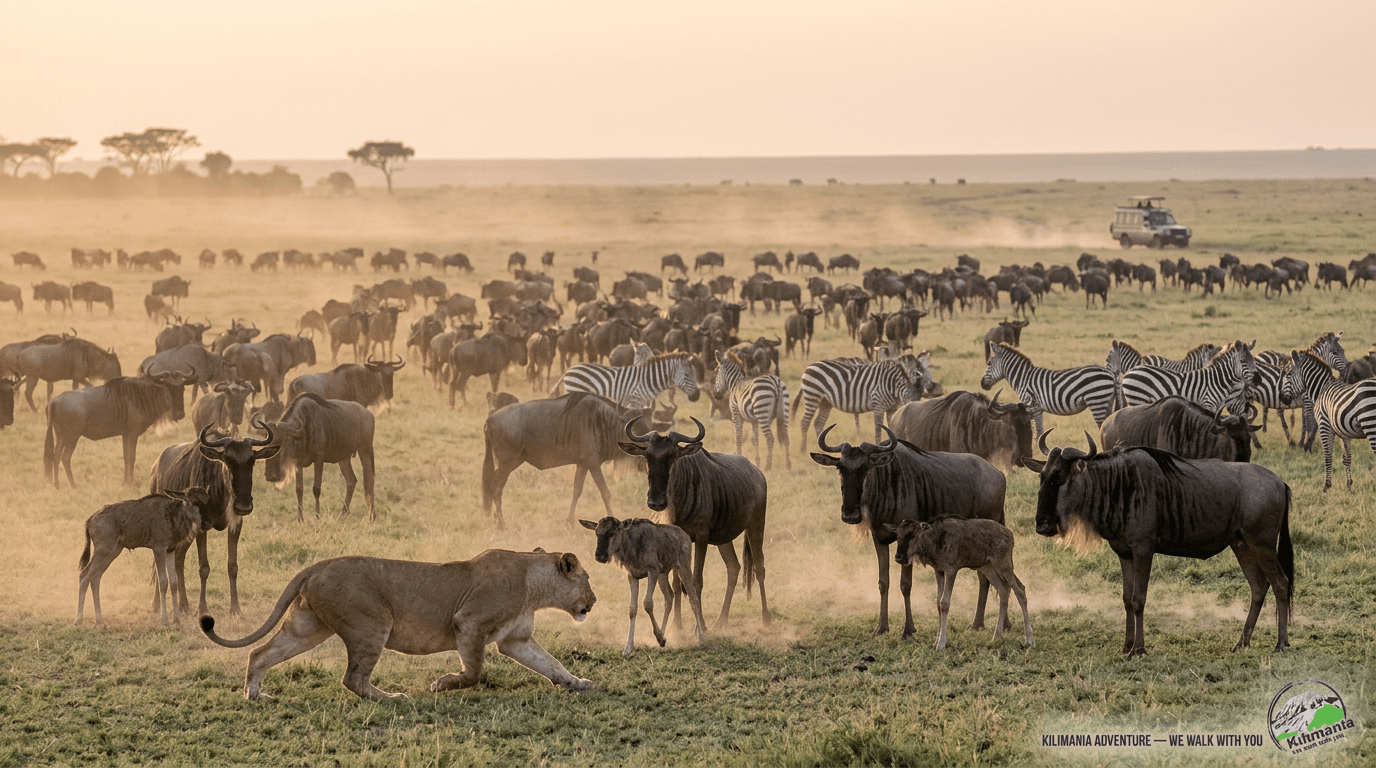
How Do Grumeti and Mara River Crossings Actually Work?
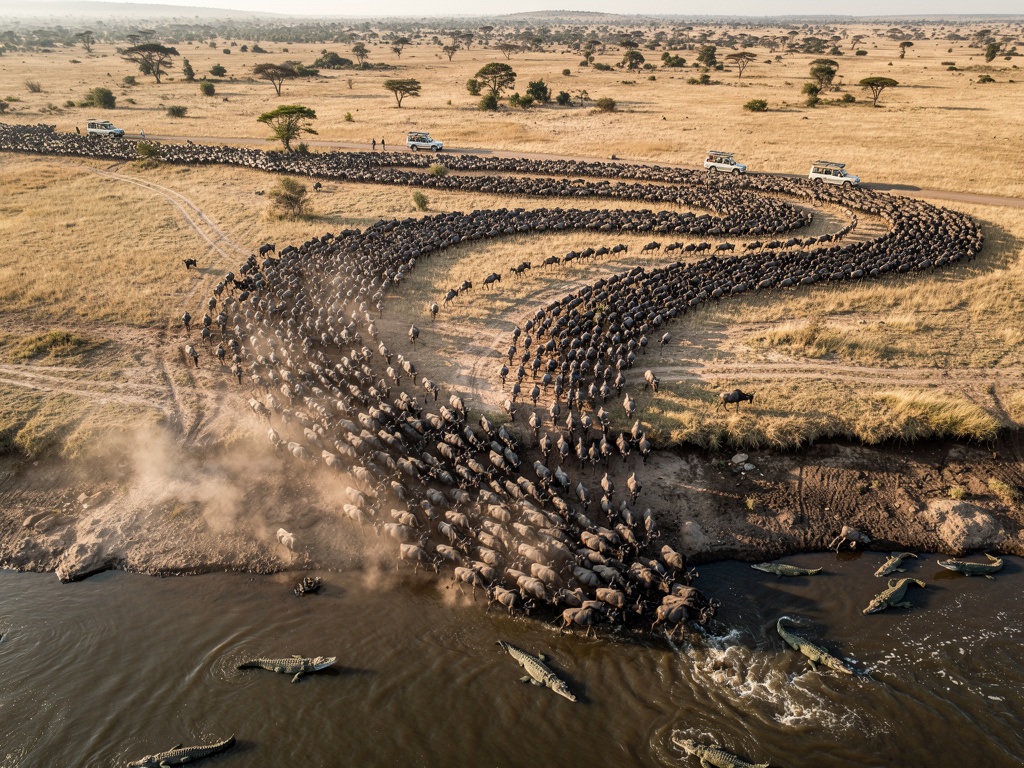
A river crossing is not continuous. Thousands of wildebeest stage on one bank — sometimes for hours. A lead animal steps into the water. Panic spreads. The crossing happens in five to fifteen minutes of explosive movement. Then silence. An experienced guide reads the herd’s staging behavior, positions the vehicle before the rush, and waits. Guide knowledge here is the single largest variable in your crossing experience.
Grumeti River (June–July)
The Grumeti River in the Western Corridor carries high water from the long rains in June. Crocodile pools are well-defined. Crossings are dramatic because the river is wide enough that animals must commit — no retreat once the column is moving. June delivers identical crossings to July at 15% lower cost with 4–5 vehicles at sightings versus 6–8.
Mara River (August–September)
The Mara River forms the Tanzania–Kenya border near Kogatende. The herd approaches on a wider front, producing fewer simultaneous mass crossings but more individual animal behavior — which serious photographers and naturalists often prefer. Vehicle pressure is lower than July. Lion predation near the river is common and cinematically different from crocodile kills.
Field note from Sabinus: Guides communicate river crossing activity by radio. When a column is staging and pressure is building, word travels fast — sometimes 15 to 20 vehicles converge on a single crossing point within minutes. The guides who position early wait quietly. The ones who arrive late scramble for angles. Book a guide who monitors weekly TANAPA game-drive reports, not one who works from a fixed marketing calendar.
July vs June vs August — The Honest Field Comparison
Operators market in July heavily because it is the most profitable month. Here is what the field actually shows.
July — Peak Grumeti Crossings
- Cost: $2,400–$2,800 per person
- Sighting probability: 90–95%
- Vehicles per sighting: 6–8 (TANAPA limit reached daily)
- Serengeti receives 10,000+ tourists per week
- Guides wake clients at 5:00–5:30 AM to reach sighting zones before queues fill
- Time at each sighting: 15–20 minutes before pressure to move on
June — Grumeti Crossings, Early
- Cost: $2,200–$2,400 per person — 15% lower than July
- Sighting probability: 88%
- Vehicles per sighting: 4–5 average
- Same Grumeti River, same crocodiles, same crossings
- Guide and vehicle availability tighter — book 10–12 weeks ahead
August — Mara River Crossings
- Cost: $2,300–$2,500 per person
- Sighting probability: 80–85%
- Vehicles per sighting: 5–6
- Herd dispersed across wider Mara front — fewer mass events, more individual behavior
- Better for photographers wanting longer sighting time and less vehicle chaos
Decision summary:
- ✅ July: maximum spectacle, maximum crowds, maximum cost
- ✅ June: equal crossings at 15% lower cost with better sighting conditions
- ✅ August: river crossings plus superior individual behavior observation, less chaos
- ❌ No month is the only valid choice
| Traveler Type | Best Month | Why |
|---|---|---|
| First-time safari travelers | June | River crossings with lower crowd pressure than July and more comfortable dry-season conditions. |
| Budget travelers | March–May | Lowest safari prices of the year with reduced campsite and lodge demand. |
| Families | January–February | High wildlife density, shorter driving distances around Ndutu, and easier game-viewing logistics. |
| Wildlife photographers | June | Excellent crossing activity combined with lower vehicle density and cleaner photographic angles. |
| Luxury travelers | August | Premium northern Serengeti camps operate at full service during Mara River season. |
| Big Five focus | June–October | Dry-season vegetation improves predator visibility across Serengeti and Ngorongoro. |
| Birdwatchers | March–May | Migratory bird activity peaks during the green season with dramatic breeding plumage. |
| Honeymoon travelers | August–October | Dry weather, premium camp atmosphere, and excellent sunset conditions across the Northern Circuit. |
No single month is universally “best” for the Serengeti migration because the ecosystem changes continuously throughout the year. January and February prioritize calving season, predator activity, and lower costs. June balances Grumeti River crossings with lower vehicle pressure than July, making it one of the strongest all-around months for first-time safari travelers. July delivers maximum migration spectacle but also the highest crowd density and peak pricing. August and September shift toward the Mara River and northern Serengeti, where luxury camps and dry-season conditions perform especially well for honeymoon travelers and photographers. March through May remain the best value period for budget-conscious travelers willing to accept occasional rain and more difficult road conditions. The correct decision depends less on marketing and more on your travel priorities: wildlife style, budget, crowd tolerance, photography goals, and accommodation expectations.
What Is the Best Time to Visit Serengeti for First-Time Travelers?
January–February (calving season) or June (early Grumeti crossings) serve first-time visitors most effectively. Calving delivers sustained wildlife density at lower cost; June delivers iconic crossing moments with better sighting conditions than July at a meaningful cost saving.
First-time visitors often ask which month delivers “the most wildlife.” The honest answer: the Serengeti carries its resident population year-round. Lions, leopards (Panthera pardus), elephants (Loxodonta africana), and buffalo (Syncerus caffer) are present in every month. The migration adds concentration and event-based drama — but a game drive in any month will produce sightings.
For a first-time visitor who wants:
- Maximum wildlife per day at lowest cost → January–February, Ndutu Plains
- A river crossing as the defining image → June, Grumeti River
- The safest scheduling (most predictable weather, best roads) → June–September dry season
- A multi-park itinerary covering Serengeti, Ngorongoro, and Tarangire → June or October
Our 7-day Northern Circuit Big Five safari covers all three parks and suits first-time visitors across budget and mid-range tiers.
What Is the best time to visit the Serengeti for Photography?
January–February delivers the best predator photography with low-angle morning light, cool temperatures, and minimal vehicle interference. June offers the same Grumeti crossing drama as July with 30–40% fewer vehicles in your frame.
Month-by-month photography assessment:
For photographers, June and January–February outperform July on a cost-per-quality-shot basis. July dust is significant in the dry season and frequently affects open-roof camera sensor cleaning. July vehicle density means other vehicles appear in wide shots constantly.
Our Serengeti hot air balloon safari adds an aerial photography dimension available year-round — balloon operators depart at dawn regardless of season.
What Is the Worst Time to Visit Serengeti?
March–May (long rains) is the most challenging period — roads are muddy, some campsites close temporarily, and sighting probability drops to 75%. But it is also the cheapest period ($1,600–$1,950 per person) and offers genuinely productive wildlife experiences for travelers who prepare correctly.
March–May honest assessment:
- Southern Serengeti roads: passable in most areas, problematic after heavy rainfall
- Some public campsites: temporarily inaccessible
- Wildlife behavior: animals concentrate at water points, improving certain sighting types
- Weekly tourist volume: 1,500–2,500 — lowest competition of the year
- Photography: dramatic skies, green landscape, unique atmospheric conditions
- Cost: lowest of any period
Who still benefits from traveling in long rains: serious photographers wanting dramatic conditions, budget travelers for whom the cost reduction outweighs the road inconvenience, birdwatchers (migratory species peak), and travelers who actively prefer solitude over wildlife density.
Speak With a Tanzania Safari Expert on WhatsApp
Chat directly with the Kilimania Adventure team for real safari prices and the best Serengeti itinerary for your dates and budget.
What Is the Best Time to Visit Serengeti on a Budget?
March–May is the cheapest at $1,600–$1,950 per person for 7 days. January–February is the cheapest high-concentration wildlife period at $1,800–$2,100. June offers the best balance of cross-season wildlife and cost savings versus peak July pricing.
Cost-to-wildlife value by month:
- March–May: $1,600–$1,950 — lowest cost, lowest sighting probability (75%), green landscape
- January–February: $1,800–$2,100 — 30% below July peak, highest predator frequency, 85% probability
- June: $2,200–$2,400 — 15% below July, river crossings, 88% probability
- September: $2,200–$2,400 — Mara crossings continuing, 80% probability, lower crowds
- October–November: $2,000–$2,300 — return migration, 78% probability, good multi-park value
Groups of three reduce per-person cost by 15–18% across all tiers. Our 6-day Tanzania safari covering Tarangire, Serengeti, and Ngorongoro runs monthly group departures — the most cost-effective entry point for solo travelers and couples.
What Does a Legitimate Serengeti Safari Cost — and How Do You Spot a Fraudulent Quote?
A legitimate 7-day Serengeti and Ngorongoro budget safari for two people costs a mathematical minimum of $1,800 per person in 2026. Any quote below this figure requires written justification before you pay a deposit. The most commonly hidden cost is the $295 per-vehicle Ngorongoro Crater descent fee.
Fixed cost floor — two travelers, budget tier, 7 days:
The five fraud patterns to identify before paying any deposit:
- Sub-$1,000 all-inclusive quote — Park fees alone exceed this figure. The operator is not paying fees or will demand them at the gate.
- Park fees listed as “excluded” or “to be advised” — Legitimate operators itemize fees in the initial quote.
- Crater descent absent or quoted per person — The $295 fee is per vehicle, divided by passengers. Quoting per person doubles the cost. Omitting it means cash demand at the crater rim.
- VAT treatment not stated in writing — Tanzania VAT is 18%. Ask: “Is this total inclusive or exclusive of 18% VAT?” Require a written answer.
- Full payment is required 90+ days before departure — Legitimate operators take a 25–30% deposit at booking, with the balance due 14 days before departure.
Before paying any deposit, ask in writing: “Is the $295 per-vehicle Ngorongoro Crater descent fee included in the total quoted price?” Require a written yes or no.
Where to Stay Best Time to Visit Serengeti for the Great Migration
In Serengeti, camp location matters more than luxury level. A well-positioned budget camp near the migration consistently outperforms a luxury lodge located three hours from current herd movement. The single biggest accommodation mistake travelers make is booking based only on room quality without understanding seasonal wildlife geography.
The migration moves continuously across the Serengeti ecosystem, and accommodation positioning changes the quality of your safari more than almost any other operational decision. Poorly positioned camps create long transit drives before sunrise, late arrival at crossings, and reduced wildlife time during peak activity hours.
Ndutu Plains — January to February
During calving season, the most effective accommodation strategy is staying in seasonal mobile camps around Ndutu Plains inside the Ngorongoro Conservation Area. These camps relocate specifically to follow herd concentration zones. Staying near Ndutu reduces daily drive times dramatically and allows earlier access to predator activity at sunrise.
Central Serengeti — March to May & October to November
For transitional migration months, Seronera Valley lodges in Central Serengeti provide the strongest logistical base. Resident wildlife remains excellent year-round here, especially lions, leopards, and hyenas. Central positioning also supports multi-park itineraries combining Serengeti with Ngorongoro and Tarangire.
Western Corridor — June to July
Grumeti River crossings are best accessed from Western Corridor camps. Travelers staying too far east in Central Serengeti often face 2–4-hour drives before reaching crossing areas. During crossing season, proximity matters because herd behavior changes quickly and crossings can begin suddenly.
Northern Serengeti — August to September
For Mara River crossings, Kogatende migration camps provide the strongest positioning. Northern Serengeti camps operate at peak demand during August and September, especially premium tented camps near river staging zones. Booking late during this period often forces travelers into camps positioned several hours from active crossing points.
Luxury level matters for comfort. Camp positioning determines wildlife access. A mid-range camp near the migration frequently delivers a stronger overall safari than a high-end lodge requiring long daily transit drives.
For a full breakdown of seasonal camp zones, luxury levels, and operational pros and cons, see our guide to the best Serengeti lodges and migration camps.
How Do TANAPA Vehicle Limits Shape Your Serengeti Experience?
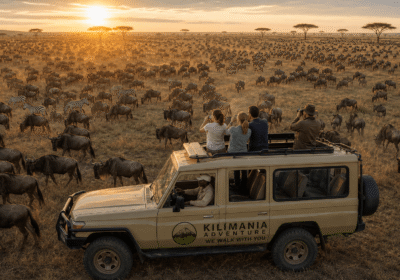
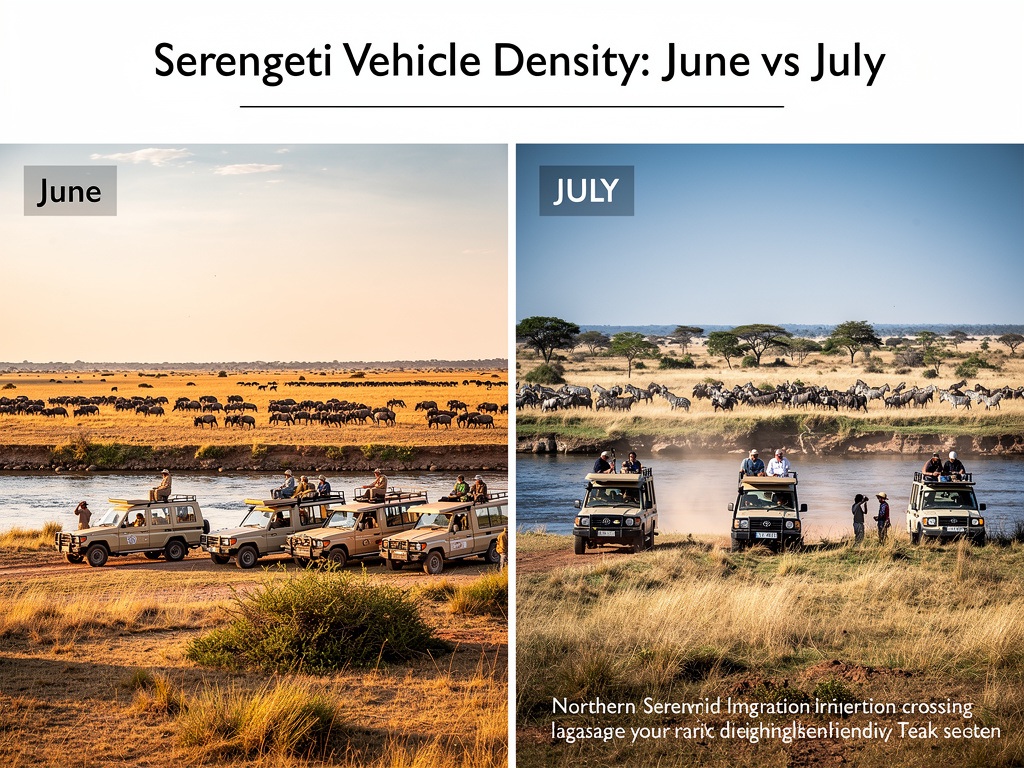
TANAPA limits wildlife sightings to 6–8 vehicles year-round. In July, with 10,000+ weekly tourists, that limit is hit at nearly every sighting daily — you get 15–20 minutes before moving on. In January–February, with 2,000–3,000 weekly tourists, the same regulation is rarely triggered — sightings run 40–60 minutes with 4–5 vehicles.
The regulation in full:
- Maximum 6–8 vehicles per wildlife sighting
- Maximum 2 vehicles per active predator kill
- Maximum 6 passengers per vehicle, plus guide
Same rule — very different experience by season:
The Wildlife Conservation Society documented in 2024 that TANAPA’s regulations create a 70% lower vehicle-to-sighting ratio in Serengeti versus Kenya’s Masai Mara National Reserve, which has no vehicle limits per sighting. A single lion kill at Mara routinely draws 15–20 vehicles forming a wall of metal around the animal.
This is one of the strongest practical arguments for choosing Serengeti over Kenya — even in July, Serengeti’s regulated sighting system produces meaningfully better wildlife behavior observation than Mara’s unregulated equivalent.
For Ngorongoro Crater planning, our Ngorongoro safari guide from Moshi covers descent logistics, vehicle limits inside the crater, and the correct calculation of the $295 crater descent fee.
Testimonials
“We waited almost two hours near the Grumeti crossing point before the first animals moved. For a while nothing happened except dust and nervous movement near the riverbank. Then suddenly the whole crossing started at once. By the time it ended, our guide said nearly every vehicle in the area had arrived.”
— Thomas K., Germany, June 2026 [Verified Google Reviews]
“January was much greener than I expected. We saw lions almost every day around Ndutu, usually early morning before breakfast. One morning we spent nearly 45 minutes watching lionesses following wildebeest calves through low grass while rain clouds moved in behind us.”
— Priya S., Canada, February 2026 [Verified TripAdvisor]
“Our guide warned us July would be busy, and he was right. Some crossings already had several vehicles waiting before sunrise. But once we moved farther north toward Kogatende, the experience became calmer and we had much longer wildlife sightings than expected.”
— Emma v.d.B., Netherlands, July 2026 [Verified TripAdvisor]
“We booked March because it was cheaper and honestly expected poor wildlife. Instead we had empty roads, dramatic skies, and one full afternoon watching elephants near Seronera with almost no other vehicles around.”
— Daniel R., Australia, April 2026 [Verified Google Reviews]
Why Trust Kilimania Adventure for This Information
- Base: Moshi, Kilimanjaro Region, Tanzania — physical office, not an online-only booking desk
- TATO registration: Active member, Tanzania Association of Tour Operators — verify at tatotz.org
- Field days: 200+ per year in Serengeti, Ngorongoro, Tarangire, and Lake Manyara
- Guide record: Sabinus Msimba, 22 years guiding, 300+ Kilimanjaro summits. Kanti Kessy, 17 years Northern Circuit game drives.
- Transparency: We publish exact park fees, honest limitations, and competitor comparisons because travelers who understand real costs book better safaris
Recommended Safari Duration by Migration Phase
Include:
- 3–4 days → calving season safaris
- 5–6 days → Grumeti crossing itineraries
- 7–8 days → Mara River + Ngorongoro combinations
- 10+ days → migration plus Zanzibar extension
FAQ: Best Time to Visit Serengeti for the Great Migration
When is the best month to see the Great Migration in the Serengeti?
Is July really the best month, or is that just marketing?
What is the cheapest month for a Serengeti safari?
How much does a 7-day Serengeti safari cost in 2026?
Is calving season worth it compared to river crossings?
How many vehicles will be at each sighting in July?
Is Serengeti less crowded than Kenya’s Masai Mara?
How far in advance should I book a Serengeti migration safari?
Is malaria a risk on a Serengeti safari?
Do I need a yellow fever vaccination for Tanzania?
For International Travelers
All prices in USD. Conversions: $1,800 ≈ £1,400 | €1,680 | AU$2,700.
Flights to Kilimanjaro International Airport (JRO): New York / Los Angeles $800–$1,400 return | London £550–£900 return | Sydney AU$1,400–AU$2,200 return.
Tanzania e-visa: $50 for most nationalities | $100 for US citizens. Apply at immigration.go.tz at least 7 days before departure — Visa or Mastercard, Chrome or Firefox. A yellow fever certificate is required only if arriving from an endemic country.
Pre-safari accommodation in Moshi: $35–$80 per night. Book one night before and one night after your safari.
Response times: Kilimania Adventure operates on East Africa Time (EAT, UTC+3) from Moshi. Messages sent after 6:00 PM EAT receive responses the following morning. Quote replies within 12 hours, 7 days per week.
Disclosure: This article is written by Kilimania Adventure, a TATO-registered safari and Kilimanjaro operator based in Moshi, Kilimanjaro Region, Tanzania. We have a direct commercial interest in Tanzania safari bookings. All prices reflect real 2026 operational costs. We encourage you to compare our quotes with at least two other TATO-registered operators before booking.
Written by: Sabinus Msimba, Senior Safari Guide and Co-founder, Kilimania Adventure. 22 years guiding Northern Circuit safaris from Moshi. 300+ Kilimanjaro summits. KINAPA-licensed mountain guide. Last reviewed: May 2026. Updated each November following TANAPA’s annual tariff announcement. Fee changes are applied within 72 hours of official publication.
Data verification notice: Park fees are set by Tanzanian government authorities and can change without advance notice. All figures reflect the May 2026 published rates. Verify current fees at tanzaniaparks.go.tz before booking. Request a gate receipt during your safari to confirm your operator paid the correct published amount.
Speak With a Tanzania Safari Expert on WhatsApp
Chat directly with the Kilimania Adventure team for real safari prices and the best Serengeti itinerary for your dates and budget.
Plan Your Serengeti Migration Safari — Get a Real Quote
From our base in Moshi, Kilimanjaro Region, Kilimania Adventure runs daily safaris to Serengeti National Park, Ngorongoro Crater, Tarangire National Park, and Lake Manyara National Park, with pickups from Kilimanjaro International Airport (JRO) and Arusha Airport (ARK).
Email: info@kilimania.co.tz 📞 Call: +255 756 449 990 (7 days per week, EAT)
Tell us:
- Travel dates and which migration phase interests you
- Number of travelers
- Budget tier: budget / mid-range / luxury
We return a full itemized quote within 12 hours — park fees by park and by day, crater descent stated per vehicle, VAT treatment confirmed in writing, complete inclusion and exclusion list. No costs were discovered at the gate.
| Park fees: tanzaniaparks.go.tz | NCAA: ncaa.go.tz | E-visa: immigration.go.tz
We Walk With You.