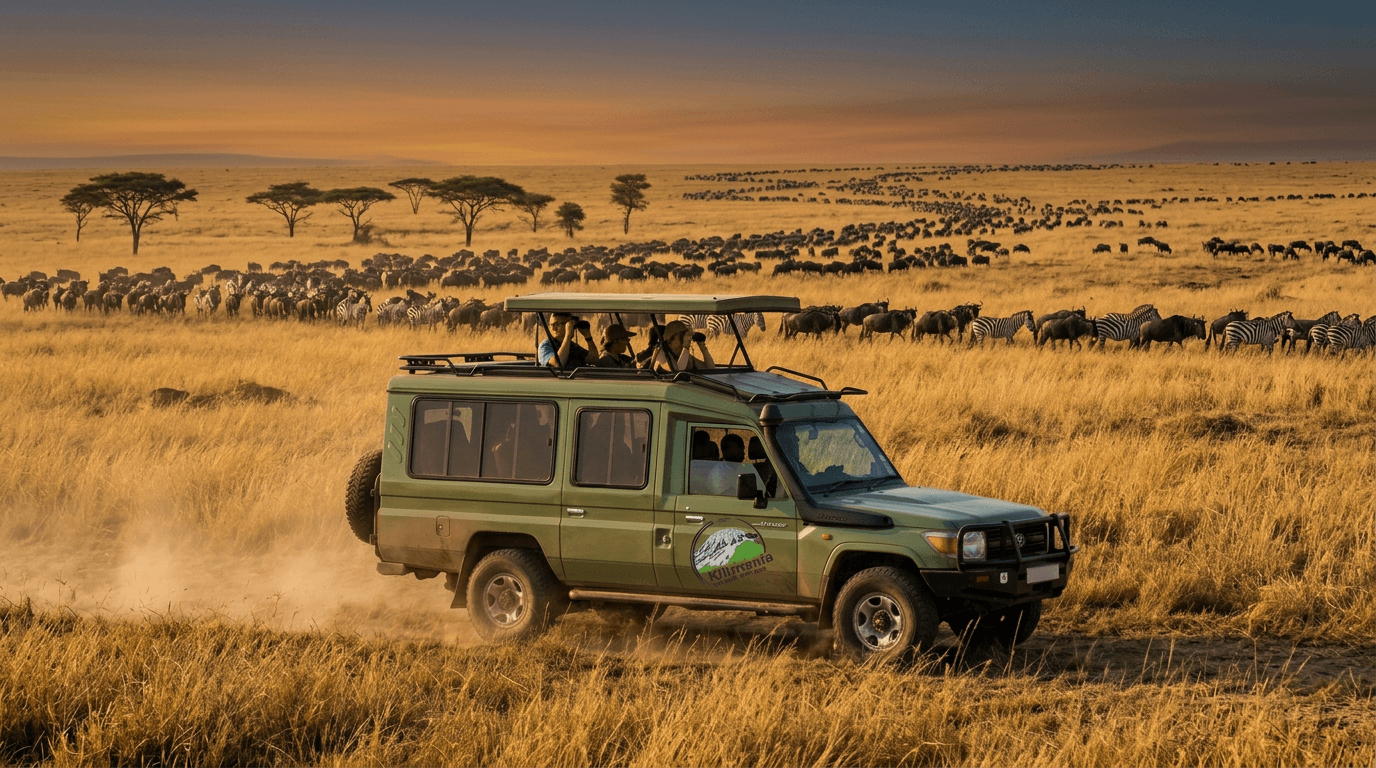
Why Are Tanzanian Safaris So Expensive? costs between $150 and $1,500+ per person per day, depending on park fees, accommodation level, transport logistics, and whether you choose a budget, mid-range, or luxury safari.
This guide explains exactly why Tanzania safaris are expensive in 2026 — including Serengeti park fees, Ngorongoro Crater charges, safari vehicle costs, accommodation pricing, and hidden expenses most travellers miss.
Last updated: May 2026
Why Trust This Guide
This article is written by Kilimania Adventure, a Moshi-based Tanzania safari operator running Northern Circuit safaris year-round with licensed guides across Serengeti, Ngorongoro, Tarangire, and Lake Manyara.
- Budget safari: $150–$300 per person/day
- Mid-range safari: $350–$600 per person/day
- Luxury safari: $700–$1,500+ per person/day
Tanzania safaris are expensive because of national park fees, Ngorongoro conservation charges, remote accommodation logistics, licensed guide requirements, and long-distance transport between parks.
This guide explains exactly why Tanzanian safaris cost what they cost, who should expect to pay what, and where you have genuine room to reduce spending. It is written for international travellers — from the USA, UK, Germany, Australia, France, the Netherlands, and Canada — planning a first or return visit to Tanzania.
From our base in Moshi, Kilimanjaro, Kilimania Adventure runs daily departures to Serengeti National Park, Ngorongoro Crater, Tarangire, and Lake Manyara. Pickups are available from Kilimanjaro International Airport (JRO) and Arusha Airport (ARK). We see how safari costs are built every week — and we share that honestly.
Table of Contents
INTRODUCTION
A Tanzania safari can cost anywhere from $150 to more than $1,500 per person per day depending on park fees, accommodation level, transport, and safari style.
This guide explains why Tanzania safaris are expensive, what budget, mid-range, and luxury safaris actually include, and where travellers can realistically save money without missing the core wildlife experience.
Based on real Northern Circuit safari operations from Moshi, Kilimanjaro, this article breaks down Serengeti, Ngorongoro, Tarangire, and Lake Manyara safari costs using current 2025/2026 pricing and practical field experience.
Who This Tanzania Safari Cost Guide Is For
This guide is designed for:
- first-time Tanzania safari travelers
- couples comparing safari budgets
- photographers planning Serengeti trips
- Solo travellers considering group safaris
- travelers comparing Tanzania vs Kenya safari costs
For a full current price breakdown by itinerary length, see our Tanzania safari cost 2026 guide.
How Tanzania Safari Prices Are Calculated (Park Fees, Accommodation & Transport)
Tanzania safari pricing has three main layers. Each adds cost before a single animal is spotted.
Some Tanzania safari expenses are unavoidable regardless of operator or accommodation level. See our Tanzania Safari Fixed Costs 2026 | Non-Negotiable Fees guide for a breakdown of mandatory park fees, conservation charges, and transport costs.
Layer 1: National park entrance fees
Every park charges a daily fee per person. In Serengeti National Park, the adult entrance fee is $82 per day (2025/2026 TANAPA rates). Tarangire National Park charges $58 per adult per day. Lake Manyara charges $53.
These fees are set by the Tanzania National Parks Authority (TANAPA) and are non-negotiable. No operator — large or small — can offer a discount on park fees.
Layer 2: Accommodation
Accommodation is the largest cost variable on any Tanzania safari. A public campsite costs $30–$40 per person per night. A mid-range tented camp runs $200–$500. A luxury lodge or private camp starts at $700 per person per night.
That single variable can turn a $3,500 trip into a $12,000 one — same parks, same wildlife, very different camp.
Layer 3: Transport and logistics
All driving in Tanzania’s national parks requires a registered 4WD vehicle with a licensed guide. Vehicle hire, fuel, and driver-guide fees add $150–$300 per day to a private safari. On a shared group safari, this cost is divided among 4–6 passengers.
Add visa fees ($50 for most nationalities), airport transfers from Arusha or Moshi, and international flights — and the cost of reaching Tanzania is high before a single park gate is crossed.
Key takeaway: Ngorongoro Crater is more expensive than other Tanzania parks because NCAA fees are layered on top of standard safari operating costs.
Travellers comparing comfort, wildlife access, and value per dollar should also read our Luxury vs Mid-Range Tanzania Safari: Best Value 2026 comparison guide.
What Makes Ngorongoro Crater Safari More Expensive Than Other Parks?
Ngorongoro Crater is the single most expensive destination on the Northern Circuit. The reason is structural: it is managed not by TANAPA, but by the Ngorongoro Conservation Area Authority (NCAA) — a separate body with its own multi-layered fee structure.
NCAA fee breakdown (2025/2026 rates):
| Fee Type | Amount (USD) |
|---|---|
| Conservation Area entry (per person, per day) | $80 |
| Crater descent fee (per vehicle, per trip) | $200 |
| Vehicle fee (per day) | $200+ |
| Public campsite (per person, per night) | $50 |
| Crater rim lodge rate (per person, per night) | $300–$800+ |
A single half-day descent into the Crater costs a private safari group $400–$600 in fees alone — before any accommodation.
The Crater also has daily vehicle limits. NCAA regulations cap the number of vehicles inside the Crater at any one time. That scarcity maintains wildlife quality but keeps prices from dropping.
This is why a 3-day Serengeti–Ngorongoro itinerary costs notably more than a 3-day Tarangire–Manyara trip. Ngorongoro is more expensive by design — and by conservation purpose.
Our 4-day Tanzania safari covering Manyara, Serengeti, and Ngorongoro shows exactly how these fees combine in a real itinerary.
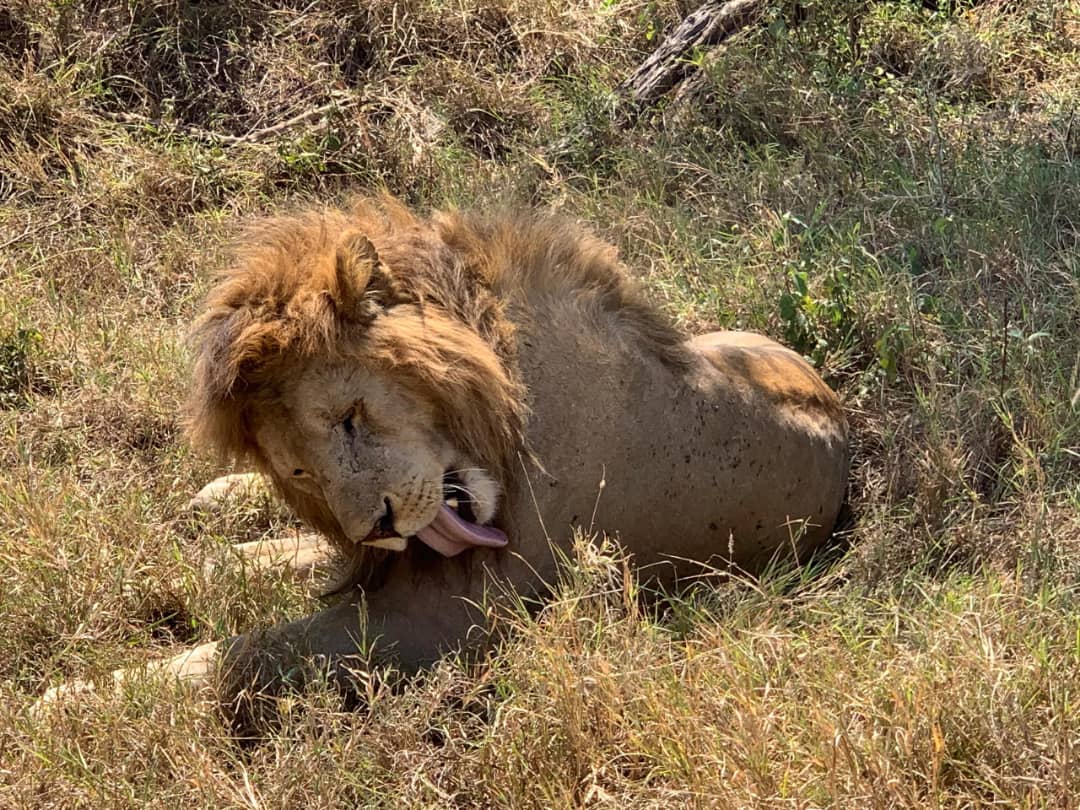
Serengeti National Park Fees 2025/2026 Breakdown
The Serengeti is Tanzania’s largest national park and its most visited. Its fee structure reflects that status.
TANAPA Serengeti entrance fees (2025/2026):
| Fee Type | USD |
|---|---|
| Adult entrance (per person, per day) | $82 |
| Child entrance (under 16, per day) | $20 |
| Public campsite (per person, per night) | $30 |
| Special campsite (per person, per night) | $50 |
| Vehicle fee (registered operator) | included in operator license |
A family of four spending three days in the Serengeti pays $984 in entrance fees alone. That’s before accommodation, guide fees, or meals.
Central Serengeti near Seronera is the most accessible area from Arusha or Moshi. Southern Serengeti — including the Ndutu plains — is key for the calving season (December–March) but requires longer drives and more fuel.
Northern Serengeti near the Mara River is prime territory for the river crossing during migration (July–October). It is also the furthest from Moshi, adding $100–$150 in fuel per vehicle each way.
Kilimania’s lead guide, Sabinus Msimba, has tracked wildlife in the Central and Southern Serengeti for over 14 years. He reads the migration patterns without relying on radio networks.
For a safari that includes the Serengeti with a hot air balloon experience, see our 4-day Big Cats and Balloon safari.
Current TANAPA fees can be verified at the official Tanzania National Parks Authority website.
Key takeaway: Ngorongoro Crater is more expensive than other Tanzania parks because NCAA fees are layered on top of standard safari operating costs.
Compare Tanzania Safari Costs by Tier
Get a Personalised Tanzania Safari Quote
Speak to a Local Tanzania Safari Expert
Request a detailed Tanzania safari quote comparing budget camping, mid-range tented camps, and luxury fly-in itineraries for your travel dates. Based in Moshi, Kilimanjaro — operating Serengeti, Ngorongoro, Tarangire, and Lake Manyara safaris year-round. Most quotes are returned within 12 hours.
Tanzania Safari Cost Comparison: Budget, Mid-Range & Luxury
Understanding why Tanzanian safaris are so expensive starts with knowing what each price tier actually delivers.
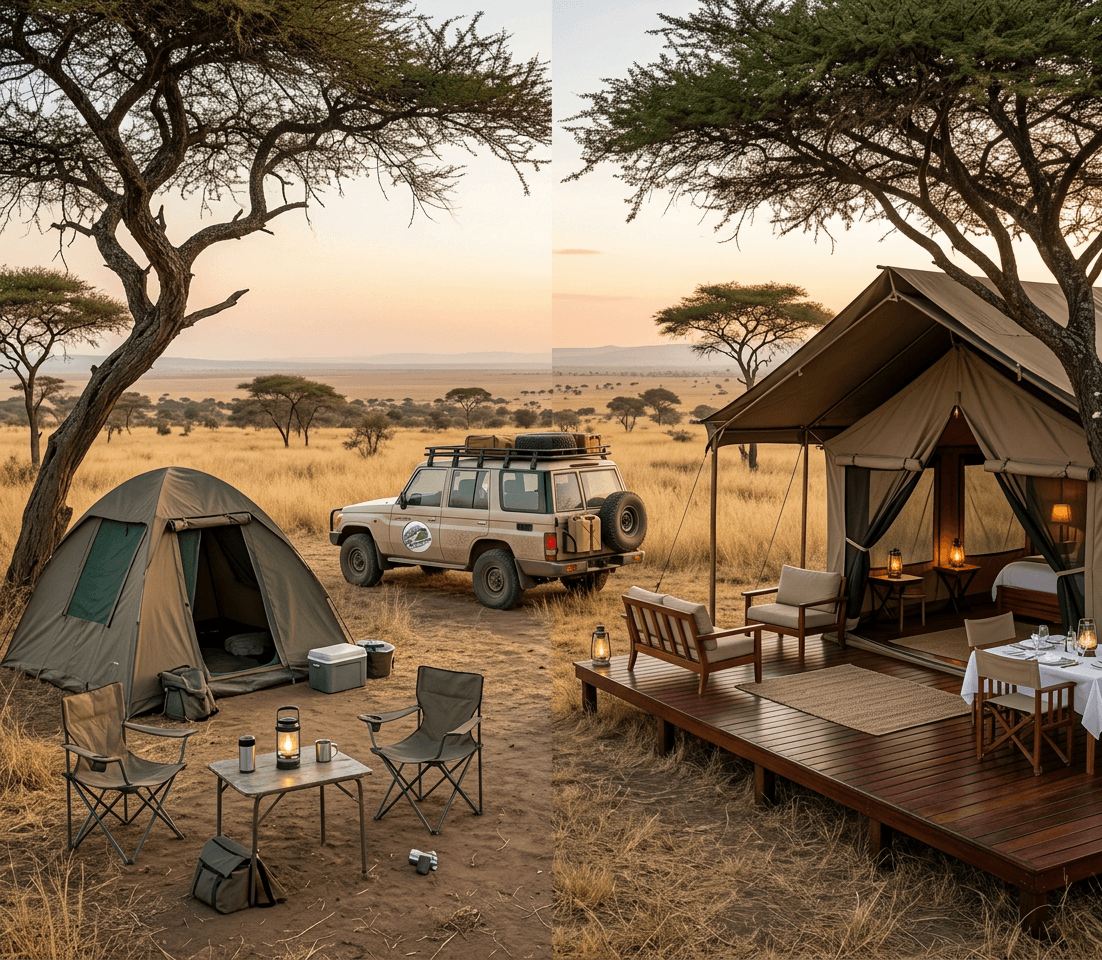
| Tier | Cost Per Person/Day | Accommodation | Vehicle | Ideal For |
|---|---|---|---|---|
| Budget | $150–$300 | Public campsite | Shared (4–6 pax) | Solo travelers, backpackers |
| Mid-Range | $350–$600 | Private tented camp or lodge | Private or shared | Couples, small groups |
| Luxury | $700–$1,500+ | Private lodge or fly camp | Private, dedicated | Honeymooners, photographers |
Budget safaris use public campsites and shared vehicles. They are not low-quality, but they offer less scheduling flexibility and no exclusivity.
Luxury camps charge high rates partly because of location. Remote fly camps in the Serengeti or Ndutu require airstrips, bush kitchens, and full staff in areas with no electricity grid or running water. For a full luxury pricing breakdown, including fly-in safaris, private lodges, and Serengeti premium camps, see our How Much Does a Luxury Safari in Tanzania Cost? | 2026 Price Guide.
That infrastructure costs money every single day — whether guests are present or not.
For a direct comparison of what each tier gives you day-to-day, read the Luxury vs Mid-Range Tanzania Safari guide. For travelers keeping costs down, our Budget Safari Tanzania Cost Guide gives realistic, honest expectations.
Tanzania vs Kenya Safari: Which Is More Expensive?
Kenya is the most common comparison to Tanzania. In most categories, Tanzania costs more — and there are specific reasons why.
Six factors that make Tanzania more expensive than Kenya:
- Park fees are higher. Kenya’s Maasai Mara entry is $80/day for non-residents. Tanzania’s Serengeti charges $82, plus Ngorongoro adds $80 more as a separate authority.
- Conservation levies are layered. The NCAA’s Crater descent fee ($200 per vehicle) has no equivalent in Kenya’s system.
- Parks are more remote. Greater distances from Nairobi to Mara versus Arusha or Moshi to Serengeti mean more fuel and more driving time.
- No self-drive permitted. Kenya allows self-driving in most parks. Tanzania requires a licensed guide and a registered vehicle. This adds a mandatory cost layer.
- Operator licensing is stricter. Tanzania requires operators to hold TATO membership and meet training standards. Compliance costs flow through to pricing.
- Accommodation supply is tighter. Tanzania’s parks have fewer lodges relative to visitor numbers — especially in the Serengeti. Scarcity keeps prices high.
That said, Tanzania’s Northern Circuit covers more park variety in one trip. Serengeti, Ngorongoro Crater, Tarangire, Lake Manyara, Lake Eyasi, and Ndutu are all within reach of Arusha or Moshi. A single 7-day itinerary can cover four of these. Kenya’s geography cannot match that variety.
The value question comes down to what you are comparing. Tanzania costs more per day. It delivers more wildlife variety per trip.
Key takeaway: Ngorongoro Crater is more expensive than other Tanzania parks because NCAA fees are layered on top of standard safari operating costs.
Tanzania Low Season Safari Prices: How Much Can You Save?
The low season in Tanzania runs from April to June (long rains) and November (short rains). Overall prices drop — but park fees do not.
TANAPA and NCAA set annual fee schedules. They do not offer seasonal discounts. What changes in low season:
- Lodge and camp rates: 20–40% lower than peak season
- Internal flights: 10–25% lower (Arusha to Serengeti airstrips)
- Shared safari departures: more places available; operators fill vehicles more aggressively
- Total itinerary cost: typically 15–30% lower than high-season equivalent
A 7-day mid-range safari that costs $4,500 in July can cost $3,100–$3,500 in April. The landscape is greener. Birdlife is richer. Crowds are smaller.
Practical low-season limitations: Some Ndutu roads close during peak rains. Parts of the Southern Serengeti become difficult for standard 4WD vehicles. Northern Serengeti and Ngorongoro Crater remain accessible year-round.
Low season is a genuine option for travellers with flexible dates and realistic expectations about road conditions.
Hidden Costs of Tanzania Safari: What Most Travellers Miss
This is where the real price surprise comes for travellers who booked on a headline figure.
1. Single traveller supplement
Safari vehicles seat 4–6 people. A solo traveller on a private safari pays for the seats they are not filling. The supplement typically runs $400–$800 for a 7-day trip. It is not a surcharge — it is the cost of the empty vehicle seats.
Joining a group departure is the practical solution. You share costs with other travellers.
2. Tipping
Tipping is expected and forms a meaningful part of local staff income. Budget $20–$30 per day for your guide, $10–$15 for a cook, and $5–$10 per camp crew member. Over 7 days with a full crew, that totals $200–$350.Tipping is expected and forms a meaningful part of local staff income. Read our How Much to Tip on Tanzania Safari 2026: Exact Amounts guide for realistic daily tipping expectations for guides, cooks, and camp crews.
Read our detailed Tanzania Safari Tipping Guide for realistic per-day tipping expectations for guides, cooks, and camp crews.
3. Ngorongoro Crater descent fee
Many budget packages include Ngorongoro Conservation Area entry but exclude the $200 vehicle Crater descent fee. Read your itinerary line by line.
4. Internal flights
Flying from Arusha to the Serengeti costs $250–$400 per person each way. Road safaris avoid this cost but add 6–8 hours of driving each way from Arusha.
5. Visa and travel insurance
Tanzania visas cost $50 for most nationalities (available on arrival or via e-visa). Travel insurance covering medical evacuation in a remote national park runs $80–$200 per person, depending on the policy.
A transparent operator lists all five of these upfront. If a quote excludes any of them, ask.
Compare Tanzania Safari Costs by Tier
Speak to a Local Tanzania Safari Expert
Request a detailed Tanzania safari quote comparing budget camping, mid-range tented camps, and luxury fly-in itineraries for your travel dates.
Private vs Group Safari Cost in Tanzania: Which Is Right for You?
Private safaris give you a dedicated vehicle, driver-guide, and full schedule control. Group safaris share the vehicle cost among 4–6 travellers — reducing per-person cost significantly.
| May apply if the minimum is not met | Private Safari | Group Safari |
|---|---|---|
| Cost (7 days, mid-range) | $4,500–$7,000 pp | $2,500–$4,000 pp |
| Vehicle type | Dedicated | Shared |
| Schedule flexibility | Full | Fixed departure |
| Single supplement | Not applicable | May apply if minimum not met |
| Guide ratio | 1:1 or 1:2 | 1:4 to 1:6 |
| Ideal for | Couples, families, photographers | Solo travelers, budget-conscious |
A couple travelling together often finds a private mid-range safari comparable in total cost to two separate group departures. For a solo traveller, joining a group departure is the most cost-effective route.
For a full breakdown of both options, read our Group Safari vs Private Safari Tanzania comparison guide.
Why Booking a Local Tanzania Operator Saves Money
International travel agencies add margins. A safari priced at $3,500 through a Moshi-based local operator can cost $5,000–$5,500 through a London or New York travel agent — same vehicle, same parks, same number of days.
The difference is a reseller margin, typically 30–50%.
Kilimania Adventure plans and operates its own safaris directly from Moshi. No third-party markup. Our team includes lead guides Kanti Kessy, Saimon Bashemera, and Louis Salvatory — each with over a decade of field experience across the Northern Circuit, from Central Serengeti to Ndutu to the Ngorongoro highlands.
Last season, a solo traveller from the Netherlands joined our 5-day Tarangire, Manyara, and Ngorongoro group safari. On day two, she watched a leopard with two cubs in a fig tree along the Tarangire River — an encounter that lasted 40 minutes. No second vehicle interrupted. No rush.
Working directly with a local Tanzania operator also means faster itinerary adjustments, on-the-ground wildlife knowledge, and a direct phone line when something changes.
Our 5-day Tarangire, Manyara, and Ngorongoro safari is a practical mid-range option for independent travellers on the Northern Circuit.
Related Tanzania Safari Cost Guides
- Tanzania Safari: Budget vs Mid-Range vs Luxury | 2026
- Luxury vs Mid-Range Tanzania Safari: Best Value 2026
- How Much Does a Luxury Safari in Tanzania Cost? | 2026 Price Guide
- Tanzania Safari Fixed Costs 2026 | Non-Negotiable Fees
- How Much to Tip on Tanzania Safari 2026: Exact Amounts
FAQ: Why Are Tanzanian Safaris So Expensive?
What Is the Minimum Realistic Budget for a Tanzania Safari?
A realistic budget for a 5-day Tanzania budget safari is approximately $1,500–$2,000 per person. This usually includes shared vehicles, public campsites, park fees, and a licensed guide on the Northern Circuit covering Tarangire, Lake Manyara, and Ngorongoro Crater.
Why Is Ngorongoro Crater More Expensive Than Other Tanzania Parks?
Ngorongoro Crater costs more because it is managed by the Ngorongoro Conservation Area Authority (NCAA), which charges separate conservation and crater descent fees. A single crater visit can add $400–$600 in fees for a private safari vehicle with two travellers.
Do Tanzania Safari Park Fees Change Every Year?
Tanzania park fees are reviewed periodically by TANAPA and NCAA. Rates increased in 2023 but remained stable through the 2025/2026 safari season. Travellers should always verify current fees before booking.
Can You Self-Drive in Tanzania National Parks?
No. Tanzania national parks require game drives to be conducted by licensed safari guides using registered safari vehicles. Unlike South Africa, self-drive safaris are generally not permitted in Tanzania’s main safari parks.
How Much Should You Budget for Tanzania Safari Tips?
Most travellers should budget approximately $200–$350 in tips for a 7-day Tanzania safari. Guides typically receive $20–$30 per day, while cooks and camp staff receive smaller daily tips depending on crew size.
Does Low Season Reduce Tanzania Safari Costs?
Yes. Tanzania safari prices during the low season (April–June and November) are typically 15–30% lower because lodge and camp accommodation rates decrease. National park entrance fees usually remain unchanged year-round.
Is a Tanzania Safari Worth the Cost?
For many travellers, yes. Tanzania offers some of Africa’s highest wildlife densities across the Serengeti, Ngorongoro Crater, Tarangire, and Lake Manyara. A well-planned safari regularly includes sightings of lions, elephants, leopards, buffalo, and cheetahs within a single trip.
Conclusion
Tanzania safaris cost what they cost because of three factors that will not change soon: government-set national park fees, remote logistics with no economies of scale, and limited accommodation supply in protected areas. These are not arbitrary — they fund the conservation that keeps wildlife density high.
If the price gives you pause, remember that the fee structure keeps commercial development out of the Serengeti, Ngorongoro Crater, Tarangire, and Lake Manyara. That is directly why the wildlife encounters remain what they are.
A mid-range safari booked through a local Tanzania operator — not routed through an international agency — is the most practical route for independent international travellers. Explore our Tanzania Safaris page to see current itineraries across all budget levels.
We Walk With You.
Compare Tanzania Safari Costs by Tier
Speak to a Local Tanzania Safari Expert
Request a detailed Tanzania safari quote comparing budget camping, mid-range tented camps, and luxury fly-in itineraries for your travel dates.
Plan Your Safari With Kilimania
You now know what a Tanzania safari costs and why. Choose your starting point:
- Budget travellers: Budget Safari Tanzania Cost Guide — realistic prices, no surprises
- Mid-range travellers: 5-day Tarangire, Manyara & Ngorongoro — the Northern Circuit in five days
- Couples and photographers: 4-day Big Cats & Balloon safari — Serengeti, balloon at dawn
- Comparing tiers: Luxury vs Mid-Range Tanzania Safari — what you actually get at each level
WhatsApp or call our Moshi team directly: +255 756 449 990
We are here 7 days a week. We Walk With You.
Authority Links Used in This Article
- Tanzania National Parks Authority (TANAPA) — official park fee schedules
- Ngorongoro Conservation Area Authority (NCAA) — Ngorongoro fees and regulations
- Tanzania Association of Tour Operators (TATO) — operator registration verification
- UNESCO Serengeti World Heritage Site — conservation context